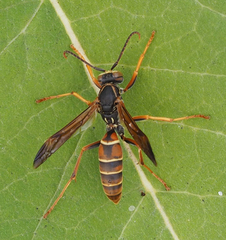
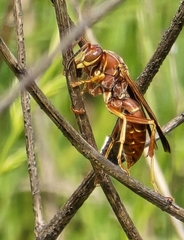
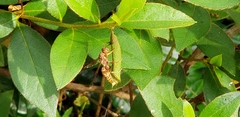
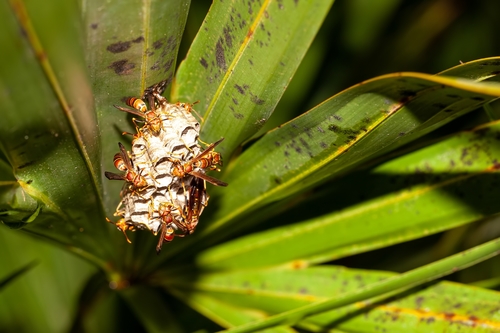
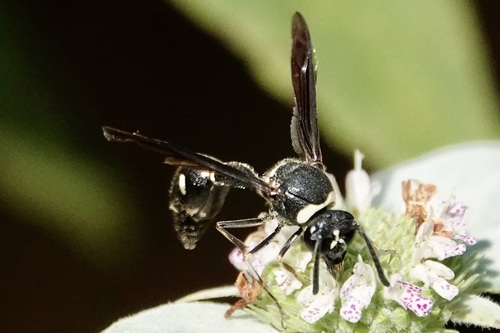
Southern Paper Wasp

Southern Paper Wasp

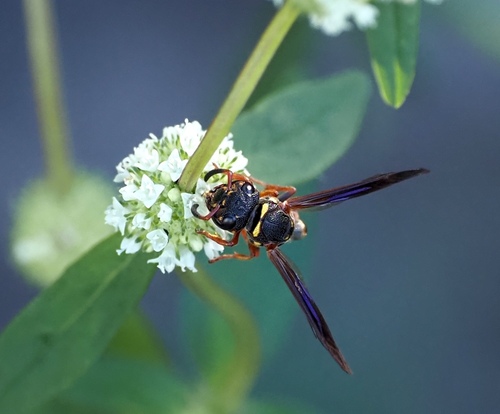
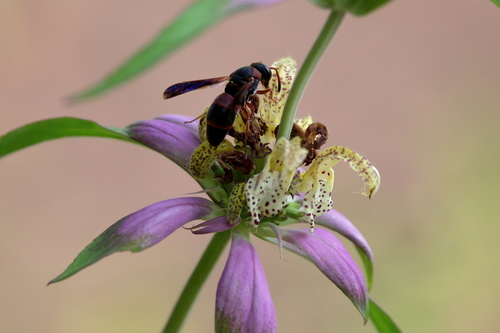
Polistes bellicosus

Daily sighting probability ~10% · With luck
at Big Cypress National Preserve

In 3 days ~30% in a week ~60%

15 Verified sightings at Big Cypress National Preserve From 2019 to 2026
70 In all 3 parks
September Best month
☀️ Diurnal When it's spotted

About the Southern Paper Wasp

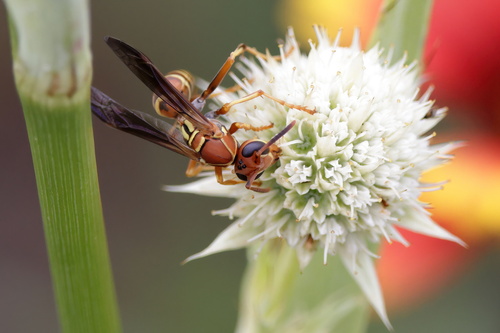
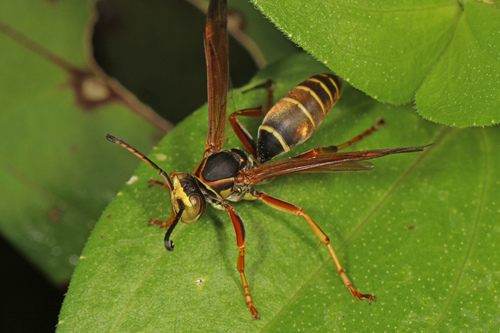
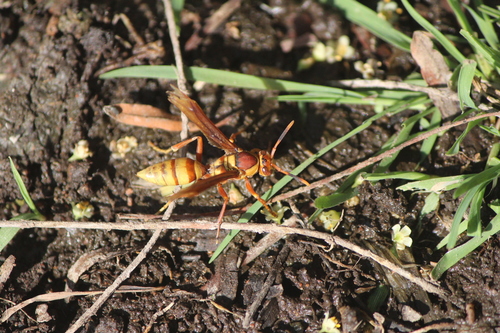
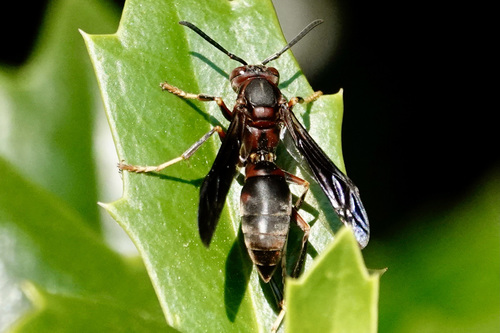
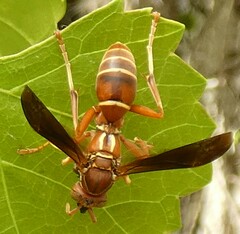
Polistes bellicosus is a social paper wasp from the order Hymenoptera typically found within Texas, namely the Houston area. Like other paper wasps, Polistes bellicosus build nests by manipulating exposed fibers into paper to create cells. P. bellicosus often rebuild their nests at least once per colony season due to predation.

Polistes bellicosus belongs to the subfamily Polistinae, which consists of only social wasps. Polistinae is divided into four tribes: Polistini, Epiponini, Mischocyttarini and Ropalidiini. The tribe Polistini includes the genus Polistes and is the only tribe of Polistinae with a cosmopolitan distribution, i.e. it is the only tribe found in many different global habitats. Polistes bellicosus is most closely related to P. apaches based on a phylogenetic tree.

Along with the genetic similarity, the phylogeny of the larva is also explained using morphological characteristics. Starting at the head, larvae are often dark brown. The body is widest at the anterior part of the abdomen and tapers towards the posterior end. The circular, slender mandible is weakly chitinized. From the mandible... Wikipedia →
Global Distribution

Parks Where Found

# Park Country Daily sighting probability
1 Big Cypress National Preserve 🇺🇸 United States
~10%
2 Everglades National Park 🇺🇸 United States
~10%
3 Merritt Island National Wildlife Refuge 🇺🇸 United States
~10%

Cities Where Found

# City Country Daily sighting probability
1 Houston 🇺🇸 United States
<5%
2 Orlando 🇺🇸 United States
<5%
3 Austin 🇺🇸 United States
<5%
4 Dallas 🇺🇸 United States
<5%
5 Miami 🇺🇸 United States
<5%

Before you go

What are the chances of seeing a Southern Paper Wasp in Big Cypress National Preserve?

With luck

About 10% of wildlife watchers report a Southern Paper Wasp sighting in Big Cypress National Preserve on a given day, based on 15 verified sightings from GBIF citizen-science data from 2019 to 2026. It is the 78th most-seen of the 262 insects we can rate there. Over three days the chance rises to about 30%, and over a week to about 60%, if each day is a fresh chance.

When is the best time to see a Southern Paper Wasp in Big Cypress National Preserve?

September

In that month about 40% of wildlife watchers report a Southern Paper Wasp in Big Cypress National Preserve on a given day, against under 5% in April, June, August, October and December–January, the lowest months. That is one of Big Cypress National Preserve's wettest months, with about 240 mm of rain against 40 mm in March.

What time of day is best to see a Southern Paper Wasp?

Between 10 am and 1 pm

Across all the parks we cover, that three-hour window holds the most Southern Paper Wasp sightings with a recorded time, and about 9 in 10 of them come between 6 am and 6 pm: it is a daytime animal.

Is Big Cypress National Preserve the best place to see a Southern Paper Wasp?

Yes

Of the 3 parks where we can rate Southern Paper Wasp sightings, Big Cypress National Preserve has the highest daily chance: about 10%. Next come Everglades National Park (United States, about 10%) and Merritt Island National Wildlife Refuge (United States, about 10%).

Which relatives of the Southern Paper Wasp live in Big Cypress National Preserve?

Same genus: Polistes

The closest relatives of the Southern Paper Wasp that you can see in Big Cypress National Preserve (genus Polistes, Umbrella Paper Wasps) are Bahamian Paper Wasp (about 10%), Hunter's Little Paper Wasp (about 10%) and Northern Paper Wasp (about 10%), with each one's daily chance of a sighting.

Where does the Southern Paper Wasp sighting chance come from?

GBIF citizen-science records

It is estimated from how often the Southern Paper Wasp is recorded against all the insects logged in Big Cypress National Preserve (15 verified sightings from 2019 to 2026), calibrated against known sighting rates. Figures are rounded to the nearest 10% because citizen-science data supports honest approximations, not decimals, and months with records from fewer than five people show "—". How it works.

← Back to Big Cypress National Preserve