White-Faced Plushback

White-Faced Plushback

Palpada albifrons

Daily sighting probability ~20% · Possible
at Big Cypress National Preserve

In 3 days ~40% in a week ~70%

31 Verified sightings at Big Cypress National Preserve From 2019 to 2026
207 In all 4 parks
November Best month
☀️ Diurnal When it's spotted

About the White-Faced Plushback

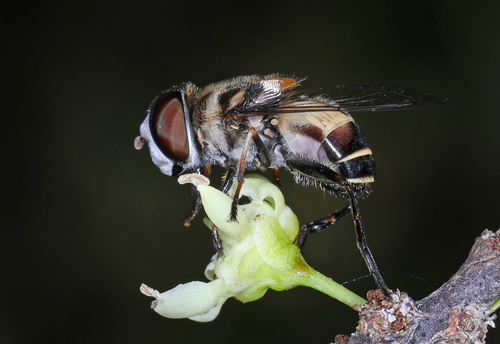
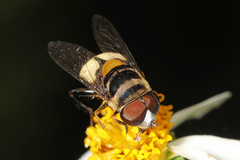
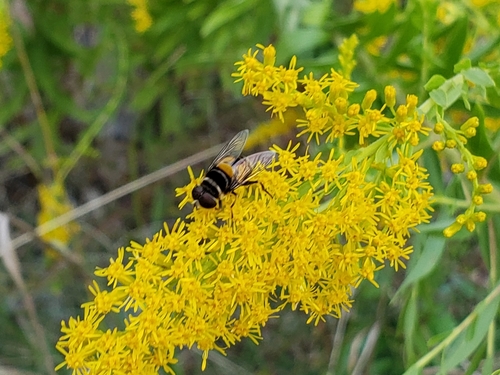
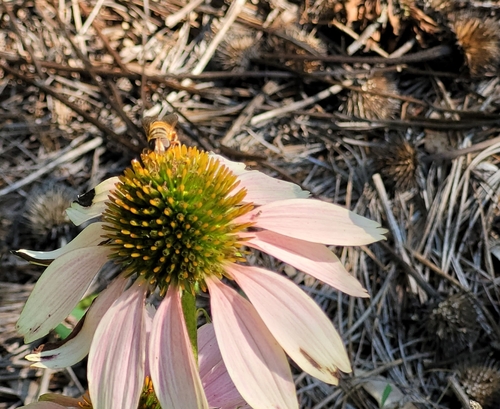
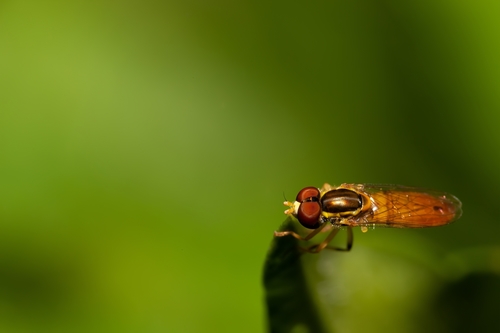
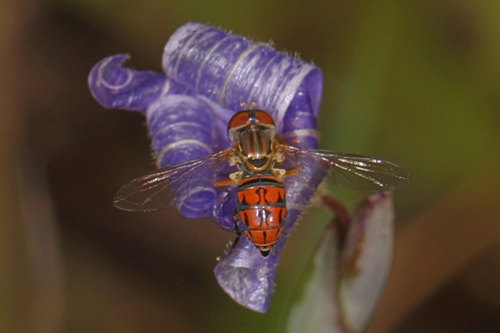
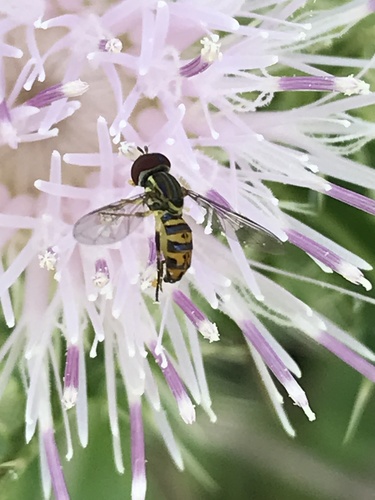
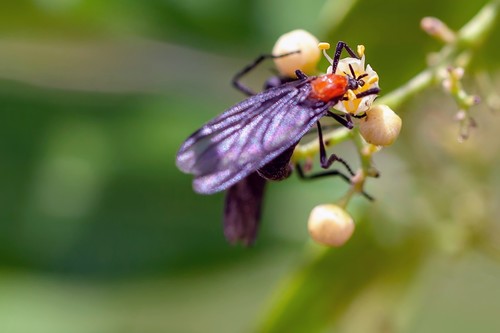
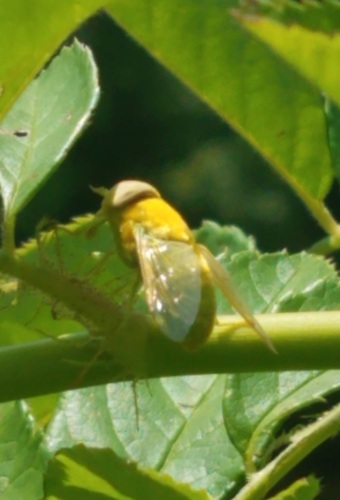
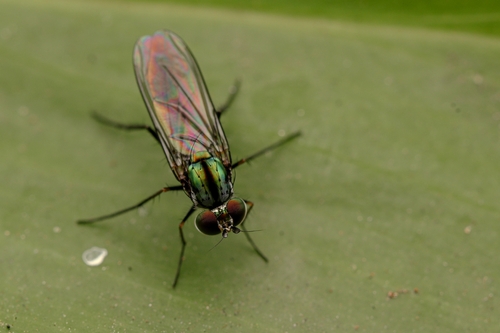
Palpada albifrons (Weidemann 1830), the White-faced Plushback, is a rare species of syrphid fly observed in from Mexico north-eastward along the coastal areas of the United States ( see map). Hoverflies can remain nearly motionless in flight. The adults are also known as flower flies, for they are commonly found on flowers from which they get both energy-giving nectar and protein-rich pollen. The larvae are aquatic.

For terminology seeSpeight key to genera and glossary Archived 2023-01-22 at the Wayback Machine Length 8–9 mm (0.31–0.35 in) Head The face is covered with white pollen and a thick white pile, which is more abundant and conspicuous on the frontal triangle. The facial stripe and gena are shining black. The eyes are pilose, Holoptic in the male. The antennae are obscurely reddish or brown, and the arista is bare.

Thorax The scutum is covered with yellowish-white pile in front, intermixed with blackish behind; in front of the suture is a conspicuous grayish, pollinose broad band, and on each side is an oblique spot reaching from the base of the wing backward toward the scutellum. The female of this species differs, having a complete grayish band on the... Wikipedia →

Global Distribution

Parks Where Found

# Park Country Daily sighting probability
1 Big Cypress National Preserve 🇺🇸 United States
~20%
2 Everglades National Park 🇺🇸 United States
~20%
3 Merritt Island National Wildlife Refuge 🇺🇸 United States
~10%
4 Ría Lagartos Biosphere Reserve 🇲🇽 Mexico
~10%

Cities Where Found

# City Country Daily sighting probability
1 Vitória 🇧🇷 Brazil
~10%
2 Miami 🇺🇸 United States
<5%

Before you go

What are the chances of seeing a White-Faced Plushback in Big Cypress National Preserve?

Possible

About 20% of wildlife watchers report a White-Faced Plushback sighting in Big Cypress National Preserve on a given day, based on 31 verified sightings from GBIF citizen-science data from 2019 to 2026. It is the 34th most-seen of the 262 insects we can rate there. Over three days the chance rises to about 40%, and over a week to about 70%, if each day is a fresh chance.

When is the best time to see a White-Faced Plushback in Big Cypress National Preserve?

November

In that month about 40% of wildlife watchers report a White-Faced Plushback in Big Cypress National Preserve on a given day, against under 5% in April to July, the lowest months. That is one of Big Cypress National Preserve's driest months, with about 60 mm of rain against 260 mm in June.

What time of day is best to see a White-Faced Plushback?

Between 11 am and 2 pm

Across all the parks we cover, that three-hour window holds the most White-Faced Plushback sightings with a recorded time, and nearly all of them come between 6 am and 6 pm: it is a daytime animal.

Is Big Cypress National Preserve the best place to see a White-Faced Plushback?

Yes

Of the 4 parks where we can rate White-Faced Plushback sightings, Big Cypress National Preserve has the highest daily chance: about 20%. Next come Everglades National Park (United States, about 20%) and Merritt Island National Wildlife Refuge (United States, about 10%).

Which relatives of the White-Faced Plushback live in Big Cypress National Preserve?

Same genus: Palpada

The closest relatives of the White-Faced Plushback that you can see in Big Cypress National Preserve (genus Palpada, Plushback Flies) are Double-Banded Plushback (about 10%) and Northern Plushback (about 10%), with each one's daily chance of a sighting.

Where does the White-Faced Plushback sighting chance come from?

GBIF citizen-science records

It is estimated from how often the White-Faced Plushback is recorded against all the insects logged in Big Cypress National Preserve (31 verified sightings from 2019 to 2026), calibrated against known sighting rates. Figures are rounded to the nearest 10% because citizen-science data supports honest approximations, not decimals, and months with records from fewer than five people show "—". How it works.

← Back to Big Cypress National Preserve