






All 2 in 3 days here: ~10%
Ría Lagartos Biosphere Reserve
🇲🇽 Mexico
Yucatán, Mexico 724 spp. recorded
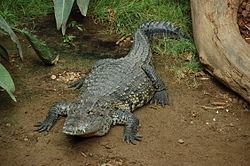
Ría Lagartos is a shallow coastal lagoon behind a barrier of mangrove, and it is visited by boat. Morelet's crocodiles lie in the channels on seven trips in ten and spiny-tailed iguanas hold every open bank.
21.588° N 87.899° W
🦜 Nature

377 Species sighted
36,535 Verified sightings From 2019 to 2026
Jan Best month
⭐ Iconic Species
📊 Most Spotted
📊 Most Spotted
⭐ Iconic Species
📊 Most Spotted
⭐ Iconic Species
📊 Most Spotted
📊 Most Spotted
📊 Most Spotted
+ 463 more species with insufficient data
Challenges you can complete here
Recent sightings in Ría Lagartos Biosphere Reserve
LIVEiNaturalistSighting Calendar
How many species you'd see in a day
63Jan
55Feb
50Mar
43Apr
41May
49Jun
48Jul
55Aug
49Sep
45Oct
56Nov
61Dec
Sighting Zones
Warmer areas are where all species together are recorded most often.
-
Río Lagartos
-
Salinas Las Coloradas
Daily sight. prob.vs avg -
Camino a Las Coloradas
Daily sight. prob.vs avg -
Aguada y Paseo Marítimo
-
Muelle de Pescadores de El Cuyo
Daily sight. prob.vs avg Black Spiny-tailed Iguana~90%+30%
 Yellow-spotted Spiny Lizard~80%+40%
 Common House Gecko~70%+30%
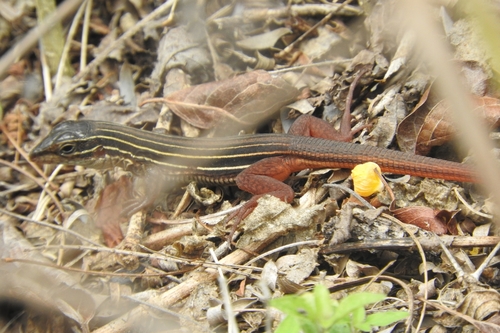
 Yucatán Whiptail~60%+30%
 Giant Marine Toad~60%+30%
 Brown Pelican~60%-30%
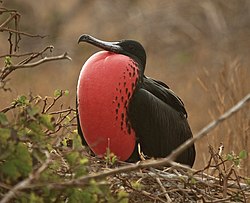 Magnificent Frigatebird~60%-30%
 Royal Tern~50%-30%
 Laughing Gull~50%-40%
 Double-crested Cormorant~50%-40%
 Mexican Parrot Snake~40%+30%
 Road Guarder~40%+20%



🏕️ Experience
Essentials
Entrance
Paid
Tourism
Low
Typical stay
1–2
daysTrails
Easy
World Heritage
No
Climate
Temp °C Rain mm
JanFebMarAprMayJunJulAugSepOctNovDec
0.0 Excellent
Wallace's Line Score
How good is this park for seeing wildlife? 🦜
Biodiversity
Very goodHow rich is the wildlife?
4.2
Species by taxon
🦅 Birds 493
🐒 Mammals 121
🦎 Reptiles 88
🐸 Amphibians 22
724 Total Species
828 Global average across 316 parks
26 Threatened 83 Endemic
🔭
Sighting
Very goodHow likely to see animals?
3.6
🎯
Top-12 Avg Probability
74% 📊
Coverage (158 species at ≥5% of 724 in the inventory)
22% 🔀
Taxon variety in top 12 (12 bird)
0% 🔭
Species per 10 outings (distinct species a visitor would meet over 10 outings — effort held equal across parks)
112 🌟
Iconic-group species (≥15%) (every species from the 19 iconic groups — monkeys, cats, toucans, macaws, sloths, crocodilians… — not just the 4 highlighted above)
9 ⭐
High-prob species (>40%)
32 🏕️
Experience
ExcellentHow easy and pleasant is the visit?
4.4
Climate Pleasant High
Entrance Paid Low
Tourism Medium Medium
Trails Easy High
World Heritage No —
What visitors say
But we also got to see plenty of birds we weren't used to, including a number of herons, falcons and hawks.
When they flying you can see their black wing tips. (White Ibis flying away from snag) (Reddish Egret) We also watched egrets in several areas, including Reddish Egrets, Snowy Egrets and the larger Great Egrets.
We saw several kinds of terns - I think this is a Caspian and I think this is a Royal Tern (in front with the orange beak) and Sandwich Terns (on the right) and tern-like Black Skimmers with oversized orange beaks.
We saw the productivity almost immediately. Ángel stopped the boat in front of a small sandbar barely above the waterline, where a mixed group of Laughing Gulls (Leucophaeus atricilla) and Brown Pelicans (Pelecanus occidentalis) were resting alongside a single American White Pelican (Pelecanus erythrorhynchos).
Before you go
What animals can you see in Ría Lagartos Biosphere Reserve?
724 species
Ría Lagartos Biosphere Reserve has 724 recorded vertebrate species. The ones wildlife watchers report most often on a given day are Laughing Gull (about 90%), Brown Pelican (about 90%), Magnificent Frigatebird (about 90%), Double-crested Cormorant (about 80%) and Royal Tern (about 80%). Among mammals, the most-seen is Common Raccoon (about 50%); among reptiles, Black Spiny-tailed Iguana (about 60%); among amphibians, Giant Marine Toad (about 30%).
When is the best time to visit Ría Lagartos Biosphere Reserve for wildlife?
August, October and December–January
In those months the park's 12 most-seen species average about 80% on a given day, against about 60% in May and June.
Can you see a Belize Crocodile in Ría Lagartos Biosphere Reserve?
Yes
About 30% of wildlife watchers report a Belize Crocodile sighting in Ría Lagartos Biosphere Reserve on a given day, based on 275 verified sightings from GBIF citizen-science data from 2019 to 2026. The best time is April, October and December–February (about 40%).
Can you see a Black Spiny-tailed Iguana in Ría Lagartos Biosphere Reserve?
Yes
About 60% of wildlife watchers report a Black Spiny-tailed Iguana sighting in Ría Lagartos Biosphere Reserve on a given day, based on 139 verified sightings from GBIF citizen-science data from 2019 to 2026. The best time is July and November (about 70%).
Can you see a Brown Pelican in Ría Lagartos Biosphere Reserve?
Yes
About 90% of wildlife watchers report a Brown Pelican sighting in Ría Lagartos Biosphere Reserve on a given day, based on 1,248 verified sightings from GBIF citizen-science data from 2019 to 2026. The best time is January (over 90%).
Can you see a Magnificent Frigatebird in Ría Lagartos Biosphere Reserve?
Yes
About 90% of wildlife watchers report a Magnificent Frigatebird sighting in Ría Lagartos Biosphere Reserve on a given day, based on 1,140 verified sightings from GBIF citizen-science data from 2019 to 2026. The best time is March, August and October–January (about 90%).
Where in Ría Lagartos Biosphere Reserve is wildlife easiest to see?
Around Río Lagartos
The richest sighting zone is around Río Lagartos, followed by Salinas Las Coloradas and Camino a Las Coloradas, ranked by how many of the park's headline animals visitors can expect to see in each. See the zones on the map.
Is Ría Lagartos Biosphere Reserve good for wildlife watching?
3.8 out of 5
On the Wallace's Line Score, Ría Lagartos Biosphere Reserve rates 3.8/5: 144th of 316 parks worldwide and 8th in North America. 41 of its species are reported by about 40% or more of wildlife watchers on a given day.


