Macadamia Nutborer

Macadamia Nutborer

Cryptophlebia ombrodelta

Daily sighting probability ~10% · With luck
at Blue Mountains National Park

In 3 days ~20% in a week ~30%

11 Verified sightings at Blue Mountains National Park From 2019 to 2026
11 In 1 park
October Best month
☀️ Diurnal When it's spotted

About the Macadamia Nutborer

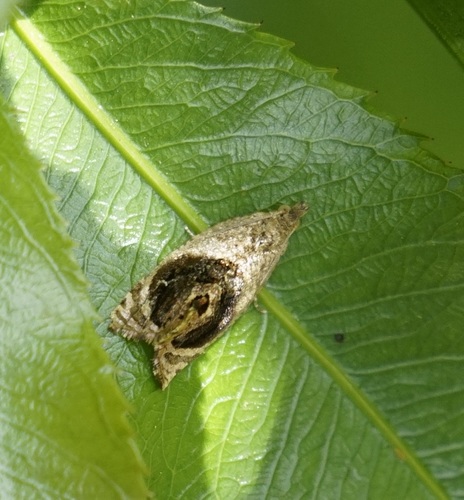
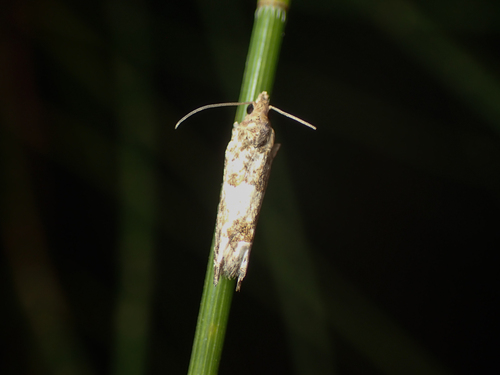
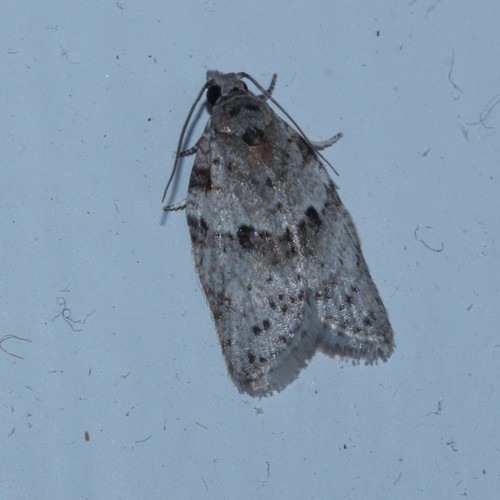
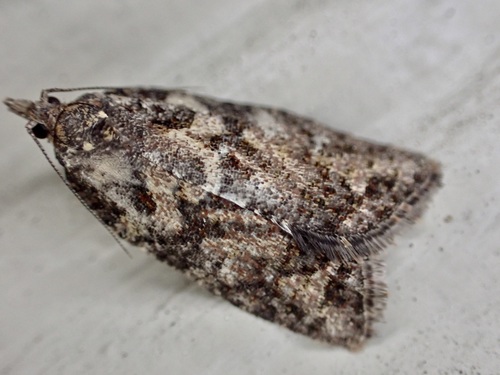
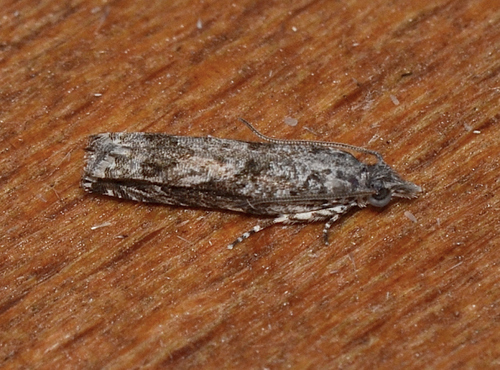
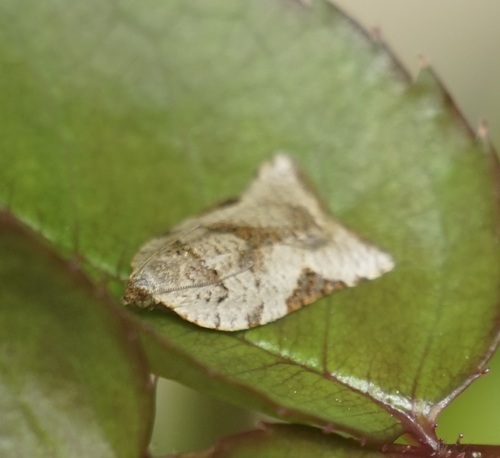
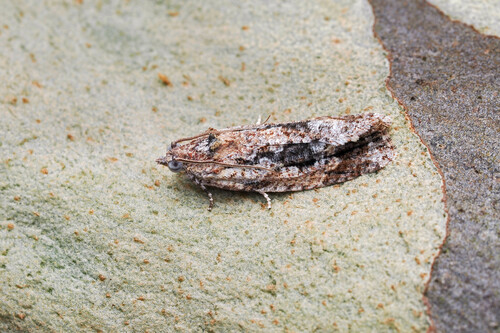
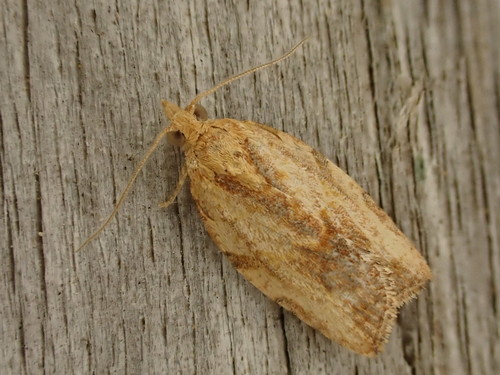
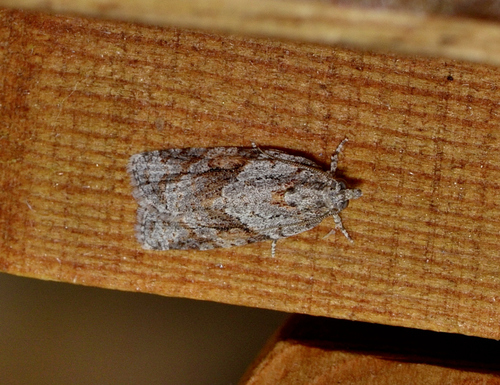
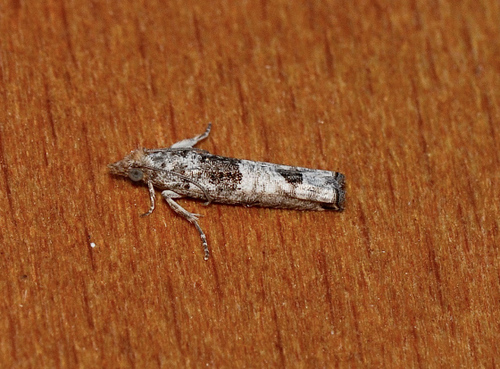
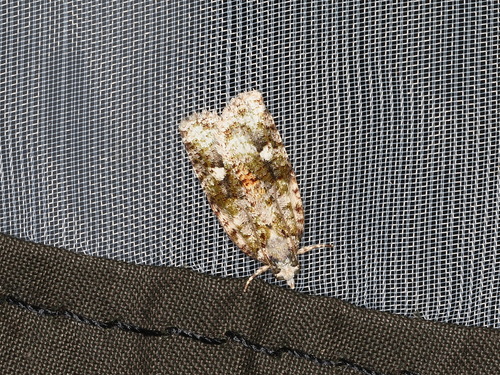
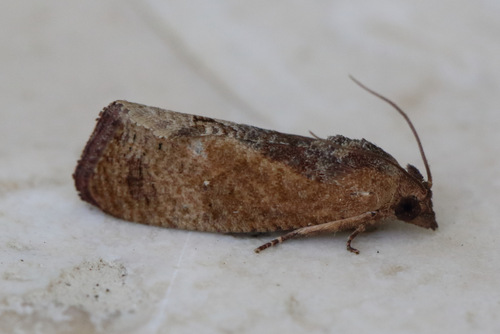
Cryptophlebia ombrodelta, the litchi fruit moth or macadamia nut borer, is a moth of the family Tortricidae. The species was first described by Oswald Bertram Lower in 1898. It is native to India, Sri Lanka, Nepal, Indonesia, China, Taiwan, Vietnam, Thailand, western Malaysia, New Guinea, the Philippines, Japan, Guam, the Caroline Islands, Australia and has been introduced to Hawaii.

The wingspan is 15–22 mm. Forewings brownish to reddish brown. A dark-brown pre-tornal spot is distinctive in females, but faded in males. Males possess sex scales on the hindwing, hind tibia, and abdomen. Females with a costal fold on forewings, which is absent in males.

Eggs are white, round and flat, and laid in small groups of 15 on the fruit. Late instars are 13–20 mm long. The abdomen of the caterpillar is yellowish white. In the final instar, its color turns to red. Pinacula large and darker than body. Head and prothoracic shield blackish to dark brown in early instars which turns pale to yellowish brown in final instars. Anal comb rudimentary with 4-6 small teeth. Pupa yellow brown.

It is considered a pest of legumes. The larvae are a minor polyphagous pest and... Wikipedia →
Global Distribution

Parks Where Found

# Park Country Daily sighting probability
1 Blue Mountains National Park 🇦🇺 Australia
~10%

More parks will be added in future updates.

Cities Where Found

# City Country Daily sighting probability
1 Brisbane 🇦🇺 Australia
<5%

Before you go

What are the chances of seeing a Macadamia Nutborer in Blue Mountains National Park?

With luck

About 10% of wildlife watchers report a Macadamia Nutborer sighting in Blue Mountains National Park on a given day, based on 11 verified sightings from GBIF citizen-science data from 2019 to 2026. It is the 359th most-seen of the 789 insects we can rate there. Over three days the chance rises to about 20%, and over a week to about 30%, if each day is a fresh chance.

When is the best time to see a Macadamia Nutborer in Blue Mountains National Park?

January–February, April and October

In those months about 10% of wildlife watchers report a Macadamia Nutborer in Blue Mountains National Park on a given day, against under 5% in March, May–September and November–December, the lowest months.

What time of day is best to see a Macadamia Nutborer?

Between 9 am and noon

Across all the parks we cover, that three-hour window holds the most Macadamia Nutborer sightings with a recorded time, and nearly all of them come between 6 am and 6 pm: it is a daytime animal.

Where else can you see a Macadamia Nutborer?

Only Blue Mountains National Park, in our data

Blue Mountains National Park is the only park on Wallace's Line with enough records to rate Macadamia Nutborer sightings: about 10% of wildlife watchers there report one on a given day.

Which relatives of the Macadamia Nutborer live in Blue Mountains National Park?

Same family: Tortricidae

The closest relatives of the Macadamia Nutborer that you can see in Blue Mountains National Park (family Tortricidae, Tortricid Leafroller Moths) are Acroceuthes metaxanthana (about 10%), Cotton Tipworm Moth (about 10%) and Orange Fruit Borer (about 10%), with each one's daily chance of a sighting.

Where does the Macadamia Nutborer sighting chance come from?

GBIF citizen-science records

It is estimated from how often the Macadamia Nutborer is recorded against all the insects logged in Blue Mountains National Park (11 verified sightings from 2019 to 2026), calibrated against known sighting rates. Figures are rounded to the nearest 10% because citizen-science data supports honest approximations, not decimals, and months with records from fewer than five people show "—". How it works.

← Back to Blue Mountains National Park