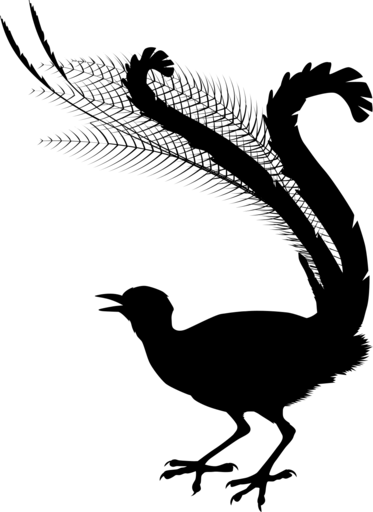
Superb Lyrebird

Superb Lyrebird

Menura novaehollandiae

Silhouette: Anders Alexander · PhyloPic

LCLeast ConcernNTVUENCR Endemic
Daily sighting probability ~30% · Possible
at Blue Mountains National Park

In 3 days ~60% in a week ~90%

2,190 Verified sightings at Blue Mountains National Park From 2019 to 2026
2,934 In all 3 parks
June Best month
☀️ Diurnal When it's spotted

About the Superb Lyrebird

The superb lyrebird (Menura novaehollandiae) is an Australian passerine songbird, one of two species from the family Menuridae, with the other being the much rarer Albert's lyrebird. One of the world's largest songbirds, the superb lyrebird is renowned for its elaborate tail and courtship displays, and for its excellent mimicry. The species is endemic to Australia and is found in forest in the southeast of the country. According to David Attenborough, the superb lyrebird displays one of the most sophisticated voice skills within the animal kingdom—"the most elaborate, the most complex, and the most beautiful".

Based on specimens sent from New South Wales to England, Major-General Thomas Davies illustrated and described this species as the "superb lyrebird", which he called Menura superba, in a presentation to the Linnean Society of London on 4 November 1800, but his work was not published until 1802; in the intervening time period, however, the species was described and named Menura novaehollandiae by John Latham in 1801, and this is the accepted name by virtue of nomenclatural priority. Latham described the inner webs of the bird's outer tail-feathers as having numerous... Wikipedia →

Sounds

Imitation1:00

Australia · 2024

© Romuald Mikusek · XC1172718 · CC BY-NC-SA 4.0

Song0:56

Australia · 2020

© Marc Anderson · XC1045886 · CC BY-NC-ND 4.0

Alarm call1:07

Australia · 2014

© Tom Tarrant · XC195481 · CC BY-NC-SA 4.0

Global Distribution

Parks Where Found

# Park Country Daily sighting probability
1 Blue Mountains National Park 🇦🇺 Australia
~30%
2 Royal National Park 🇦🇺 Australia
~20%
3 Kosciuszko National Park 🇦🇺 Australia
~20%

Cities Where Found

# City Country Daily sighting probability
1 Sydney 🇦🇺 Australia
<5%

Zoos & Centres Where Found

# Zoo / Centre Country
1 Healesville Sanctuary 🇦🇺 Australia In captivity
2 Taronga Zoo 🇦🇺 Australia In captivity
3 Adelaide Zoo 🇦🇺 Australia In captivity
4 Featherdale Sydney Wildlife Park 🇦🇺 Australia In captivity

Before you go

What are the chances of seeing a Superb Lyrebird in Blue Mountains National Park?

Possible

About 30% of wildlife watchers report a Superb Lyrebird sighting in Blue Mountains National Park on a given day, based on 2,190 verified sightings from GBIF citizen-science data from 2019 to 2026. It is the 33rd most-seen of the 196 birds we can rate there. Over three days the chance rises to about 60%, and over a week to about 90%, if each day is a fresh chance.

When is the best time to see a Superb Lyrebird in Blue Mountains National Park?

March, May–July and October–December

In those months about 30% of wildlife watchers report a Superb Lyrebird in Blue Mountains National Park on a given day, against about 20% in January–February, April and August–September, the lowest months.

What time of day is best to see a Superb Lyrebird?

Between 10 am and 1 pm

Across all the parks we cover, that three-hour window holds the most Superb Lyrebird sightings with a recorded time, and about 9 in 10 of them come between 6 am and 6 pm: it is a daytime animal.

Is Blue Mountains National Park the best place to see a Superb Lyrebird?

Yes

Of the 3 parks where we can rate Superb Lyrebird sightings, Blue Mountains National Park has the highest daily chance: about 30%. Next come Royal National Park (Australia, about 20%) and Kosciuszko National Park (Australia, about 20%).

Which relatives of the Superb Lyrebird live in Blue Mountains National Park?

Same order: Passeriformes

The closest relatives of the Superb Lyrebird that you can see in Blue Mountains National Park (order Passeriformes, Perching Birds) are Eastern Spinebill (about 70%), Red Wattlebird (about 60%) and Australian Magpie (about 60%), with each one's daily chance of a sighting.

Where does the Superb Lyrebird sighting chance come from?

GBIF citizen-science records

It is estimated from how often the Superb Lyrebird is recorded against all the birds logged in Blue Mountains National Park (2,190 verified sightings from 2019 to 2026), calibrated against known sighting rates. Figures are rounded to the nearest 10% because citizen-science data supports honest approximations, not decimals, and months with records from fewer than five people show "—". How it works.

← Back to Blue Mountains National Park