Common Pug

Common Pug

Eupithecia vulgata

Daily sighting probability ~10% · With luck
at Cairngorms National Park

In 3 days ~20% in a week ~30%

5 Verified sightings at Cairngorms National Park From 2019 to 2026
5 In 1 park
May Best month
☀️ Diurnal When it's spotted

About the Common Pug

The common pug (Eupithecia vulgata) is a moth of the family Geometridae. It is a common species across the Palearctic region, including the Near East and North Africa. It ranges from the Atlantic coast of Ireland and Portugal across Europe, the Middle East and Central Asia to the Russian Far East (Priamurje) and Korea.

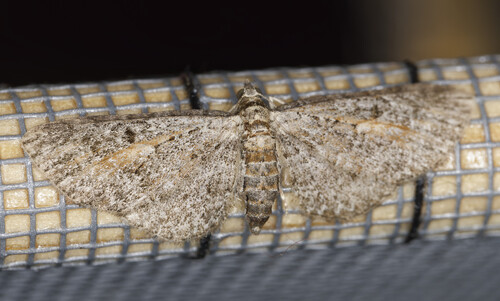
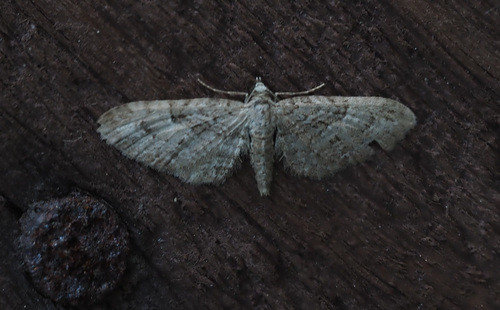
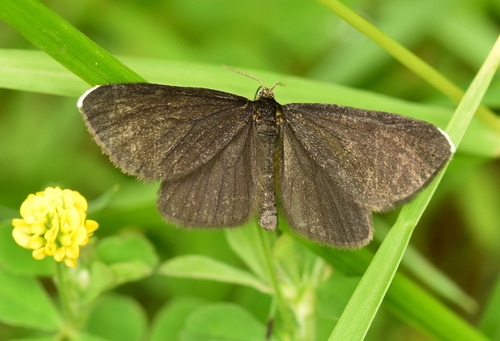
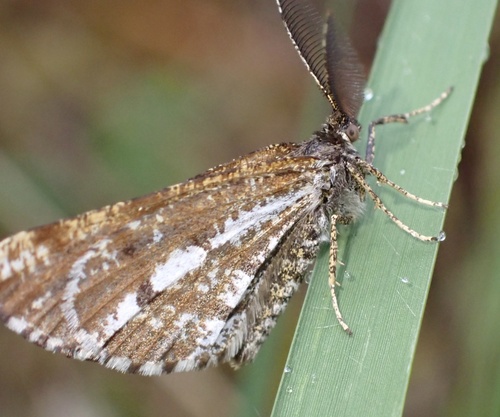
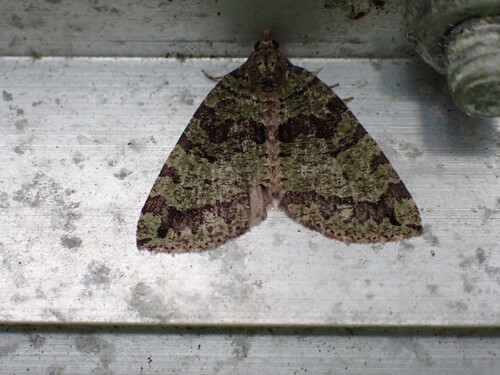
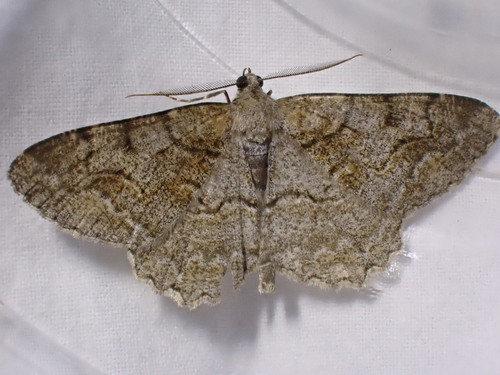
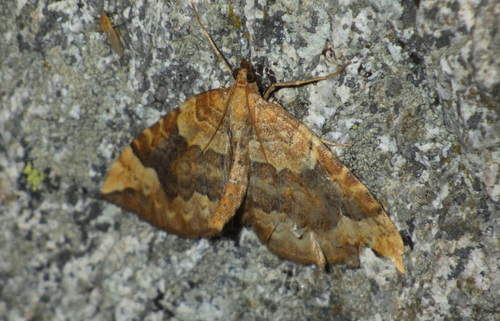
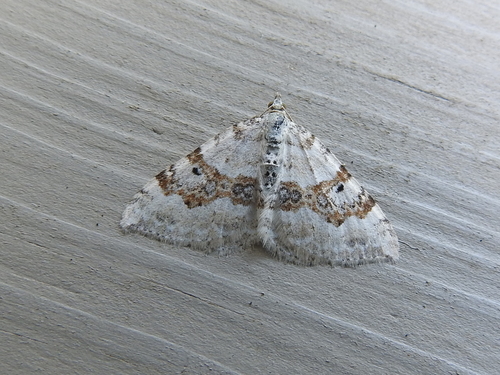
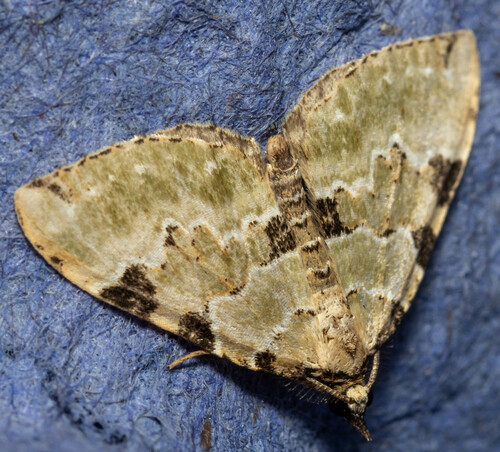
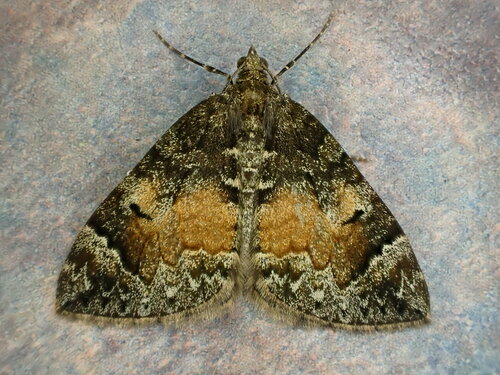
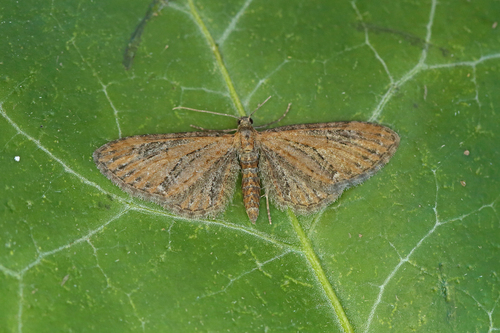
The wingspan is 18–21 mm. The ground colour of the forewings is very variable – brown to fuscous, with a reddish tinge, ochreous, or whitish. The darker fuscous striae are angulated and the postmedian line is biangulate. The posterior edge of the median band is marked with black, the subterminal line is interrupted into whitish dots and a small white tornal mark. The forewings have either a minute dark discal mark or are without a discal mark. Forewings with a crescentic pale tornal stain. The hindwings are similar to the forewings but less conspicuously patterned. See also Prout.

The larva is naked, long and slender, greyish green or light brown, on its back with a variety of rhomboid, darker spots. The reddish brown pupa has olive green wing sheaths. At the pointed cremaster there are eight hook bristles.

Two broods are produced each year with... Wikipedia →
Global Distribution

Parks Where Found

# Park Country Daily sighting probability
1 Cairngorms National Park 🇬🇧 United Kingdom
~10%

More parks will be added in future updates.

Cities Where Found

# City Country Daily sighting probability
1 Birmingham 🇬🇧 United Kingdom
~10%
2 London 🇬🇧 United Kingdom
~10%
3 Liverpool 🇬🇧 United Kingdom
~10%
4 Helsinki 🇫🇮 Finland
<5%
5 Moscow 🇷🇺 Russia
<5%

Before you go

What are the chances of seeing a Common Pug in Cairngorms National Park?

With luck

About 10% of wildlife watchers report a Common Pug sighting in Cairngorms National Park on a given day, based on 5 verified sightings from GBIF citizen-science data from 2019 to 2026. It is the 260th most-seen of the 300 insects we can rate there. Over three days the chance rises to about 20%, and over a week to about 30%, if each day is a fresh chance.

When is the best time to see a Common Pug in Cairngorms National Park?

May and June

In those months about 10% of wildlife watchers report a Common Pug in Cairngorms National Park on a given day, against under 5% in July to April, the lowest months.

What time of day is best to see a Common Pug?

Between 8 and 11 am

Across all the parks we cover, that three-hour window holds the most Common Pug sightings with a recorded time, and nearly all of them come between 6 am and 6 pm: it is a daytime animal.

Where else can you see a Common Pug?

Only Cairngorms National Park, in our data

Cairngorms National Park is the only park on Wallace's Line with enough records to rate Common Pug sightings: about 10% of wildlife watchers there report one on a given day.

Which relatives of the Common Pug live in Cairngorms National Park?

Same genus: Eupithecia

The closest relatives of the Common Pug that you can see in Cairngorms National Park (genus Eupithecia, Pug Moths) are Tawny Speckled Pug (about 10%) and Juniper Pug (about 10%), with each one's daily chance of a sighting.

Where does the Common Pug sighting chance come from?

GBIF citizen-science records

It is estimated from how often the Common Pug is recorded against all the insects logged in Cairngorms National Park (5 verified sightings from 2019 to 2026), calibrated against known sighting rates. Figures are rounded to the nearest 10% because citizen-science data supports honest approximations, not decimals, and months with records from fewer than five people show "—". How it works.

← Back to Cairngorms National Park