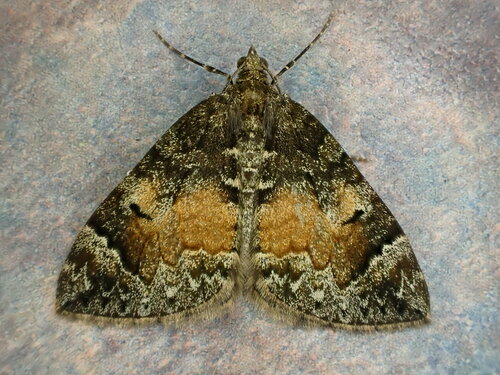
Juniper Pug

Juniper Pug

Eupithecia pusillata

Daily sighting probability ~10% · With luck
at Cairngorms National Park

In 3 days ~20% in a week ~30%

9 Verified sightings at Cairngorms National Park From 2019 to 2026
9 In 1 park
August Best month
☀️ Diurnal When it's spotted

About the Juniper Pug

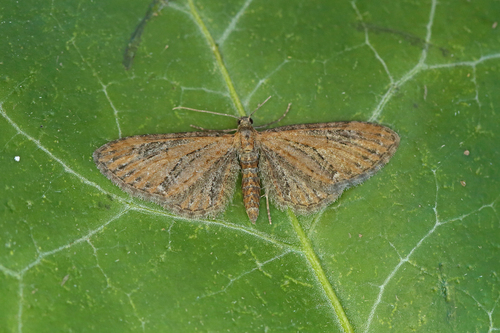
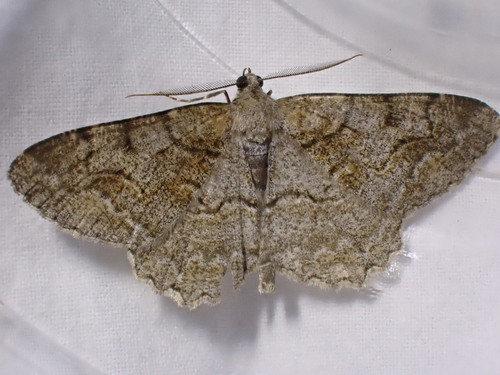
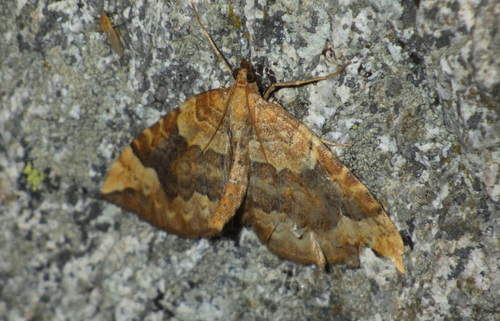
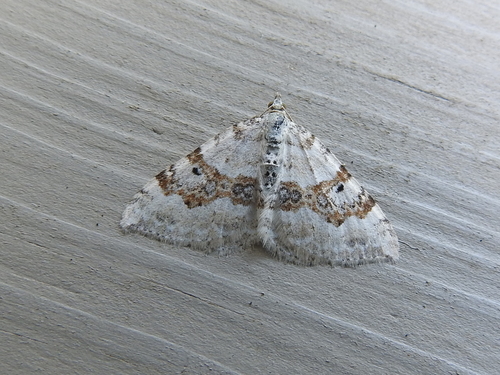
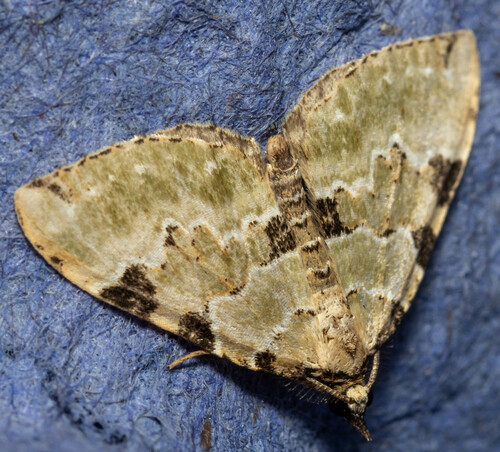
The juniper pug or juniper looper (Eupithecia pusillata) is a moth of the family Geometridae. The species was first described by Michael Denis and Ignaz Schiffermüller in 1775. It is found throughout the Palearctic (Ireland to the Russian Far East) and in the Nearctic.

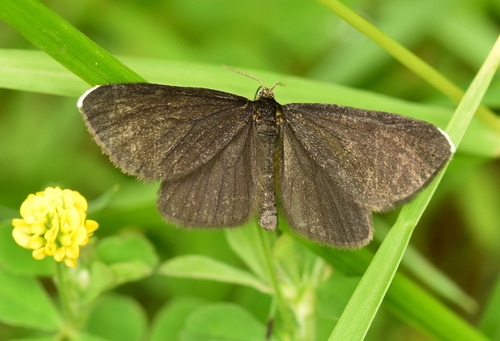
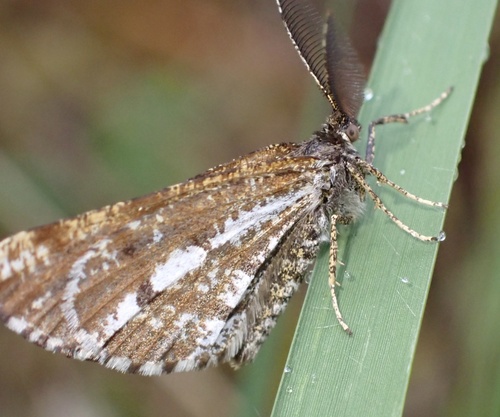
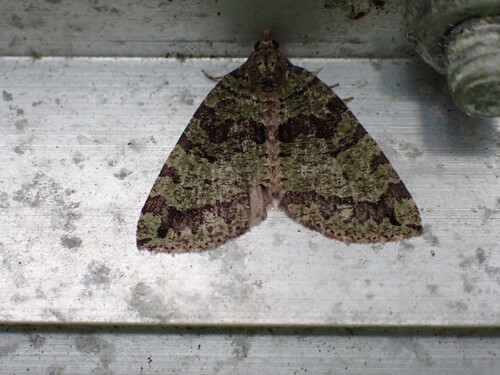
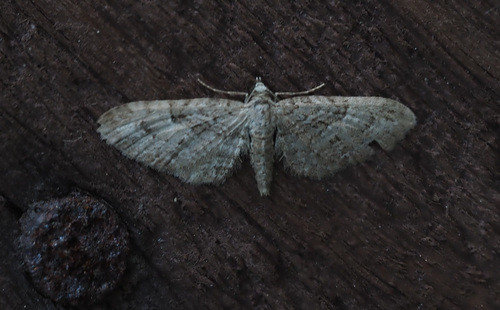
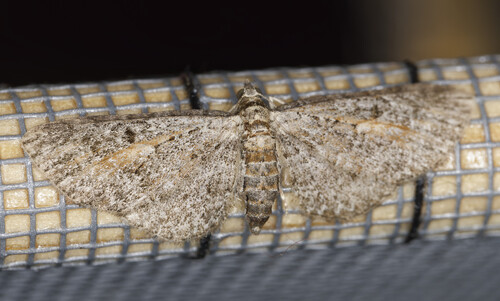
Subspecies E. p. interruptofasciata is sometimes treated as a valid species Eupithecia interruptofasciata. The forewings are greyish brown often with two distinctive black cross bands. The wingspan is 17–21 mm (0.67–0.83 in). It is relatively contrastingly coloured, with marked, light and dark cross-bands and short black longitudinal lines. It often lacks a black spot in the middle of the wing (discal spot). It is extremely variable but generally easy to recognize by the acutely angulated antemedian line, the whitish patch between discal dot and the postmedian and dark dashes proximally to the postmedian — graeseriata Ratzer (= latoniata Mill.) is larger and greyer is in general more weakly marked but very variable (Swiss Alps). — anglicata H-Sch. from the chalk cliffs of Kent, is a whitish grey form of rather characteristic appearance. — scoriata Stgr. from Iceland, is a dark, weakly-marked form.

The larva has a number of short brushes and numerous small white warts. The body is green, along the back it has either a simple, dark back strip or a variety of bell-shaped, dark brown spots. The adults fly at night from July to September,[2] and are attracted to light.

In the Old World, the larva feeds on Juniperus (juniper) and some other conifers in the cypress family such as Chamaecyparis and Thuja. In the New World, there is a greater range of recorded food plants including apple, clover, raspberry, redcurrant, strawberry, sunflower and willow as well as juniper. The species overwinters as an egg. Wikipedia →
Global Distribution

Parks Where Found

# Park Country Daily sighting probability
1 Cairngorms National Park 🇬🇧 United Kingdom
~10%

More parks will be added in future updates.

Cities Where Found

# City Country Daily sighting probability
1 Helsinki 🇫🇮 Finland
~10%

Before you go

What are the chances of seeing a Juniper Pug in Cairngorms National Park?

With luck

About 10% of wildlife watchers report a Juniper Pug sighting in Cairngorms National Park on a given day, based on 9 verified sightings from GBIF citizen-science data from 2019 to 2026. It is the 260th most-seen of the 300 insects we can rate there. Over three days the chance rises to about 20%, and over a week to about 30%, if each day is a fresh chance.

When is the best time to see a Juniper Pug in Cairngorms National Park?

August and September

In those months about 10% of wildlife watchers report a Juniper Pug in Cairngorms National Park on a given day, against under 5% in October to July, the lowest months.

What time of day is best to see a Juniper Pug?

Between 6 and 9 am

Across all the parks we cover, that three-hour window holds the most Juniper Pug sightings with a recorded time, and about 8 in 10 of them come between 6 am and 6 pm: it is a daytime animal.

Where else can you see a Juniper Pug?

Only Cairngorms National Park, in our data

Cairngorms National Park is the only park on Wallace's Line with enough records to rate Juniper Pug sightings: about 10% of wildlife watchers there report one on a given day.

Which relatives of the Juniper Pug live in Cairngorms National Park?

Same genus: Eupithecia

The closest relatives of the Juniper Pug that you can see in Cairngorms National Park (genus Eupithecia, Pug Moths) are Tawny Speckled Pug (about 10%) and Common Pug (about 10%), with each one's daily chance of a sighting.

Where does the Juniper Pug sighting chance come from?

GBIF citizen-science records

It is estimated from how often the Juniper Pug is recorded against all the insects logged in Cairngorms National Park (9 verified sightings from 2019 to 2026), calibrated against known sighting rates. Figures are rounded to the nearest 10% because citizen-science data supports honest approximations, not decimals, and months with records from fewer than five people show "—". How it works.

← Back to Cairngorms National Park