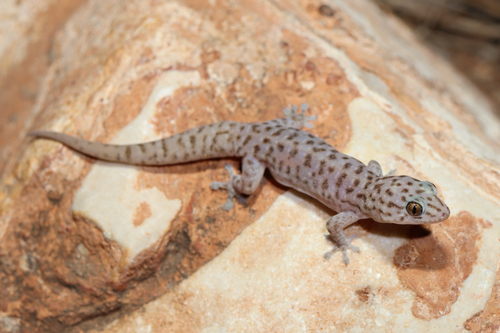
Pilbara Death Adder

Pilbara Death Adder

Acanthophis wellsi

Silhouette: SeismicShrimp · PhyloPic

LCLeast ConcernNTVUENCR Endemic
Daily sighting probability ~40% · Likely
at Cape Range

In 3 days ~80% in a week >90%

19 Verified sightings at Cape Range From 2019 to 2026
40 In all 2 parks
October Best month
🌅 Crepuscular When it's spotted

About the Pilbara Death Adder

The Pilbara death adder (Acanthophis wellsi), also known commonly as Wells' death adder, is a species of venomous snake in the family Elapidae. The species is one of the eight members of the genus Acanthophis, a genus which is found throughout northwestern and southwestern Australia and some parts of southern Papua New Guinea. The species Acanthophis wellsi is endemic to Western Australia.

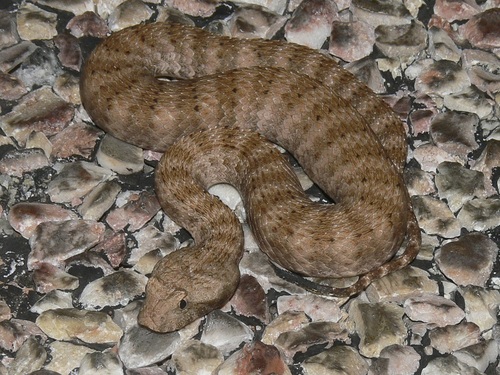
The Pilbara death adder was described by Raymond Hoser in 1998. The specific name, wellsi, is in honor of Australian herpetologist Richard Walter Wells. Dorsally, A. wellsi is usually brick red, with narrow, close-spaced gray crossbands. Individuals called "melanistic" have a black head, and the crossbands, which are wider, are yellowish brown, edged with black.

Acanthophis wellsi is found in the Hamersley Range and the Chichester Range in the Pilbara region in northern Western Australia. The preferred natural habitats of A. wellsi are grassland, shrubland, and rocky areas. Acanthophis wellsi is ovoviviparous.

Cogger HG (2014). Reptiles and Amphibians of Australia... Wikipedia →
Global Distribution

Parks Where Found

# Park Country Daily sighting probability
1 Cape Range 🇦🇺 Australia
~40%
2 Ningaloo Marine Park 🇦🇺 Australia
~30%

Before you go

What are the chances of seeing a Pilbara Death Adder in Cape Range?

Likely

About 40% of wildlife watchers report a Pilbara Death Adder sighting in Cape Range on a given day, based on 19 verified sightings from GBIF citizen-science data from 2019 to 2026. It is the 4th most-seen of the 22 reptiles we can rate there. Over three days the chance rises to about 80%, and over a week to over 90%, if each day is a fresh chance.

When is the best time to see a Pilbara Death Adder in Cape Range?

January and October

In those months about 70% of wildlife watchers report a Pilbara Death Adder in Cape Range on a given day, against under 5% in April, August and November, the lowest months. Those are among Cape Range's driest months, with about 5 mm of rain a month against 55 mm in June.

What time of day is best to see a Pilbara Death Adder?

Between 7 and 10 pm

Across all the parks we cover, that three-hour window holds the most Pilbara Death Adder sightings with a recorded time, and about 7 in 10 of them come between 6 pm and 6 am: it is most active around dawn and dusk.

Is Cape Range the best place to see a Pilbara Death Adder?

Yes

Of the 2 parks where we can rate Pilbara Death Adder sightings, Cape Range has the highest daily chance: about 40%. Next come Ningaloo Marine Park (Australia, about 30%).

Where does the Pilbara Death Adder sighting chance come from?

GBIF citizen-science records

It is estimated from how often the Pilbara Death Adder is recorded against all the reptiles logged in Cape Range (19 verified sightings from 2019 to 2026), calibrated against known sighting rates. Figures are rounded to the nearest 10% because citizen-science data supports honest approximations, not decimals, and months with records from fewer than five people show "—". How it works.

← Back to Cape Range