Northern Spiny-tailed Gecko

Northern Spiny-tailed Gecko

Strophurus ciliaris

Silhouette: Beth Reinke · PhyloPic

LCLeast ConcernNTVUENCR Endemic
Daily sighting probability ~40% · Likely
at Cape Range

In 3 days ~80% in a week >90%

24 Verified sightings at Cape Range From 2019 to 2026
79 In all 5 parks
February Best month
🌙 Nocturnal When it's spotted

About the Northern Spiny-tailed Gecko

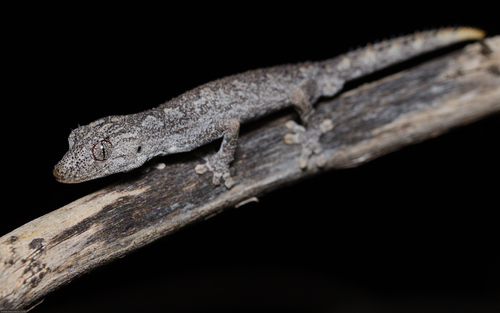
The northern spiny-tailed gecko (Strophurus ciliaris) is a species of lizard in the family Diplodactylidae. The species is endemic to Australia. The meaning of the scientific name or binomial, Strophurus ciliaris, comes from strophurus meaning "turning-tail" and ciliaris meaning "eyelashed", referring to the spines above the eyes.

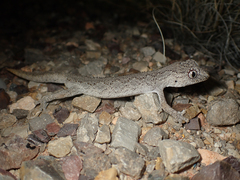
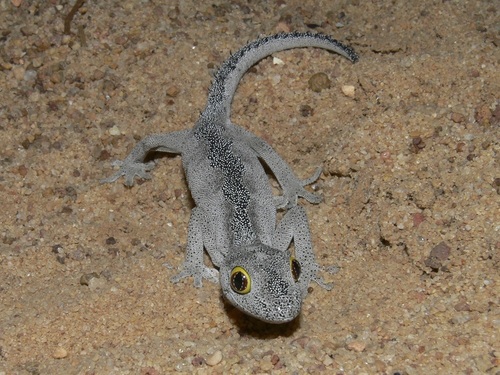
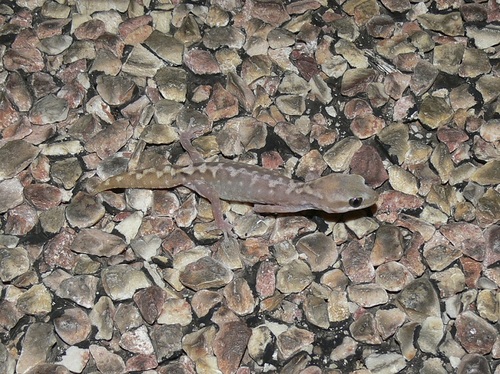
S. ciliaris is highly variable in colour. This species can vary from a uniform grey colour, with few black or orange scales, to rich brown, with a mottled pattern of grey, white, and orange scales. Spines are present along the tail, and long spines are generally present above the eyes, giving the impression of being eye-lashed.

The average length for a member of this species is 89 mm (3.5 in). Females are known to be significantly larger than males. S. ciliaris an oviparous species that has a clutch size of two. Members of the genus Strophurus have the ability to squirt a harmless, smelly, fluid from their tails. This is used as a deterrent for birds and other predations whilst they are perching in shrubs. Another defence mechanism that S. ciliaris has is bright palate colour. Wikipedia →

Global Distribution

Parks Where Found

# Park Country Daily sighting probability
1 Cape Range 🇦🇺 Australia
~40%
2 Uluru-Kata Tjuta National Park 🇦🇺 Australia
~30%
3 Ningaloo Marine Park 🇦🇺 Australia
~30%
4 Litchfield National Park 🇦🇺 Australia
~20%
5 Kakadu National Park 🇦🇺 Australia
~10%

Zoos & Centres Where Found

# Zoo / Centre Country
1 Zoo Pilsen 🇨🇿 Czechia In captivity

Before you go

What are the chances of seeing a Northern Spiny-tailed Gecko in Cape Range?

Likely

About 40% of wildlife watchers report a Northern Spiny-tailed Gecko sighting in Cape Range on a given day, based on 24 verified sightings from GBIF citizen-science data from 2019 to 2026. It is the 2nd most-seen of the 22 reptiles we can rate there. Over three days the chance rises to about 80%, and over a week to over 90%, if each day is a fresh chance.

When is the best time to see a Northern Spiny-tailed Gecko in Cape Range?

February and March

In those months about 70% of wildlife watchers report a Northern Spiny-tailed Gecko in Cape Range on a given day, against under 5% in May and July–August, the lowest months. Those are among Cape Range's wettest months, with about 35 mm of rain a month against almost none in October.

What time of day is best to see a Northern Spiny-tailed Gecko?

Between 7 and 10 pm

Across all the parks we cover, that three-hour window holds the most Northern Spiny-tailed Gecko sightings with a recorded time, and about 8 in 10 of them come between 6 pm and 6 am: it is mostly seen at night.

Is Cape Range the best place to see a Northern Spiny-tailed Gecko?

Yes

Of the 5 parks where we can rate Northern Spiny-tailed Gecko sightings, Cape Range has the highest daily chance: about 40%. Next come Uluru-Kata Tjuta National Park (Australia, about 30%) and Ningaloo Marine Park (Australia, about 30%).

Where does the Northern Spiny-tailed Gecko sighting chance come from?

GBIF citizen-science records

It is estimated from how often the Northern Spiny-tailed Gecko is recorded against all the reptiles logged in Cape Range (24 verified sightings from 2019 to 2026), calibrated against known sighting rates. Figures are rounded to the nearest 10% because citizen-science data supports honest approximations, not decimals, and months with records from fewer than five people show "—". How it works.

← Back to Cape Range