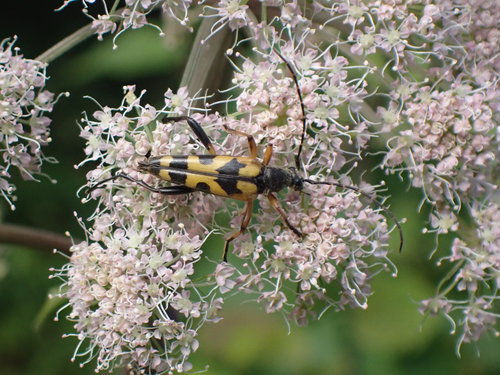
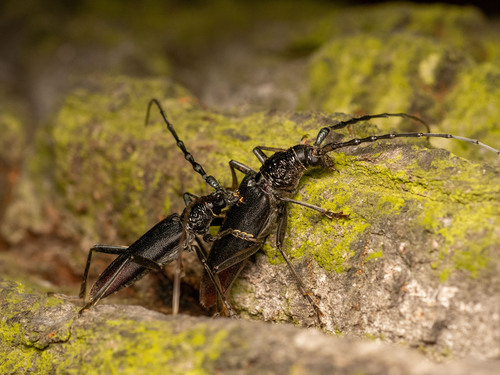
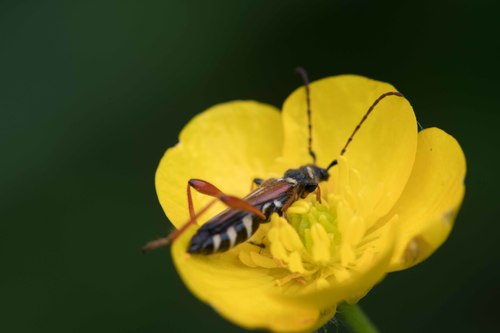
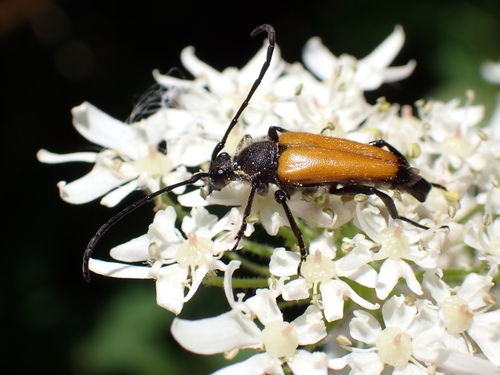
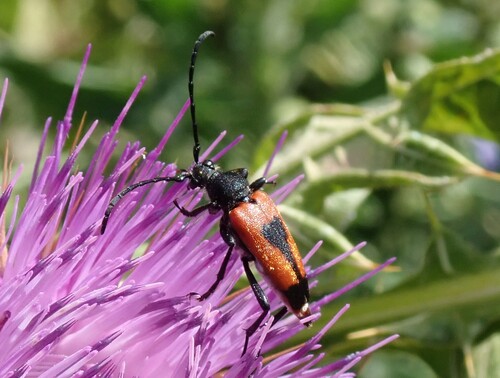
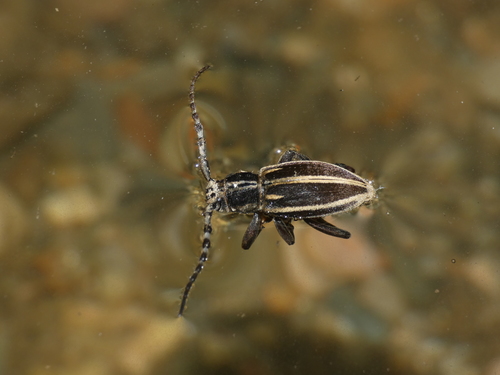
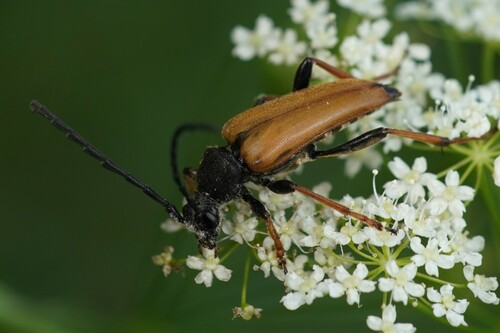
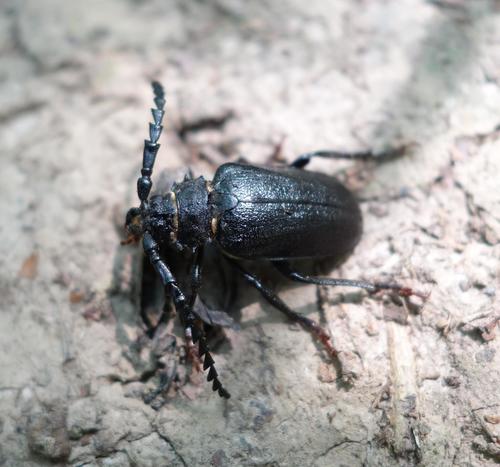
Black Pine Sawyer Beetle

Black Pine Sawyer Beetle

Monochamus galloprovincialis

Daily sighting probability ~10% · With luck
at Cévennes National Park

In 3 days ~20% in a week ~30%

9 Verified sightings at Cévennes National Park From 2019 to 2026
9 In 1 park
August Best month
☀️ Diurnal When it's spotted

About the Black Pine Sawyer Beetle

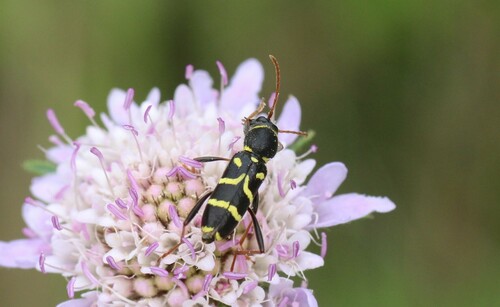
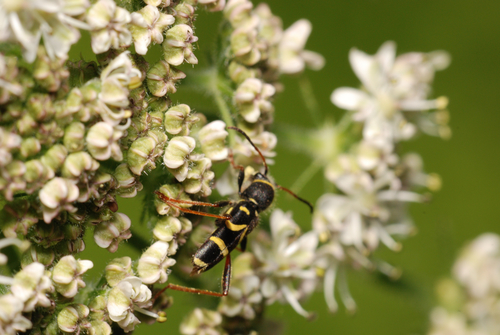
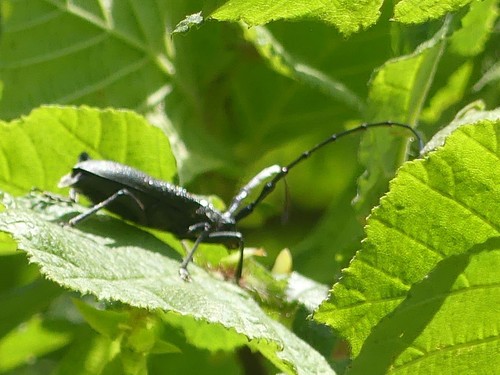
Monochamus galloprovincialis, the pine sawyer beetle, also referred to as the black pine sawyer beetle, is a species of beetle in the family Cerambycidae. It was described by Olivier in 1795, originally under the genus Cerambyx. It has a wide distribution, occurring naturally throughout Europe and the Caucasus. It has also been introduced into the Canary Islands. It serves as a vector for the parasitic nematode species Bursaphelenchus xylophilus, and also acts as a host to the parasitoid wasp species Dolichomitus tuberculatus.

Adult beetles are strong fliers, and in flight mill experiments were, on average, able to fly 16 km over the lifetime of the beetle. The adult male produces an aggregation pheromone to attract females. Wikipedia →

Global Distribution

Parks Where Found

# Park Country Daily sighting probability
1 Cévennes National Park 🇫🇷 France
~10%

More parks will be added in future updates.

Cities Where Found

# City Country Daily sighting probability
1 Kyiv 🇺🇦 Ukraine
<5%
2 Novosibirsk 🇷🇺 Russia
<5%
3 Yekaterinburg 🇷🇺 Russia
<5%
4 Moscow 🇷🇺 Russia
<5%

Before you go

What are the chances of seeing a Black Pine Sawyer Beetle in Cévennes National Park?

With luck

About 10% of wildlife watchers report a Black Pine Sawyer Beetle sighting in Cévennes National Park on a given day, based on 9 verified sightings from GBIF citizen-science data from 2019 to 2026. It is the 619th most-seen of the 996 insects we can rate there. Over three days the chance rises to about 20%, and over a week to about 30%, if each day is a fresh chance.

When is the best time to see a Black Pine Sawyer Beetle in Cévennes National Park?

August

In that month about 20% of wildlife watchers report a Black Pine Sawyer Beetle in Cévennes National Park on a given day, against under 5% in September to July, the lowest months. That is one of Cévennes National Park's driest months, with about 55 mm of rain against 260 mm in October.

What time of day is best to see a Black Pine Sawyer Beetle?

Between noon and 3 pm

Across all the parks we cover, that three-hour window holds the most Black Pine Sawyer Beetle sightings with a recorded time, and about 9 in 10 of them come between 6 am and 6 pm: it is a daytime animal.

Where else can you see a Black Pine Sawyer Beetle?

Only Cévennes National Park, in our data

Cévennes National Park is the only park on Wallace's Line with enough records to rate Black Pine Sawyer Beetle sightings: about 10% of wildlife watchers there report one on a given day.

Which relatives of the Black Pine Sawyer Beetle live in Cévennes National Park?

Same family: Cerambycidae

The closest relatives of the Black Pine Sawyer Beetle that you can see in Cévennes National Park (family Cerambycidae, Longhorn Beetles) are Spotted Longhorn Beetle (about 20%), Great Capricorn Beetle (about 20%) and Stenopterus rufus (about 10%), with each one's daily chance of a sighting.

Where does the Black Pine Sawyer Beetle sighting chance come from?

GBIF citizen-science records

It is estimated from how often the Black Pine Sawyer Beetle is recorded against all the insects logged in Cévennes National Park (9 verified sightings from 2019 to 2026), calibrated against known sighting rates. Figures are rounded to the nearest 10% because citizen-science data supports honest approximations, not decimals, and months with records from fewer than five people show "—". How it works.

← Back to Cévennes National Park