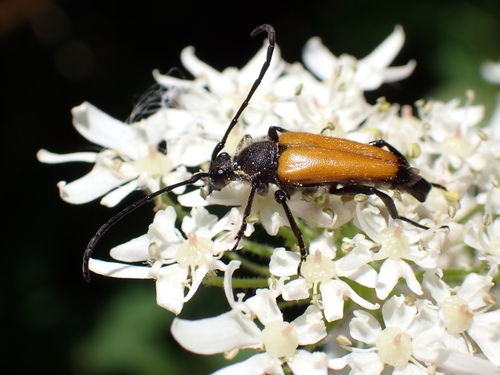
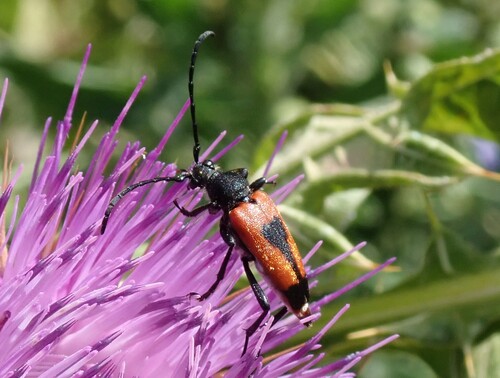
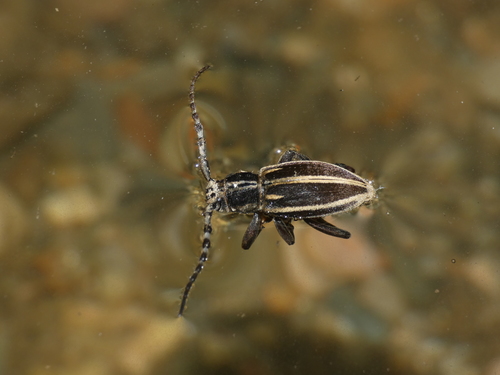
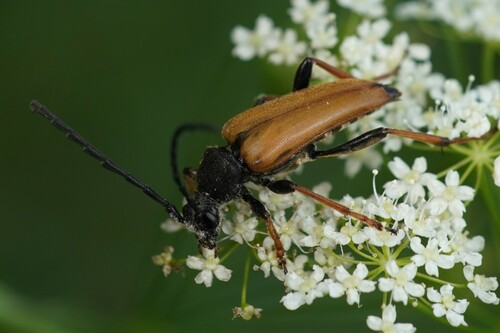
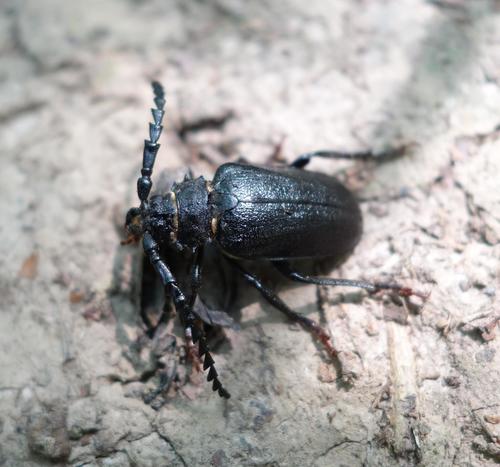
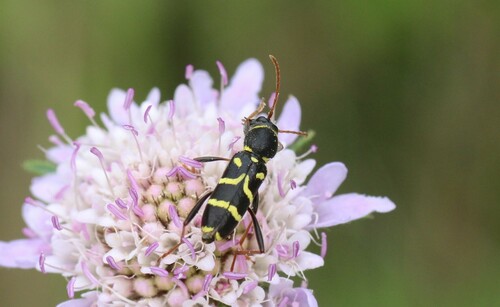
Great Capricorn Beetle

Great Capricorn Beetle

Cerambyx cerdo

Daily sighting probability ~20% · Possible
at Cévennes National Park

In 3 days ~40% in a week ~70%

63 Verified sightings at Cévennes National Park From 2019 to 2026
72 In all 2 parks
July Best month
☀️🌙 Day & Night When it's spotted

About the Great Capricorn Beetle

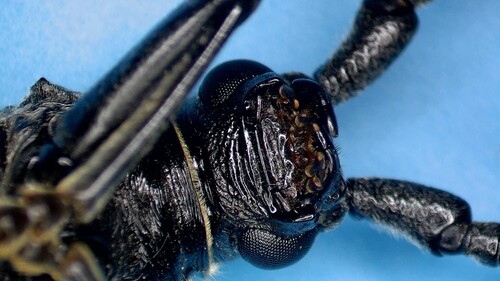
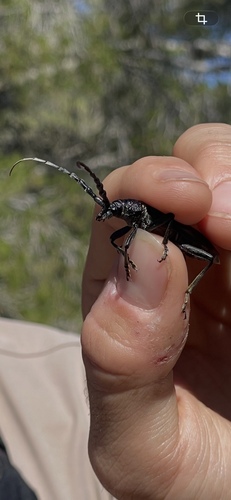
Cerambyx cerdo, commonly known as the great capricorn beetle or cerambyx longicorn, is a species of beetle in family Cerambycidae. It occurs in North Africa (Algeria, Morocco, and Tunisia), Europe (Austria, Belarus, Bulgaria, Croatia, the Czech Republic, North Macedonia, France, Georgia, Germany, Hungary, Italy, Moldova, Poland, Portugal, Romania, Russia, Serbia, Slovakia, Spain, Sweden, Switzerland, and Ukraine), and West Asia (Armenia, Azerbaijan, Georgia, Iran, and Turkey).

The beetle was previously present in the United Kingdom but went locally extinct at least hundreds of years ago. Preserved specimens have been found in the UK, having been dated to around 4000 years old. It has been recorded in the UK since, but this is believed to be because of accidental human introduction due to wood transport.

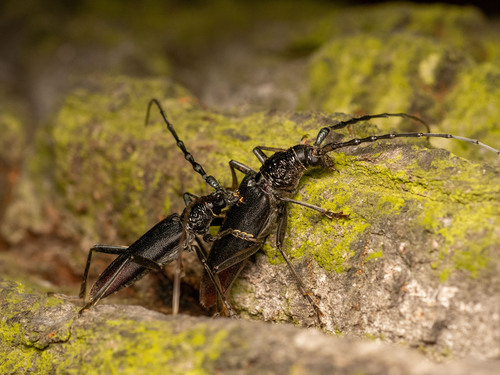
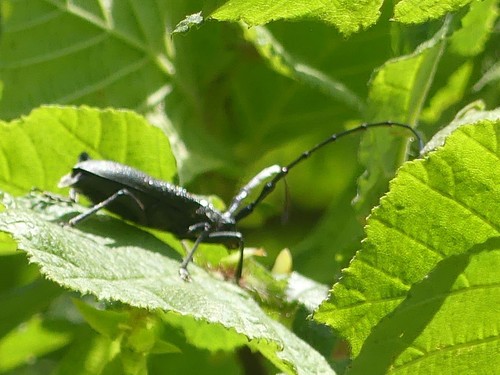
This beetle measures between 41 and 55 mm in body length and is among the largest of the European beetle species. It has an elongated, robust body and, like all members of the longhorn family, it has long antennae. In males, these thread-like antennae are longer than the body, but in females they are only as long as the hard wing cases (the elytra). The legs and body... Wikipedia →
Global Distribution

Parks Where Found

# Park Country Daily sighting probability
1 Cévennes National Park 🇫🇷 France
~20%
2 Pyrénées National Park 🇫🇷 France
<5%

Cities Where Found

# City Country Daily sighting probability
1 Warsaw 🇵🇱 Poland
<5%
2 Paris 🇫🇷 France
<5%
3 Porto 🇵🇹 Portugal
<5%
4 Vienna 🇦🇹 Austria
<5%

Before you go

What are the chances of seeing a Great Capricorn Beetle in Cévennes National Park?

Possible

About 20% of wildlife watchers report a Great Capricorn Beetle sighting in Cévennes National Park on a given day, based on 63 verified sightings from GBIF citizen-science data from 2019 to 2026. It is the 88th most-seen of the 996 insects we can rate there. Over three days the chance rises to about 40%, and over a week to about 70%, if each day is a fresh chance.

When is the best time to see a Great Capricorn Beetle in Cévennes National Park?

July

In that month about 30% of wildlife watchers report a Great Capricorn Beetle in Cévennes National Park on a given day, against under 5% in September and November–April, the lowest months. That is one of Cévennes National Park's driest months, with about 35 mm of rain against 260 mm in October.

What time of day is best to see a Great Capricorn Beetle?

Between 7 and 10 pm

Across all the parks we cover, that three-hour window holds the most Great Capricorn Beetle sightings with a recorded time, and about half of them come between 6 pm and 6 am: it is seen both by day and at night.

Is Cévennes National Park the best place to see a Great Capricorn Beetle?

Yes

Of the 2 parks where we can rate Great Capricorn Beetle sightings, Cévennes National Park has the highest daily chance: about 20%. Next come Pyrénées National Park (France, under 5%).

Which relatives of the Great Capricorn Beetle live in Cévennes National Park?

Same genus: Cerambyx

The closest relatives of the Great Capricorn Beetle that you can see in Cévennes National Park (genus Cerambyx) are Capricorn Beetle (about 10%) and Cerambyx welensii (about 10%), with each one's daily chance of a sighting.

Where does the Great Capricorn Beetle sighting chance come from?

GBIF citizen-science records

It is estimated from how often the Great Capricorn Beetle is recorded against all the insects logged in Cévennes National Park (63 verified sightings from 2019 to 2026), calibrated against known sighting rates. Figures are rounded to the nearest 10% because citizen-science data supports honest approximations, not decimals, and months with records from fewer than five people show "—". How it works.

← Back to Cévennes National Park