Orange Moth

Orange Moth

Angerona prunaria

Daily sighting probability ~10% · With luck
at Cévennes National Park

In 3 days ~20% in a week ~30%

10 Verified sightings at Cévennes National Park From 2019 to 2026
52 In all 3 parks
June Best month
☀️🌙 Day & Night When it's spotted

About the Orange Moth

Angerona is a monotypic genus of moth in the family Geometridae erected by Philogène Auguste Joseph Duponchel in 1829. Its only species, Angerona prunaria, the orange moth, was first described by Carl Linnaeus in his 1758 10th edition of Systema Naturae.

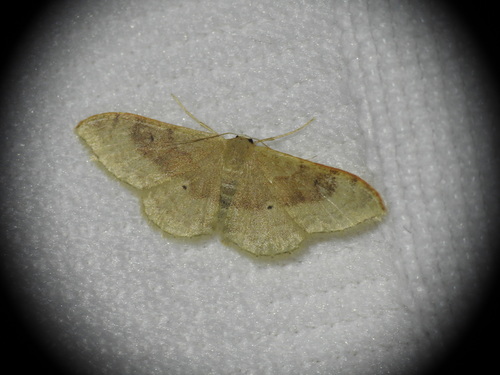
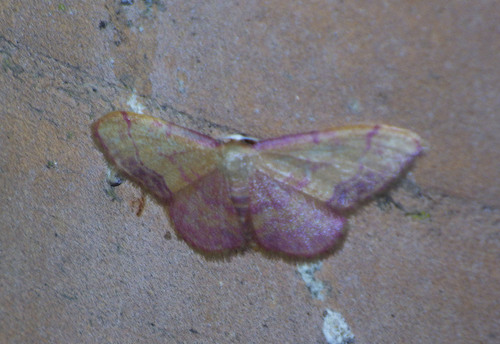
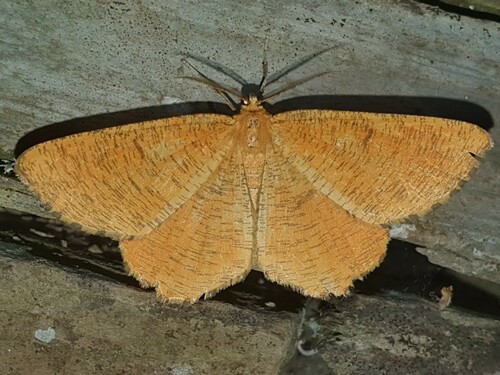
Angerona prunaria is a relatively large and prominent representatives of the geometer moths. It can reach a wingspan of 35–45 mm, rarely up to 56 mm. As in most Lepidoptera, the males are usually slightly smaller than the females.

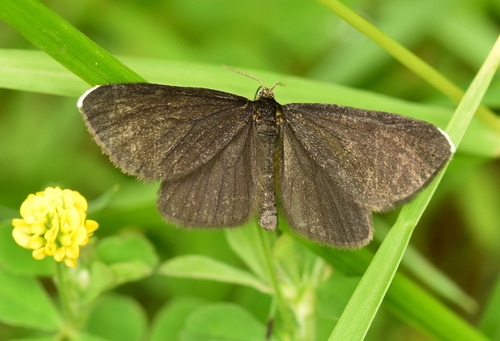
The ground colour is red to orange or yellow. There is a fine grey to almost black cross stippling and a transverse vein spot in females. The fringes have dark spots. The species is very variable. The males of this species are brighter in colour than the females, both sexes can be found in the typical plain orange form, as well as f. corylaria, which exhibits an orange band on a dark brown ground colour.

Angerona prunaria f. spangbergi Lampa. Dark cross-band is missing. Angerona prunaria f. corylaria Thunberg. The basal and marginal areas are darkened olive brown, the discal area remains in the ground colour. Angerona prunaria f. pickettaria Prout. With remnants of the ground... Wikipedia →
Global Distribution

Parks Where Found

# Park Country Daily sighting probability
1 Bavarian Forest National Park 🇩🇪 Germany
~10%
2 Pyrénées National Park 🇫🇷 France
~10%
3 Cévennes National Park 🇫🇷 France
~10%

Cities Where Found

# City Country Daily sighting probability
1 Novosibirsk 🇷🇺 Russia
<5%
2 Nizhny Novgorod 🇷🇺 Russia
<5%
3 Moscow 🇷🇺 Russia
<5%

Before you go

What are the chances of seeing an Orange Moth in Cévennes National Park?

With luck

About 10% of wildlife watchers report an Orange Moth sighting in Cévennes National Park on a given day, based on 10 verified sightings from GBIF citizen-science data from 2019 to 2026. It is the 619th most-seen of the 996 insects we can rate there. Over three days the chance rises to about 20%, and over a week to about 30%, if each day is a fresh chance.

When is the best time to see an Orange Moth in Cévennes National Park?

June and July

In those months about 10% of wildlife watchers report an Orange Moth in Cévennes National Park on a given day, against under 5% in August to May, the lowest months. Those are among Cévennes National Park's driest months, with about 60 mm of rain a month against 260 mm in October.

What time of day is best to see an Orange Moth?

Between 10 pm and 1 am

Across all the parks we cover, that three-hour window holds the most Orange Moth sightings with a recorded time, and about 7 in 10 of them come between 6 pm and 6 am: it is seen both by day and at night.

Is Cévennes National Park the best place to see an Orange Moth?

Among the best

Of the 3 parks where we can rate Orange Moth sightings, Cévennes National Park ranks 3rd at about 10%, level with the leaders once rounded. The best odds are in Bavarian Forest National Park (Germany, about 10%) and Pyrénées National Park (France, about 10%).

Which relatives of the Orange Moth live in Cévennes National Park?

Same family: Geometridae

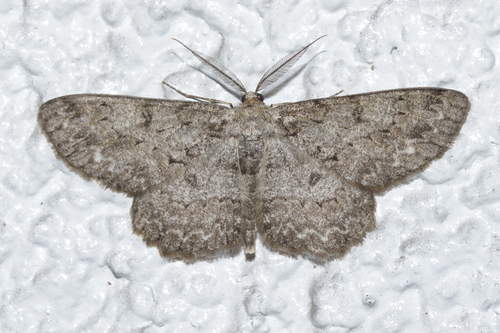
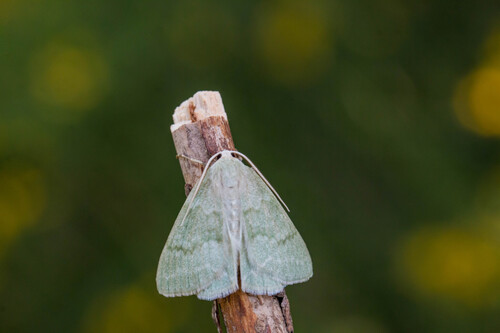
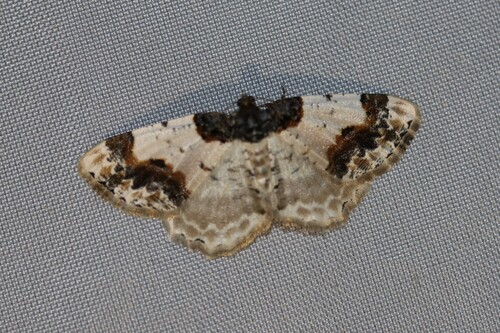
The closest relatives of the Orange Moth that you can see in Cévennes National Park (family Geometridae, Geometer Moths) are Willow Beauty (about 20%), Portland Ribbon Wave (about 10%) and Chimney-Sweeper (about 10%), with each one's daily chance of a sighting.

Where does the Orange Moth sighting chance come from?

GBIF citizen-science records

It is estimated from how often the Orange Moth is recorded against all the insects logged in Cévennes National Park (10 verified sightings from 2019 to 2026), calibrated against known sighting rates. Figures are rounded to the nearest 10% because citizen-science data supports honest approximations, not decimals, and months with records from fewer than five people show "—". How it works.

← Back to Cévennes National Park