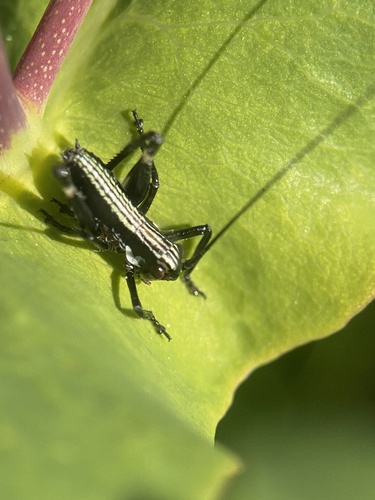
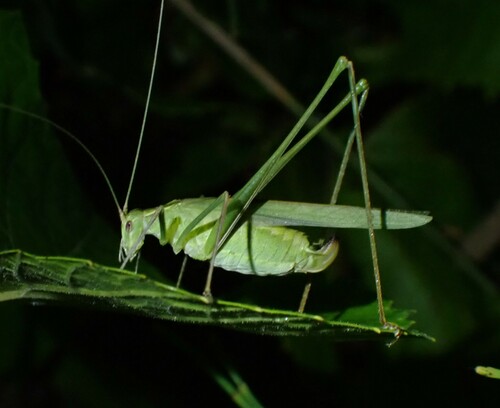
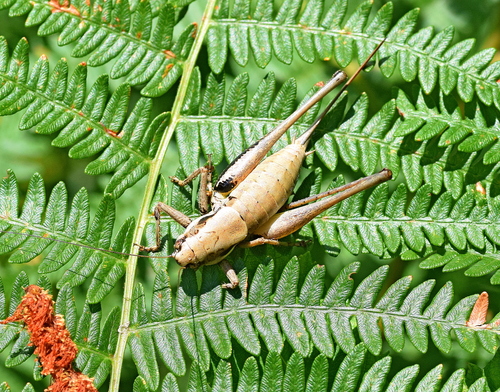
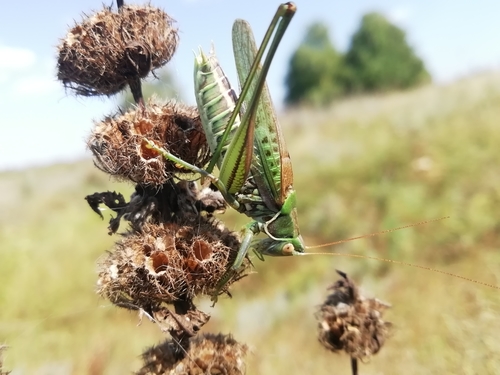
Predatory Bush-Cricket

Predatory Bush-Cricket

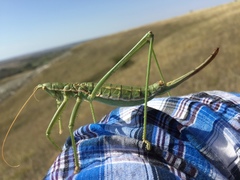
Saga pedo

Daily sighting probability ~10% · With luck
at Cévennes National Park

In 3 days ~20% in a week ~30%

9 Verified sightings at Cévennes National Park From 2019 to 2026
42 In all 3 parks
July Best month
☀️ Diurnal When it's spotted

About the Predatory Bush-Cricket

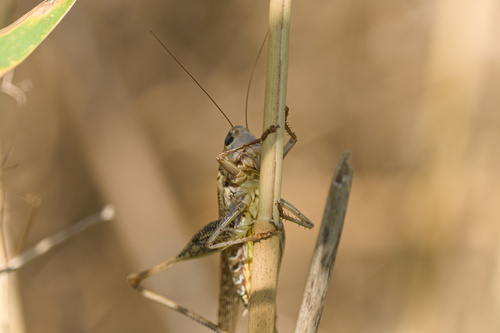
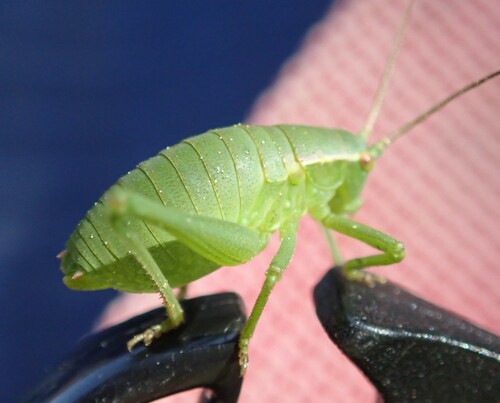
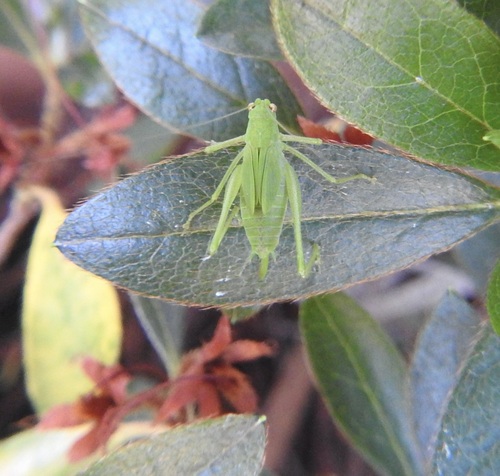
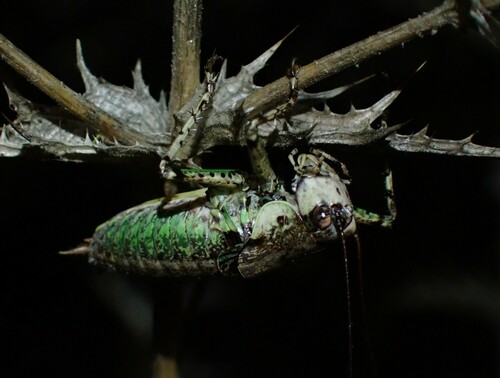
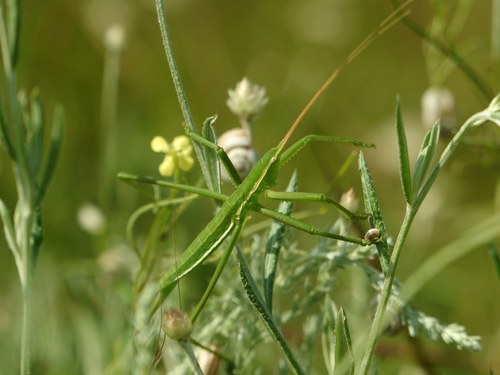
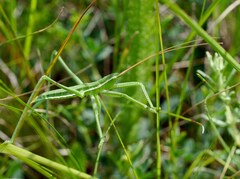
Saga pedo is a species of wingless bush cricket from the southern half of Europe and western and central Asia. This brown or green bush cricket typically has a total length, from the head to the tip of the ovipositor, of up to 10.5 cm (4.1 in), but exceptionally it may reach 12 cm (4.7 in), which makes it one of the largest European insects and one of the world's largest Orthoptera (grasshoppers, crickets and alike). The head-and-body alone typically is 5–7 cm (2.0–2.8 in) long in adults, but may reach up to 7.8 cm (3.1 in).

Colloquially known as the predatory bush cricket, or the spiked magician (due to the "enchanting" manner in which it waves its forelimbs as it approaches its prey), it is unusual due to its strictly carnivorous lifestyle and its parthenogenetic reproduction (only females exist and they breed by themselves).

Saga pedo is a predator that feeds mostly on other Orthoptera, but also frequently on mantises, especially the European mantis. On occasion it may feed on other types of insects and rarely even small lizards. S. pedo also has a tendency towards cannibalism, but adults do not appear to cannibalise other adults. Nymphs are predatory like the adults... Wikipedia →
Global Distribution

Parks Where Found

# Park Country Daily sighting probability
1 Kiskunság National Park 🇭🇺 Hungary
~30%
2 Cévennes National Park 🇫🇷 France
~10%
3 Fertő-Hanság National Park 🇭🇺 Hungary
<5%

Cities Where Found

# City Country Daily sighting probability
1 Madrid 🇪🇸 Spain
<5%

Before you go

What are the chances of seeing a Predatory Bush-Cricket in Cévennes National Park?

With luck

About 10% of wildlife watchers report a Predatory Bush-Cricket sighting in Cévennes National Park on a given day, based on 9 verified sightings from GBIF citizen-science data from 2019 to 2026. It is the 619th most-seen of the 996 insects we can rate there. Over three days the chance rises to about 20%, and over a week to about 30%, if each day is a fresh chance.

When is the best time to see a Predatory Bush-Cricket in Cévennes National Park?

June to August

In those months about 10% of wildlife watchers report a Predatory Bush-Cricket in Cévennes National Park on a given day, against under 5% in September to May, the lowest months. Those are among Cévennes National Park's driest months, with about 60 mm of rain a month against 260 mm in October.

What time of day is best to see a Predatory Bush-Cricket?

Between 1 and 4 pm

Across all the parks we cover, that three-hour window holds the most Predatory Bush-Cricket sightings with a recorded time, and about 8 in 10 of them come between 6 am and 6 pm: it is a daytime animal.

Is Cévennes National Park the best place to see a Predatory Bush-Cricket?

2nd of 3

Of the 3 parks where we can rate Predatory Bush-Cricket sightings, Cévennes National Park ranks 2nd at about 10%. The best odds are in Kiskunság National Park (Hungary, about 30%).

Which relatives of the Predatory Bush-Cricket live in Cévennes National Park?

Same family: Tettigoniidae

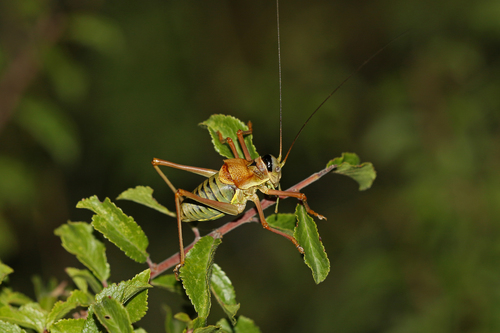
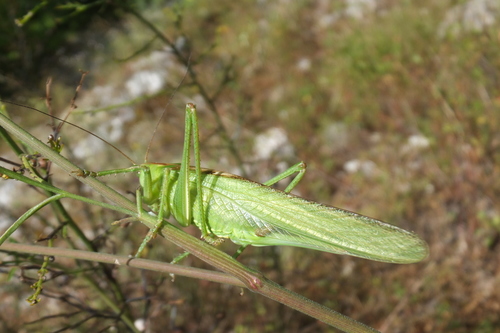
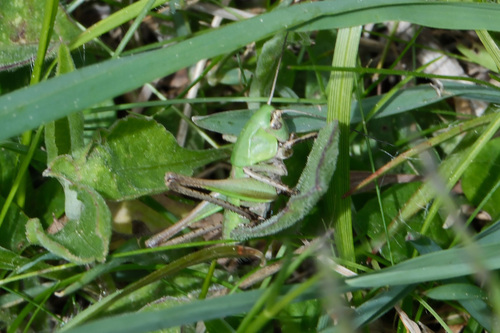
The closest relatives of the Predatory Bush-Cricket that you can see in Cévennes National Park (family Tettigoniidae, Katydids) are Western Saddle Bush-Cricket (about 30%), Great Green Bush-Cricket (about 30%) and Wart-Biter (about 20%), with each one's daily chance of a sighting.

Where does the Predatory Bush-Cricket sighting chance come from?

GBIF citizen-science records

It is estimated from how often the Predatory Bush-Cricket is recorded against all the insects logged in Cévennes National Park (9 verified sightings from 2019 to 2026), calibrated against known sighting rates. Figures are rounded to the nearest 10% because citizen-science data supports honest approximations, not decimals, and months with records from fewer than five people show "—". How it works.

← Back to Cévennes National Park