
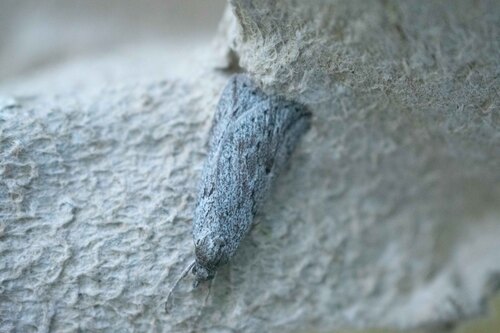
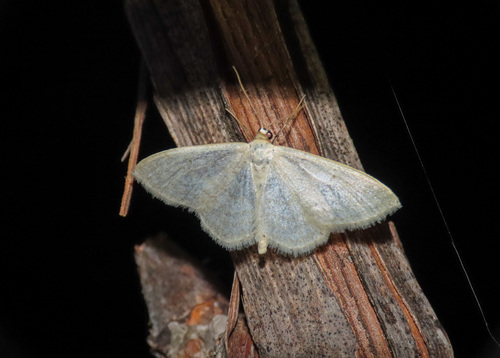
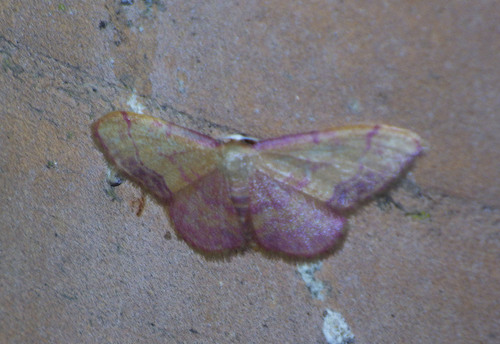
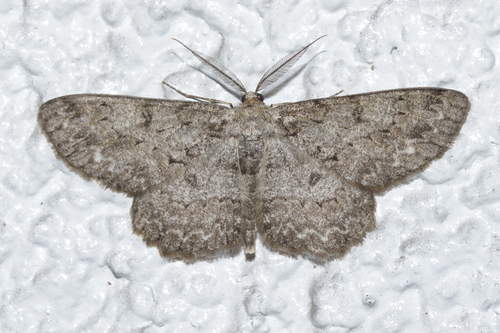
Sussex Emerald

Sussex Emerald

Thalera fimbrialis

Daily sighting probability ~10% · With luck
at Cévennes National Park

In 3 days ~20% in a week ~30%

19 Verified sightings at Cévennes National Park From 2019 to 2026
37 In all 3 parks
July Best month
🌅 Crepuscular When it's spotted

About the Sussex Emerald

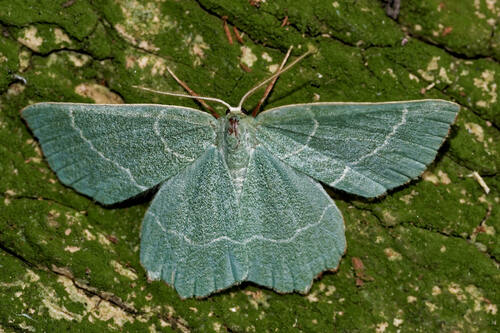
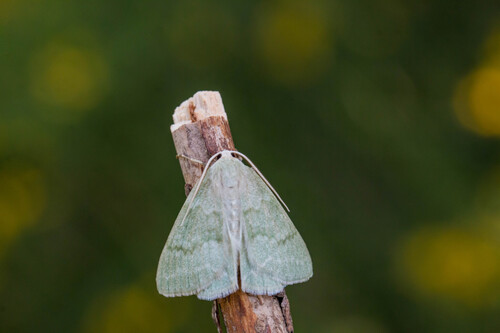
Thalera fimbrialis, the Sussex emerald, is a species of moth of the family Geometridae, found in Europe and across the Palearctic to the area surrounding the Amur River in China. It was described by the Italian physician and naturalist Giovanni Antonio Scopoli in 1763.

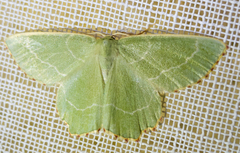
The wingspan is 25–30 mm. The ground colour is green which can fade with increasing lifespan and then assumes yellowish tints. The outer edge of the wings is yellowish, the hair fringes along the edge are alternately white and reddish-brown. The forewing has two white crosslines, the hind wing only a single line as a continuation of the forewing outer line. The hind wing shows a slightly forward corner in the middle, over which there is an indentation.

The moth flies from June to August depending on the location. Larva Larva overwinter part-grown and when fully grown is long and thin, green with a brownish-red dorsal stripe that is sometimes broken up into a variety of spots. The head is divided in two by a deep cleft in the middle. On the front body segment there are a pair of spikes protruding above the head. During ecdysis, the caterpillar eats the discarded skin, possibly for food value or possibly... Wikipedia →

Global Distribution

Parks Where Found

# Park Country Daily sighting probability
1 Aigüestortes National Park 🇪🇸 Spain
~10%
2 Cévennes National Park 🇫🇷 France
~10%
3 Pyrénées National Park 🇫🇷 France
<5%

Before you go

What are the chances of seeing a Sussex Emerald in Cévennes National Park?

With luck

About 10% of wildlife watchers report a Sussex Emerald sighting in Cévennes National Park on a given day, based on 19 verified sightings from GBIF citizen-science data from 2019 to 2026. It is the 619th most-seen of the 996 insects we can rate there. Over three days the chance rises to about 20%, and over a week to about 30%, if each day is a fresh chance.

When is the best time to see a Sussex Emerald in Cévennes National Park?

June and July

In those months about 10% of wildlife watchers report a Sussex Emerald in Cévennes National Park on a given day, against under 5% in August to May, the lowest months. Those are among Cévennes National Park's driest months, with about 60 mm of rain a month against 260 mm in October.

What time of day is best to see a Sussex Emerald?

Between 5 and 8 am

Across all the parks we cover, that three-hour window holds the most Sussex Emerald sightings with a recorded time, and about 6 in 10 of them come between 6 pm and 6 am: it is most active around dawn and dusk.

Is Cévennes National Park the best place to see a Sussex Emerald?

Among the best

Of the 3 parks where we can rate Sussex Emerald sightings, Cévennes National Park ranks 2nd at about 10%, level with the leaders once rounded. The best odds are in Aigüestortes National Park (Spain, about 10%).

Which relatives of the Sussex Emerald live in Cévennes National Park?

Same family: Geometridae

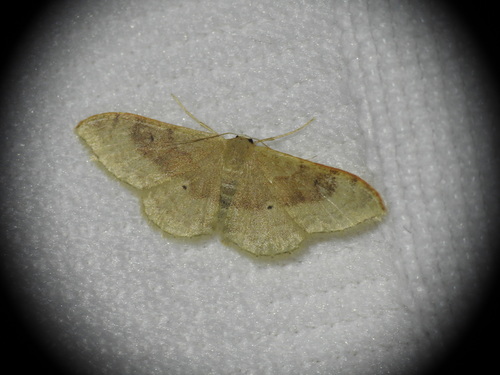
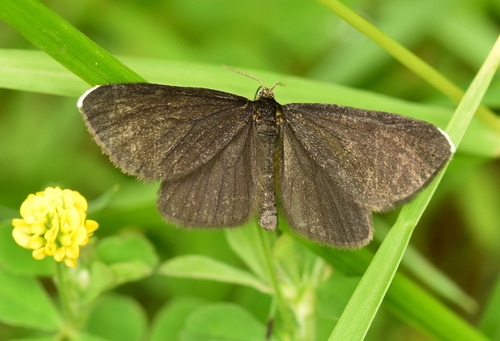
The closest relatives of the Sussex Emerald that you can see in Cévennes National Park (family Geometridae, Geometer Moths) are Willow Beauty (about 20%), Portland Ribbon Wave (about 10%) and Chimney-Sweeper (about 10%), with each one's daily chance of a sighting.

Where does the Sussex Emerald sighting chance come from?

GBIF citizen-science records

It is estimated from how often the Sussex Emerald is recorded against all the insects logged in Cévennes National Park (19 verified sightings from 2019 to 2026), calibrated against known sighting rates. Figures are rounded to the nearest 10% because citizen-science data supports honest approximations, not decimals, and months with records from fewer than five people show "—". How it works.

← Back to Cévennes National Park