Ochre-breasted Brush-Finch

Ochre-breasted Brush-Finch

Atlapetes semirufus

Silhouette: L. Shyamal · PhyloPic

LCLeast ConcernNTVUENCR
Daily sighting probability <5% · Rare
at Chingaza National Natural Park

In 3 days <5% in a week ~10%

15 Verified sightings at Chingaza National Natural Park From 2019 to 2026
74 In all 2 parks
October Best month
☀️ Diurnal When it's spotted

About the Ochre-breasted Brush-Finch

The ochre-breasted brushfinch (Atlapetes semirufus) is a species of bird in the family Passerellidae. It is endemic to the northern Andes, occurring in Colombia and Venezuela. In Colombia, it inhabits elevations of 1,600–3,500 meters, while in Venezuela it is found between 600–2,700 meters. The species is present in several national parks and is not currently considered to face immediate conservation threats. Although relatively common, its breeding biology and life history remain poorly understood, and the population is believed to be in decline.

In 1840 Boissonneau, a French ornithologist and ocularist, first described the Atlapetes semirufus as a bird species in the family Passerellidae found in the montane forests in Columbia and Venezuela, where it occupies subtropical moist environments. This species was first described under the original name Tanagra (Arremon) semirufus.

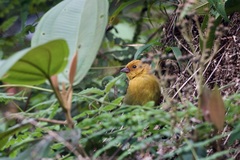
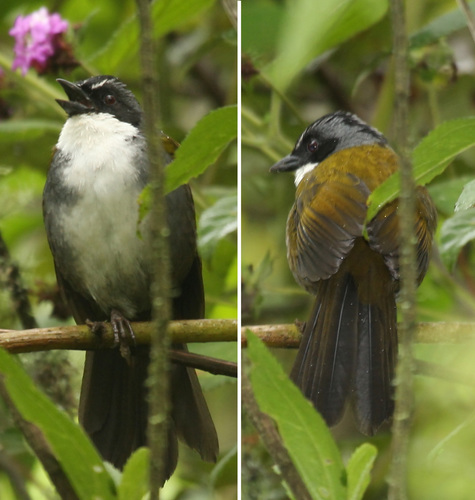
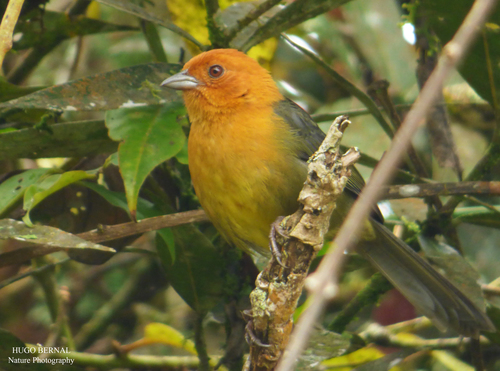
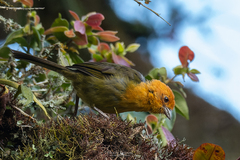
The ochre-breasted brushfinch measures approximately 18 cm in length and weighs between 29–33 g. It is a slim brushfinch with a finely tipped, pointed bill. Adults display a plain tawny-orange coloration from the head to the breast, olive upperparts including wings and tail... Wikipedia →
Sounds

Dawn song1:08

Colombia · 2022

© Rolf A. de By · XC726082 · CC BY-NC-ND 4.0

Song0:56

Colombia · 2019

© Iván Lau · XC593552 · CC BY-NC-SA 4.0

Call0:31

Venezuela · 1997

© Peter Boesman · XC219267 · CC BY-NC-ND 4.0

Global Distribution

Parks Where Found

# Park Country Daily sighting probability
1 Henri Pittier National Park 🇻🇪 Venezuela
~10%
2 Chingaza National Natural Park 🇨🇴 Colombia
<5%

Cities Where Found

# City Country Daily sighting probability
1 Caracas 🇻🇪 Venezuela
<5%

Before you go

What are the chances of seeing an Ochre-breasted Brush-Finch in Chingaza National Natural Park?

Rare

Under 5% of wildlife watchers report an Ochre-breasted Brush-Finch sighting in Chingaza National Natural Park on a given day, based on 15 verified sightings from GBIF citizen-science data from 2019 to 2026. It is the 154th most-seen of the 258 birds we can rate there. Over three days the chance rises to under 5%, and over a week to about 10%, if each day is a fresh chance.

When is the best time to see an Ochre-breasted Brush-Finch in Chingaza National Natural Park?

Any time of year

In every month with enough records, under 5% of wildlife watchers report an Ochre-breasted Brush-Finch in Chingaza National Natural Park on a given day, so our monthly data shows no clear season.

What time of day is best to see an Ochre-breasted Brush-Finch?

Between 10 am and 1 pm

Across all the parks we cover, that three-hour window holds the most Ochre-breasted Brush-Finch sightings with a recorded time, and about 9 in 10 of them come between 6 am and 6 pm: it is a daytime animal.

Is Chingaza National Natural Park the best place to see an Ochre-breasted Brush-Finch?

2nd of 2

Of the 2 parks where we can rate Ochre-breasted Brush-Finch sightings, Chingaza National Natural Park ranks 2nd at under 5%. The best odds are in Henri Pittier National Park (Venezuela, about 10%).

Which relatives of the Ochre-breasted Brush-Finch live in Chingaza National Natural Park?

Same genus: Atlapetes

The closest relatives of the Ochre-breasted Brush-Finch that you can see in Chingaza National Natural Park (genus Atlapetes, Atlapetes Brushfinches) are Pale-naped Brush-Finch (about 50%) and Slaty Brush-Finch (about 30%), with each one's daily chance of a sighting.

Where does the Ochre-breasted Brush-Finch sighting chance come from?

GBIF citizen-science records

It is estimated from how often the Ochre-breasted Brush-Finch is recorded against all the birds logged in Chingaza National Natural Park (15 verified sightings from 2019 to 2026), calibrated against known sighting rates. Figures are rounded to the nearest 10% because citizen-science data supports honest approximations, not decimals, and months with records from fewer than five people show "—". How it works.

← Back to Chingaza National Natural Park