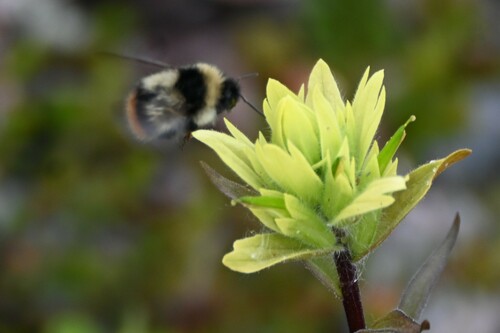
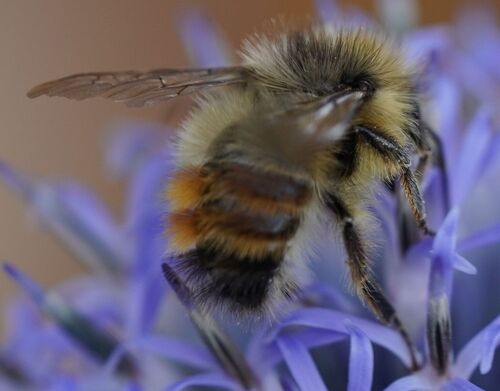
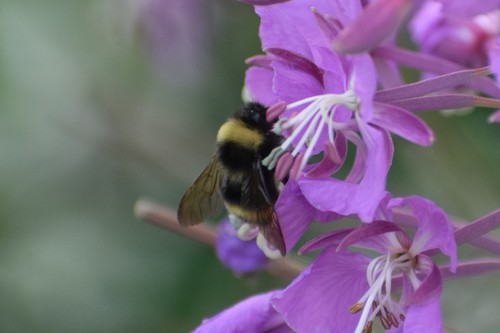
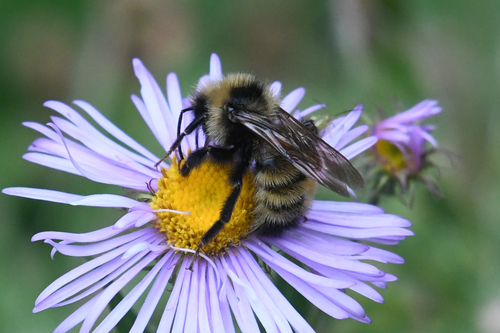
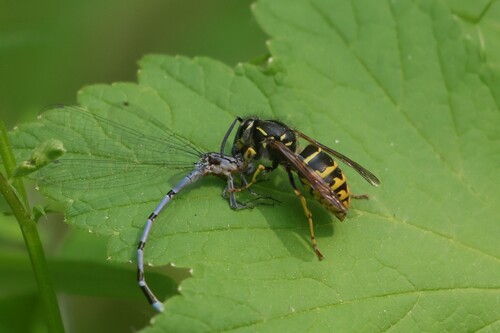
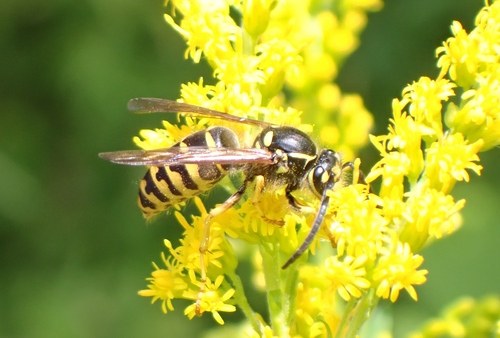
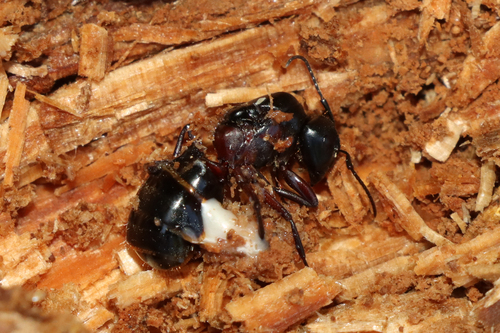
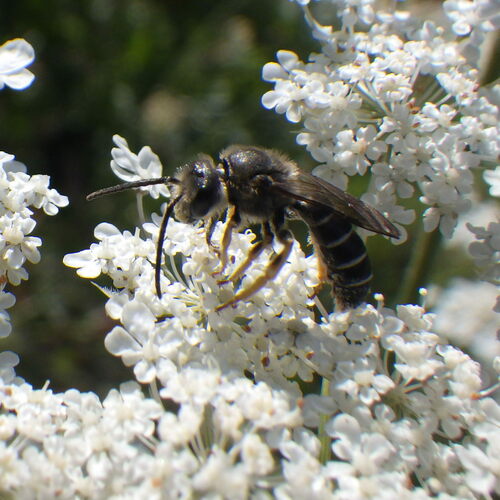
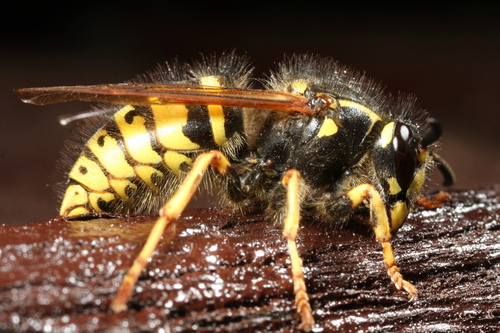
Frigid Bumble Bee

Frigid Bumble Bee

Bombus frigidus

Daily sighting probability ~10% · With luck
at Anchorage

In 3 days ~30% in a week ~60%

23 Verified sightings at Anchorage
48 In all 3 parks From 2019 to 2026
May Best month
☀️ Diurnal When it's spotted

About the Frigid Bumble Bee

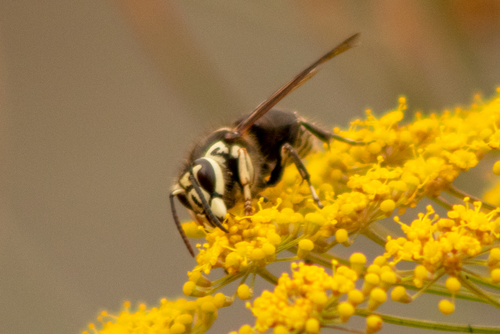
Bombus frigidus, the frigid bumblebee, is a rare species of bumblebee largely found in Canada and parts of the United States. These bees have adapted to their cold environment by being able to keep their internal temperature within a certain range while also being able to expel heat to keep the colony warm. An additional adaptation to the cold is their reduced length of copulation. Also, B. frigidus has developed a relationship with Mertensia paniculata so that the flowers' color signals to the bees when to obtain nectar.

Bombus frigidus was described in 1854 by Frederick Smith in the Catalogue of hymenopterous insects in the collection of the British Museum. Some species from the Appalachians have been included with this species in the past, but not in newer sources. This bee can be confused with Bombus mixtus and Bombus balteatus. Bees in the family Apidae consist of honey bees, bumblebees, and stingless bees.

Bombus frigidus have a yellow thorax and T1–T2. T1–T5 refers to the dorsal abdomen of the bee with T1 being closer to the thorax-abdomen division. A black band is present between the wings (the band may not be there for some males... Wikipedia →

Global Distribution

Parks Where Found

# Park Country Daily sighting probability
1 Wrangell-St. Elias National Park 🇺🇸 United States
~40%
2 Kluane National Park 🇨🇦 Canada
~30%
3 Banff National Park 🇨🇦 Canada
~10%

Cities Where Found

# City Country Daily sighting probability
1 Anchorage 🇺🇸 United States
~10%

Before you go

What are the chances of seeing a Frigid Bumble Bee in Anchorage?

With luck

About 10% of wildlife watchers report a Frigid Bumble Bee sighting in Anchorage on a given day, based on 23 verified sightings from GBIF citizen-science data. It is the 11th most-seen of the 59 insects we can rate there. Over three days the chance rises to about 30%, and over a week to about 60%, if each day is a fresh chance.

When is the best time to see a Frigid Bumble Bee in Anchorage?

May

In that month about 30% of wildlife watchers report a Frigid Bumble Bee in Anchorage on a given day, against under 5% in August to April, the lowest months.

What time of day is best to see a Frigid Bumble Bee?

Between 11 am and 2 pm

Across all the parks we cover, that three-hour window holds the most Frigid Bumble Bee sightings with a recorded time, and nearly all of them come between 6 am and 6 pm: it is a daytime animal.

Where else can you see a Frigid Bumble Bee?

Only Anchorage, in our data

Anchorage is the only city on Wallace's Line with enough records to rate Frigid Bumble Bee sightings: about 10% of wildlife watchers there report one on a given day.

Where does the Frigid Bumble Bee sighting chance come from?

GBIF citizen-science records

It is estimated from how often the Frigid Bumble Bee is recorded against all the insects logged in Anchorage (23 verified sightings), calibrated against known sighting rates. Figures are rounded to the nearest 10% because citizen-science data supports honest approximations, not decimals, and months with records from fewer than five people show "—". How it works.

← Back to Anchorage