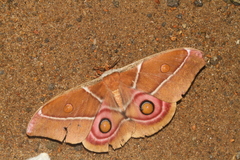
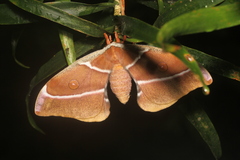
Suraka Silk Moth

Suraka Silk Moth

Antherina suraka

Daily sighting probability ~10% · With luck
at Antananarivo

In 3 days ~40% in a week ~60%

6 Verified sightings at Antananarivo
17 In 1 park From 2019 to 2026
January Best month
☀️🌙 Day & Night When it's spotted

About the Suraka Silk Moth

Antherina is a monotypic moth genus in the family Saturniidae erected by William Elford Leach in 1815. Its only species, Antherina suraka, the Suraka silk moth, was first described by Jean Baptiste Boisduval in 1833. It is found on Madagascar and Mayotte. Both larvae and pupae consumed in parts of Madagascar, but not to a great extent. The larvae feed on oleander, privet, willows, beech, Liquidambar, Crataegus (hawthorns), grapevine, lilac, cherry, laurel, Forsythia, Rhus, Pistacia, apple, pear, plum and peach leaves, but foodplants differ from species to species. They start off black with yellow protrusions to eventually green with red and yellow on their bodies. Once they've finished growing they will be as thick as your finger and when they have reached their final days as a caterpillar they will develop a blue dorsal stripe and wander around looking for a place to pupate. Wikipedia →

Global Distribution

Parks Where Found

# Park Country Daily sighting probability
1 Ranomafana National Park 🇲🇬 Madagascar
~30%

More parks will be added in future updates.

Cities Where Found

# City Country Daily sighting probability
1 Antananarivo 🇲🇬 Madagascar
~10%

Before you go

What are the chances of seeing a Suraka Silk Moth in Antananarivo?

With luck

About 10% of wildlife watchers report a Suraka Silk Moth sighting in Antananarivo on a given day, based on 6 verified sightings from GBIF citizen-science data. It is the 48th most-seen of the 59 insects we can rate there. Over three days the chance rises to about 40%, and over a week to about 60%, if each day is a fresh chance.

When is the best time to see a Suraka Silk Moth in Antananarivo?

January

In that month about 40% of wildlife watchers report a Suraka Silk Moth in Antananarivo on a given day, against under 5% in February, April–September and November–December, the lowest months. That is one of Antananarivo's wettest months, with about 480 mm of rain against 45 mm in September.

What time of day is best to see a Suraka Silk Moth?

Between noon and 3 pm

Across all the parks we cover, that three-hour window holds the most Suraka Silk Moth sightings with a recorded time, and about half of them come between 6 am and 6 pm: it is seen both by day and at night.

Where else can you see a Suraka Silk Moth?

Only Antananarivo, in our data

Antananarivo is the only city on Wallace's Line with enough records to rate Suraka Silk Moth sightings: about 10% of wildlife watchers there report one on a given day.

Which relatives of the Suraka Silk Moth live in Antananarivo?

Same order: Lepidoptera

The closest relatives of the Suraka Silk Moth that you can see in Antananarivo (order Lepidoptera, Butterflies and Moths) are Royal Blue Pansy (about 60%), African Grass Blue (about 40%) and Island Brown Pansy (about 40%), with each one's daily chance of a sighting.

Where does the Suraka Silk Moth sighting chance come from?

GBIF citizen-science records

It is estimated from how often the Suraka Silk Moth is recorded against all the insects logged in Antananarivo (6 verified sightings), calibrated against known sighting rates. Figures are rounded to the nearest 10% because citizen-science data supports honest approximations, not decimals, and months with records from fewer than five people show "—". How it works.

← Back to Antananarivo