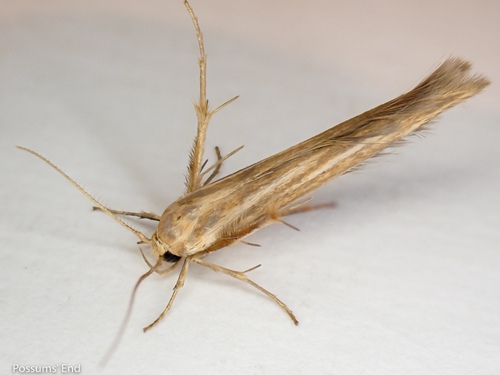
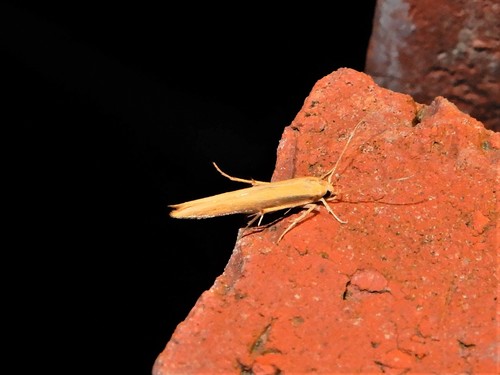
About the Kowhai Seed Moth
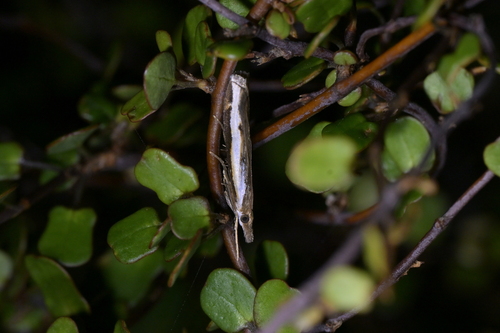
Stathmopoda aposema or the Kowhai seed moth, is a species of moth of the family Stathmopodidae. It was first described by Edward Meyrick in 1901. This species is endemic in New Zealand and has been observed in both the North and South Islands. This moth inhabits native forest and scrub and can also be found in sand dune habitat, residential gardens and commercial orchards. Eggs are laid on the seed pods of its host plants, species in the genus Sophora.
Larvae bore into the pods and seeds of their hosts and then overwinter within those seeds. In the New Zealand early spring the larvae feed on the seeds and then pupate within them in a silken cocoon. Research suggests that constant temperatures above 22°C during the larval stage of development renders the adult moths infertile.
Adults begin to emerge in October. Adults are attracted to light and are most commonly observed from October until December. This species plays host to the parasitic wasp Meteorus luteus. This species was first described by Edward Meyrick in 1901 using a specimen he collected in Auckland in December. It was discussed and illustrated by George Hudson in his 1928 book The butterflies and moths... Wikipedia →