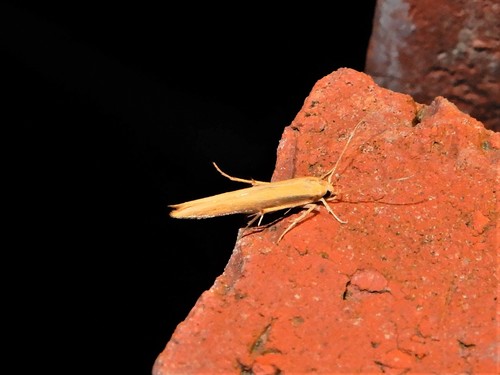
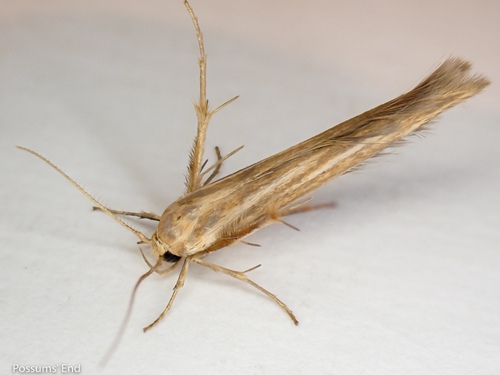
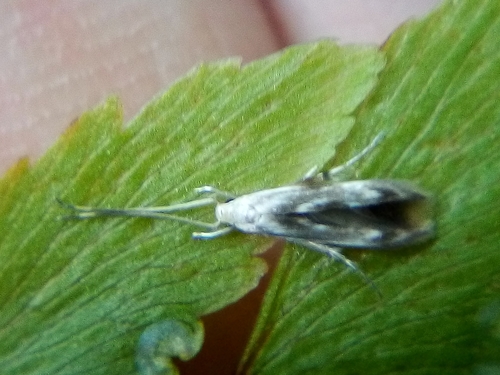
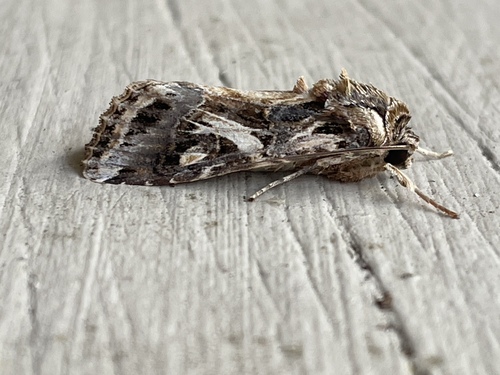
About the Yellow Featherfoot
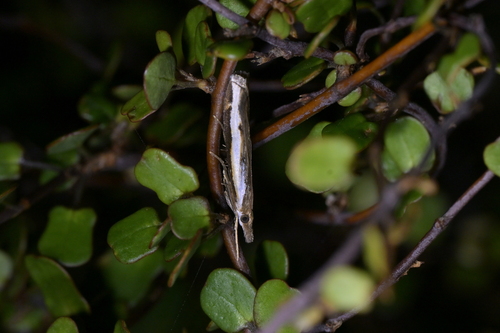
Stathmopoda skelloni, the yellow featherfoot, is a species of moth in the Stathmopodidae family. It is endemic to New Zealand and can be found throughout the country. This species inhabits native forest, coastal dunes and shrubland as well as cultivated gardens and orchards. The larvae of this species feed on a variety of plant species including agricultural crops such as kiwifruit and persimmons. This species is therefore regarded as an agricultural pest. Larvae have been observed as being parasitised by the fly species Trigonospila brevifacies.
The adult moths are on the wing from September until March and are nocturnal but are attracted to light. It has been hypothesised that constant ambient temperatures above 22°C during the larval stage of development renders adult moths of this species infertile.
This species was first described by Arthur Gardiner Butler in 1880 and named Boocara skelloni. Butler named this species in honour of William Skellon who had sent various specimens he had collected in Blenheim to Butler. In 1889 Edward Meyrick placed this species within the genus Stathmopoda. In 1921 Meyrick synonymised Stathmopoda fusilis with Stathmopoda phlegyra,... Wikipedia →