
Cuban Treefrog

Cuban Treefrog

Osteopilus septentrionalis

Silhouette: Dmitry Bogdanov (vectorized by T. Michael Keesey) · PhyloPic

LCLeast ConcernNTVUENCR
Daily sighting probability <5% · Rare
at Austin

In 3 days ~10% in a week ~20%

5 Verified sightings at Austin
709 In all 4 parks From 2019 to 2026
November Best month
☀️🌙 Day & Night When it's spotted

About the Cuban Treefrog

The Cuban tree frog (Osteopilus septentrionalis) is a large species of tree frog that is native to Cuba, the Bahamas, and the Cayman Islands; but has become invasive in several other places around the Americas. Its wide diet and ability to thrive in urban areas has made it a highly invasive species with established colonies in places such as Florida, the Hawaiian island of Oahu, and the Caribbean Islands. These tree frogs can vary in size from 2 to 5.5 inches (5 to 12.7 cm) in length. Due to their large size, Cuban tree frogs can eat a wide variety of things, particularly native tree frogs, and their removal has shown to result in an increase in the amount of native tree frogs in an area. The tadpoles of Cuban tree frogs also heavily compete with native frog tadpoles, which can cause negative effects in body mass, size at metamorphosis, and growth rates for the native tadpoles.

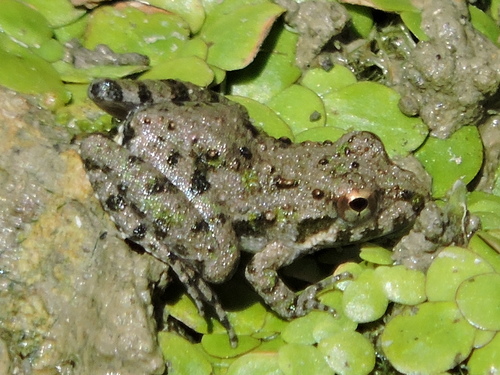
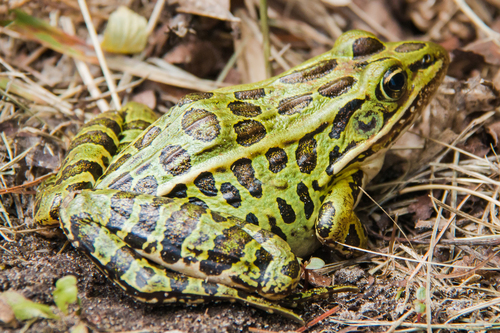
Cuban tree frogs are the largest tree frogs in North America, ranging from 2 to 5.5 inches or (5 to 12.7 cm) in length. Cuban tree frogs are mostly gray, brown, or green, with young frogs having more green coloration than adults. These frogs have rough, warty skin with blotchy or mottled patterning... Wikipedia →

Sounds

Advertisement call0:14

United States · 2018

© Chris Harrison · XC891003 · CC BY-NC-SA 4.0

Recording0:05

United States · 2026

© Connor Gordon · iNaturalist · CC BY-NC 4.0

Recording0:32

United States · 2025

© ocnchikergirl · iNaturalist · CC BY-NC 4.0

Global Distribution

Parks Where Found

# Park Country Daily sighting probability
1 Big Cypress National Preserve 🇺🇸 United States
~50%
2 Ciénaga de Zapata 🇨🇺 Cuba
~40%
3 Everglades National Park 🇺🇸 United States
~40%
4 Merritt Island National Wildlife Refuge 🇺🇸 United States
~20%

Cities Where Found

# City Country Daily sighting probability
1 Orlando 🇺🇸 United States
~30%
2 Miami 🇺🇸 United States
~30%
3 Havana 🇨🇺 Cuba
~30%
4 Austin 🇺🇸 United States
<5%
5 New York City 🇺🇸 United States
<5%

Zoos & Centres Where Found

# Zoo / Centre Country
1 Audubon Zoo 🇺🇸 United States In captivity
2 ZooTampa 🇺🇸 United States In captivity
3 Houston Zoo 🇺🇸 United States In captivity
4 Wild Bird Fund 🇺🇸 United States In captivity

Closest Relatives at Austin

Before you go

What are the chances of seeing a Cuban Treefrog in Austin?

Rare

Under 5% of wildlife watchers report a Cuban Treefrog sighting in Austin on a given day, based on 5 verified sightings from GBIF citizen-science data. It is the 13th most-seen of the 13 amphibians we can rate there. Over three days the chance rises to about 10%, and over a week to about 20%, if each day is a fresh chance.

When is the best time to see a Cuban Treefrog in Austin?

Any time of year

In every month with enough records, under 5% of wildlife watchers report a Cuban Treefrog in Austin on a given day, so our monthly data shows no clear season.

What time of day is best to see a Cuban Treefrog?

Between 8 and 11 pm

Across all the parks we cover, that three-hour window holds the most Cuban Treefrog sightings with a recorded time, and about 6 in 10 of them come between 6 pm and 6 am: it is seen both by day and at night.

Is Austin the best place to see a Cuban Treefrog?

4th of 5

Of the 5 cities where we can rate Cuban Treefrog sightings, Austin ranks 4th at under 5%. The best odds are in Orlando (United States, about 30%), Miami (United States, about 30%) and Havana (Cuba, about 30%).

Which relatives of the Cuban Treefrog live in Austin?

Same family: Hylidae

The closest relatives of the Cuban Treefrog that you can see in Austin (family Hylidae, Hylid Tree Frogs) are Blanchard's Cricket Frog (about 10%) and Green Treefrog (about 10%), with each one's daily chance of a sighting.

Where does the Cuban Treefrog sighting chance come from?

GBIF citizen-science records

It is estimated from how often the Cuban Treefrog is recorded against all the amphibians logged in Austin (5 verified sightings), calibrated against known sighting rates. Figures are rounded to the nearest 10% because citizen-science data supports honest approximations, not decimals, and months with records from fewer than five people show "—". How it works.

← Back to Austin