About the Asian Bush Mosquito
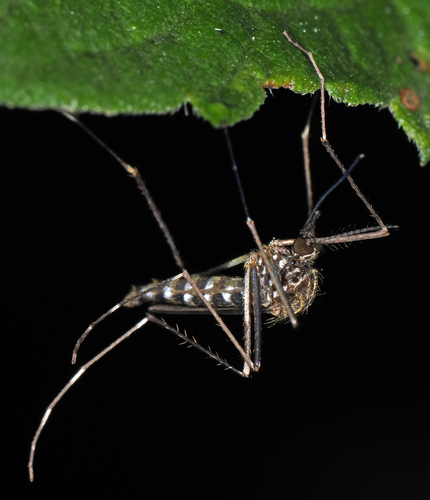
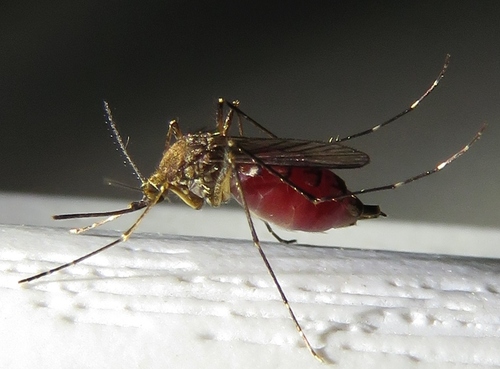
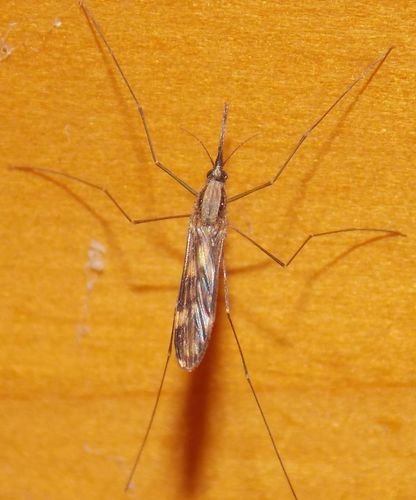
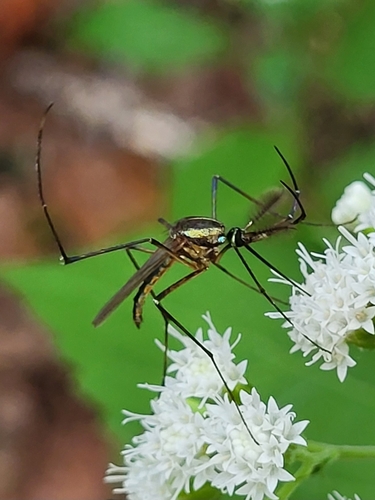
Aedes japonicus, commonly known as the Asian bush mosquito or the Asian rock pool mosquito, was first described by Theobald in 1901 from Tokyo, Japan. They are competent arbovirus vectors known to transmit the West Nile virus as well as Japanese and St. Louis encephalitis. They are listed as an invasive species by the Global Invasive Species Database.
Adults live in forested areas and are day biters, but are apparently reluctant to bite humans. In the laboratory, they feed on chicks and mice but not on reptiles or amphibians. Larvae occur in a wide variety of natural and artificial water retainers such as tree holes and rock holes, usually preferring shaded places and water rich in organic matter. They are found from early spring to early autumn in their native habitat of Central Japan. They overwinter as eggs in cooler regions and larvae in warmer regions.
Adults have a distinctive bronze-colored... Wikipedia →