About the Pigeon Louse Fly
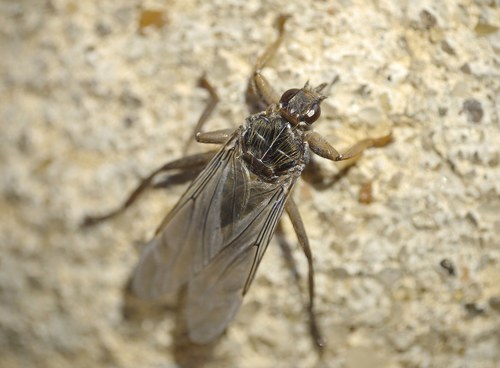
Pseudolynchia canariensis, the pigeon louse fly or pigeon fly, is a species of biting fly in the family of louse flies, Hippoboscidae. Pseudolynchia canariensis are species-specific (Columbidae) obligate ectoparasites potentially found in many parts of world where domestic pigeons are kept. Known from wild or feral hosts in continental Africa, the Mediterranean Sub-region, Afghanistan, India, Bangladesh, Nepal, Thailand, Taiwan, Ryukyu Islands, the Philippines, Malaya, and Indonesia, as well as North America and South America in warmer latitudes.
In 1931, G. Robert Coatney conducted an experiment to determine if pigeon louse flies would bite humans and survive on human blood and he found they could not. The only wild hosts are pigeons and doves (Columbidae). In domestic settings they have been recorded from 33 genera, 13 families and 8 orders of birds.
Pseudolynchia canariensis is the definitive host (sexual reproduction takes place in the insect vector) for the protozoan Haemoproteus columbae or pigeon malaria and transmits this parasite to Columbiformes. This parasite can be fatal to young rock pigeons in extremely infected birds... Wikipedia →