Giant Asian Mantis

Giant Asian Mantis

Hierodula patellifera

Daily sighting probability ~10% · With luck
at Beijing

In 3 days ~30% in a week ~60%

88 Verified sightings at Beijing
94 In 1 park From 2019 to 2026
September Best month
☀️ Diurnal When it's spotted

About the Giant Asian Mantis

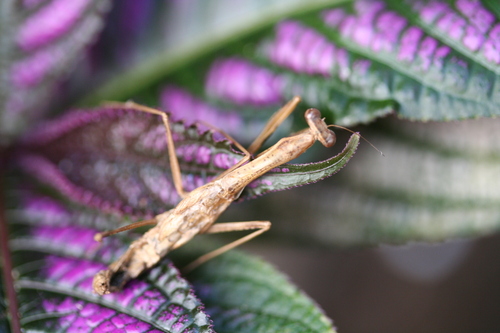
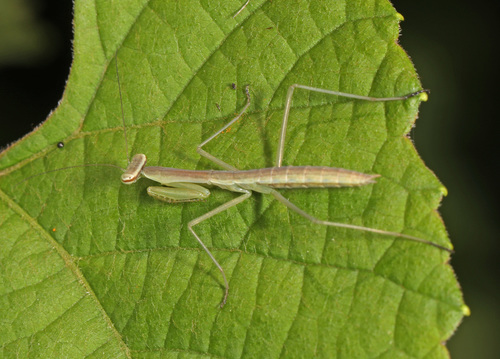
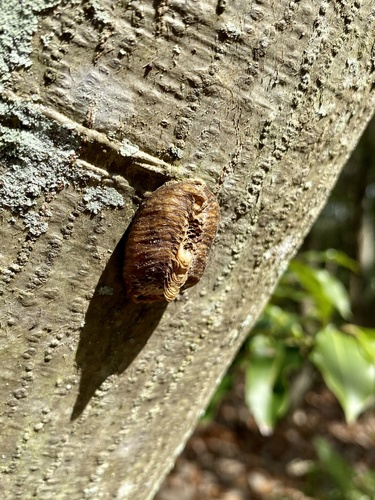
Hierodula patellifera, commonly known as giant Asian mantis, Asian mantis, or Indochina mantis, is a species of praying mantis in the family Mantidae. They are found in Malaysia, Hawaii, India, Nepal, Italy (San Paolo Solbrito), Indonesia (Java, West Sumba,), Korean Peninsula, Philippines, New Guinea, southern China, Taiwan, Vietnam, and Japan (Honshu, Shikoku, Kyushu, Okinawa). H. patellifera lives in trees and in grasslands at the edges of forests.

H. patellifera is a species that is part of the subfamily Hierodulinae. A distinct appearance makes this species recognizable owing to its elongated prothorax and slender body, which contributes to an overall stick-like structure. This species can be seen around the southeast Asia region, inhabiting grasslands and forest where it can effectively camouflage. Males are about 5.19 cm long while females range from 6.06 cm long, with individual variation into two different colours, green or brown. Significant morphological diversity has been observed within this species across populations. Research has observed variation of body size, shape of spines in the forelegs and genitalia size in specimens from Korea, Okinawa, Java... Wikipedia →
Global Distribution

Parks Where Found

# Park Country Daily sighting probability
1 Taroko National Park 🇹🇼 Taiwan
~40%

More parks will be added in future updates.

Cities Where Found

# City Country Daily sighting probability
1 Xiuying District 🇨🇳 China
~40%
2 Busan 🇰🇷 South Korea
~40%
3 Naha 🇯🇵 Japan
~40%
4 Tuen Mun 🇨🇳 China
~30%
5 Seoul 🇰🇷 South Korea
~30%
6 Hefei 🇨🇳 China
~30%
7 Nagoya 🇯🇵 Japan
~30%
8 Daejeon 🇰🇷 South Korea
~30%
9 Taichung 🇹🇼 Taiwan
~30%
10 Surakarta 🇮🇩 Indonesia
~20%

Zoos & Centres Where Found

# Zoo / Centre Country
1 Audubon Zoo 🇺🇸 United States In captivity

Before you go

What are the chances of seeing a Giant Asian Mantis in Beijing?

With luck

About 10% of wildlife watchers report a Giant Asian Mantis sighting in Beijing on a given day, based on 88 verified sightings from GBIF citizen-science data. It is the 22nd most-seen of the 401 insects we can rate there. Over three days the chance rises to about 30%, and over a week to about 60%, if each day is a fresh chance.

When is the best time to see a Giant Asian Mantis in Beijing?

July to September

In those months about 20% of wildlife watchers report a Giant Asian Mantis in Beijing on a given day, against under 5% in March and November–December, the lowest months. Those are among Beijing's wettest months, with about 110 mm of rain a month against almost none in January.

What time of day is best to see a Giant Asian Mantis?

Between 1 and 4 pm

Across all the parks we cover, that three-hour window holds the most Giant Asian Mantis sightings with a recorded time, and nearly all of them come between 6 am and 6 pm: it is a daytime animal.

Is Beijing the best place to see a Giant Asian Mantis?

32nd of 39

Of the 39 cities where we can rate Giant Asian Mantis sightings, Beijing ranks 32nd at about 10%. The best odds are in Xiuying District (China, about 40%), Busan (South Korea, about 40%) and Naha (Japan, about 40%).

Which relatives of the Giant Asian Mantis live in Beijing?

Same family: Mantidae

The closest relatives of the Giant Asian Mantis that you can see in Beijing (family Mantidae, Mantids) are Asian Jumping Mantis (about 10%) and Chinese Mantis (about 10%), with each one's daily chance of a sighting.

Where does the Giant Asian Mantis sighting chance come from?

GBIF citizen-science records

It is estimated from how often the Giant Asian Mantis is recorded against all the insects logged in Beijing (88 verified sightings), calibrated against known sighting rates. Figures are rounded to the nearest 10% because citizen-science data supports honest approximations, not decimals, and months with records from fewer than five people show "—". How it works.

← Back to Beijing