Hawthorn Fly

Hawthorn Fly

Bibio marci

Daily sighting probability ~10% · With luck
at Berlin

In 3 days ~20% in a week ~50%

79 Verified sightings at Berlin
16 In all 2 parks From 2019 to 2026
April Best month
☀️ Diurnal When it's spotted

About the Hawthorn Fly

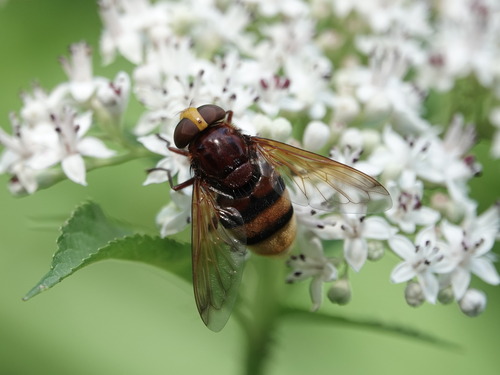
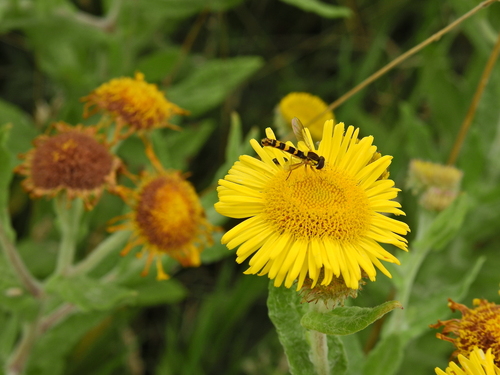
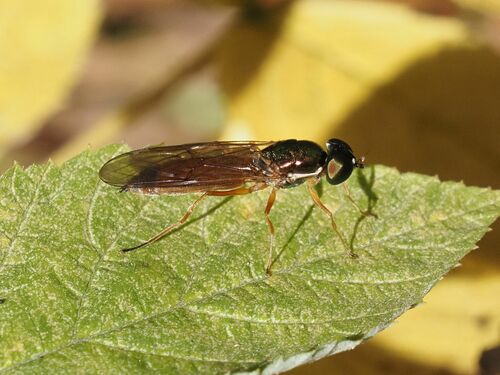
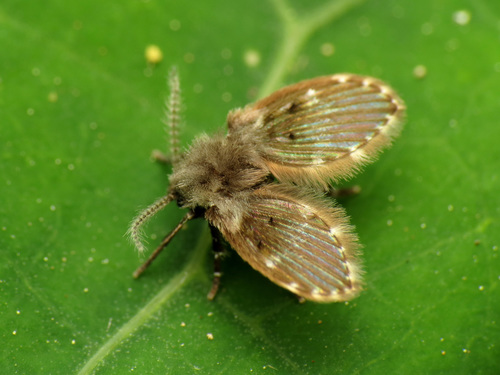
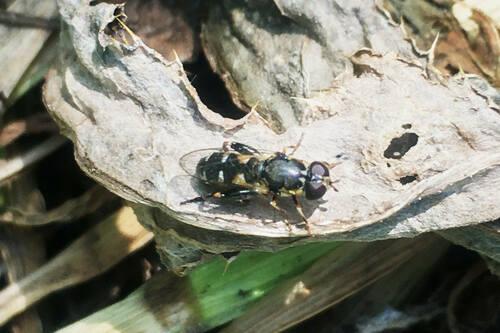
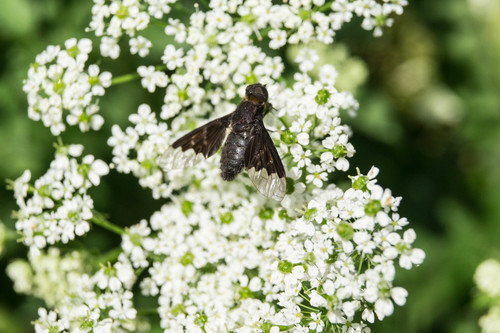
Bibio marci or St. Mark's fly or hawthorn fly, is a species of fly from the family Bibionidae. It is found across much of Europe. Their common name comes from the fact that the adults usually emerge around St Mark's Day, 25 April.

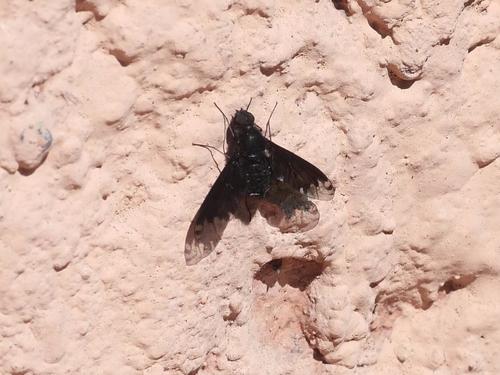
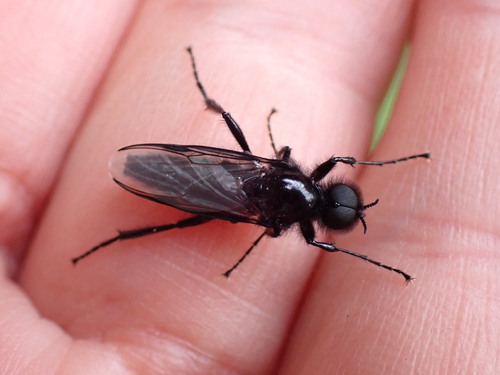
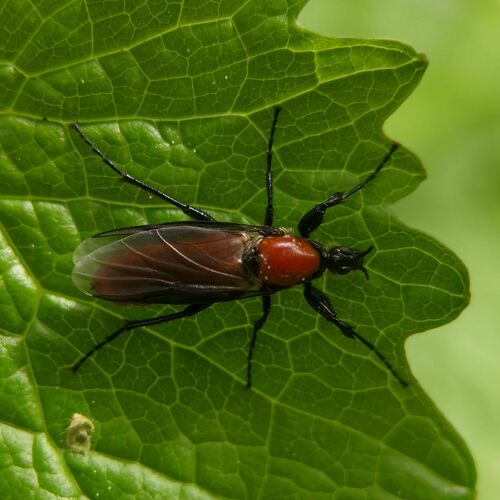
Adult specimens are usually 12-14mm in length. They can be observed hovering with their prominent legs dangling below. The adults feed on nectar and are considered an important pollinator. The body is entirely shiny black and covered in dark hairs, and the wings are translucent or milky-white with prominent dark veins along the leading costal margin.

The species exhibits sexual dimorphism in eye structure: Males have large eyes that meet at the top of the head (holoptic), divided horizontally into upper and lower sections. Females have smaller compound eyes set far apart on the sides of the head (dichoptic).

Like most bibionid larvae, they grow up in grassy areas and are herbivores and scavengers feeding on dead vegetation or living plant roots. Adult females usually lay their eggs in soil or decomposing vegetation. Bibio marci larvae are known to be root damage pests of celery, asparagus, roses, saxifrages... Wikipedia →
Global Distribution

Parks Where Found

# Park Country Daily sighting probability
1 Bavarian Forest National Park 🇩🇪 Germany
~10%
2 Wadden Sea National Park 🇩🇪 Germany
<5%

Cities Where Found

# City Country Daily sighting probability
1 Berlin 🇩🇪 Germany
~10%
2 Liverpool 🇬🇧 United Kingdom
~10%
3 Kharkiv 🇺🇦 Ukraine
~10%
4 Kyiv 🇺🇦 Ukraine
~10%
5 Turin 🇮🇹 Italy
~10%
6 Brussels 🇧🇪 Belgium
~10%
7 Prague 🇨🇿 Czechia
~10%
8 Helsinki 🇫🇮 Finland
~10%
9 Paris 🇫🇷 France
~10%
10 Hamburg 🇩🇪 Germany
~10%

Before you go

What are the chances of seeing a Hawthorn Fly in Berlin?

With luck

About 10% of wildlife watchers report a Hawthorn Fly sighting in Berlin on a given day, based on 79 verified sightings from GBIF citizen-science data. It is the 125th most-seen of the 1065 insects we can rate there. Over three days the chance rises to about 20%, and over a week to about 50%, if each day is a fresh chance.

When is the best time to see a Hawthorn Fly in Berlin?

April and May

In those months about 20% of wildlife watchers report a Hawthorn Fly in Berlin on a given day, against under 5% in June to March, the lowest months.

What time of day is best to see a Hawthorn Fly?

Between 2 and 5 pm

Across all the parks we cover, that three-hour window holds the most Hawthorn Fly sightings with a recorded time, and about 8 in 10 of them come between 6 am and 6 pm: it is a daytime animal.

Is Berlin the best place to see a Hawthorn Fly?

Yes

Of the 19 cities where we can rate Hawthorn Fly sightings, Berlin has the highest daily chance: about 10%. Next come Liverpool (United Kingdom, about 10%) and Kharkiv (Ukraine, about 10%).

Where does the Hawthorn Fly sighting chance come from?

GBIF citizen-science records

It is estimated from how often the Hawthorn Fly is recorded against all the insects logged in Berlin (79 verified sightings), calibrated against known sighting rates. Figures are rounded to the nearest 10% because citizen-science data supports honest approximations, not decimals, and months with records from fewer than five people show "—". How it works.

← Back to Berlin