Lilac Beauty

Lilac Beauty

Apeira syringaria

Daily sighting probability <5% · Rare
at Berlin

In 3 days ~10% in a week ~20%

5 Verified sightings at Berlin
8 In 1 park From 2019 to 2026
August Best month
☀️ Diurnal When it's spotted

About the Lilac Beauty

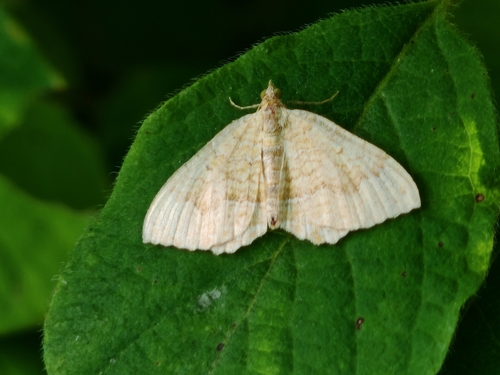
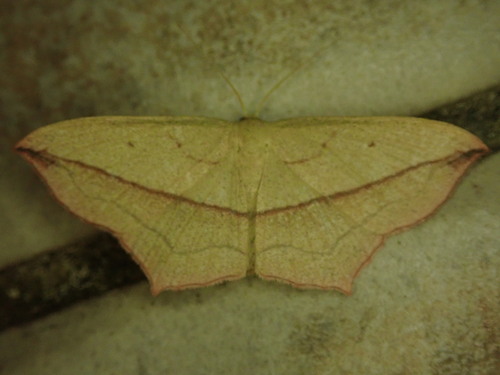
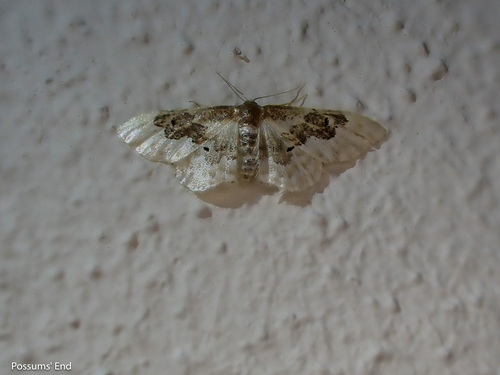
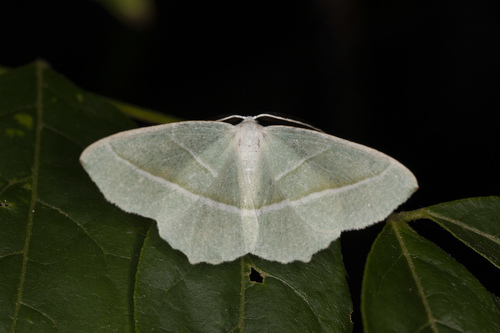
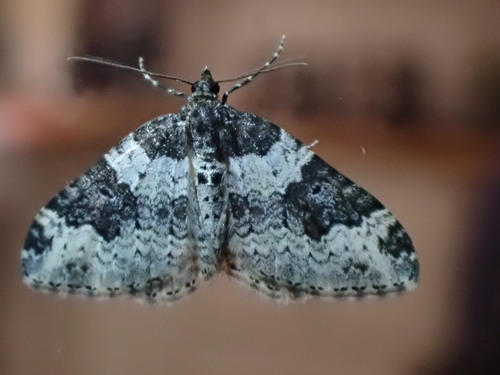
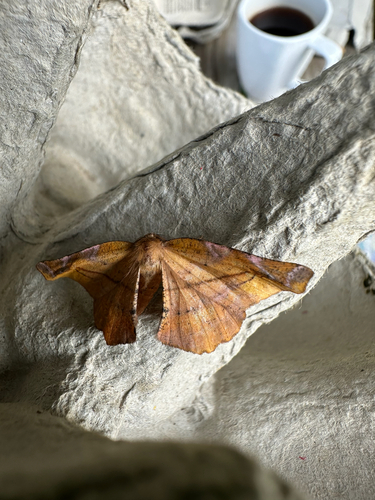
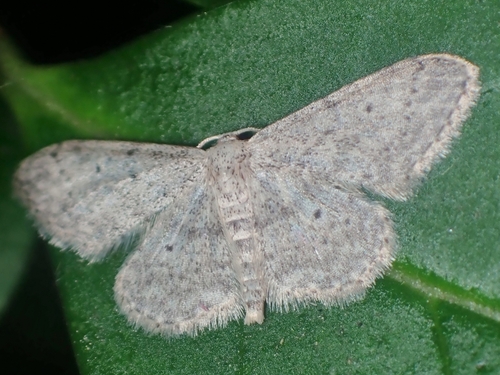
Apeira syringaria, the lilac beauty, is a moth of the family Geometridae. It is found throughout Europe and east across the Palearctic to the Russian Far East and Japan. The wingspan is 38–42 mm. The length of the forewings is 19–22 mm. The front wings are coloured violet-grey to bright reddish brown and yellowish in the marginal field. There are white marks along the costa. The interior cross line is pinkish white and broken under the costa (toward the basal field). The narrow central band is red-brown and continues on the hindwings. The outer cross line is dark on the front edge becoming pink white adjoining on the hind wings a dark row of dots. A pink-white spot is located off the apex of the wing. In rest, the front margins of the wings are curiously folded. This, in combination with the colour and pattern give a crumpled leaf-like appearance.

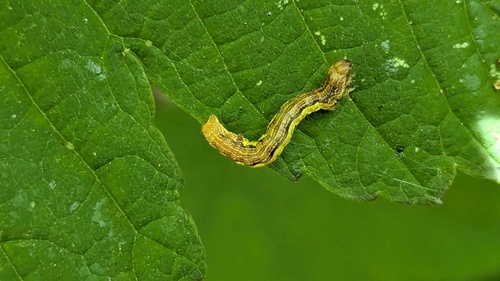
The caterpillars reach a length of up to 30 millimeters.. On the seventh segment there is an eye-catching pair of curved extensions; smaller dorsal humps are located on segments five and six. They are pale ochre-coloured with dark olive-brown or purple-brown markings. The head capsule is grey-brown. In a resting position, the caterpillars do not sit stretched out like most other looper caterpillars, but remain curved to resemble the dried fruit capsules of the lilac.

The moth flies from June to July [1]. The caterpillars feed on lilac, honeysuckle and privet. This species overwinters as a larva. Ecology: found in woodland, heaths and occasionally fens. Wikipedia →
Global Distribution

Parks Where Found

# Park Country Daily sighting probability
1 Bavarian Forest National Park 🇩🇪 Germany
~10%

More parks will be added in future updates.

Cities Where Found

# City Country Daily sighting probability
1 Berlin 🇩🇪 Germany
<5%

Before you go

What are the chances of seeing a Lilac Beauty in Berlin?

Rare

Under 5% of wildlife watchers report a Lilac Beauty sighting in Berlin on a given day, based on 5 verified sightings from GBIF citizen-science data. It is the 949th most-seen of the 1065 insects we can rate there. Over three days the chance rises to about 10%, and over a week to about 20%, if each day is a fresh chance.

When is the best time to see a Lilac Beauty in Berlin?

August

In that month about 10% of wildlife watchers report a Lilac Beauty in Berlin on a given day, against under 5% in September to July, the lowest months.

What time of day is best to see a Lilac Beauty?

Between 3 and 6 pm

Across all the parks we cover, that three-hour window holds the most Lilac Beauty sightings with a recorded time, and about 8 in 10 of them come between 6 am and 6 pm: it is a daytime animal.

Where else can you see a Lilac Beauty?

Only Berlin, in our data

Berlin is the only city on Wallace's Line with enough records to rate Lilac Beauty sightings: under 5% of wildlife watchers there report one on a given day.

Which relatives of the Lilac Beauty live in Berlin?

Same family: Geometridae

The closest relatives of the Lilac Beauty that you can see in Berlin (family Geometridae, Geometer Moths) are Small Dusty Wave (about 10%), Yellow Shell Moth (about 10%) and Willow Beauty (about 10%), with each one's daily chance of a sighting.

Where does the Lilac Beauty sighting chance come from?

GBIF citizen-science records

It is estimated from how often the Lilac Beauty is recorded against all the insects logged in Berlin (5 verified sightings), calibrated against known sighting rates. Figures are rounded to the nearest 10% because citizen-science data supports honest approximations, not decimals, and months with records from fewer than five people show "—". How it works.

← Back to Berlin