Riband Wave

Riband Wave

Idaea aversata

Daily sighting probability ~10% · With luck
at Berlin

In 3 days ~30% in a week ~50%

119 Verified sightings at Berlin
451 In all 11 parks From 2019 to 2026
June Best month
☀️🌙 Day & Night When it's spotted

About the Riband Wave

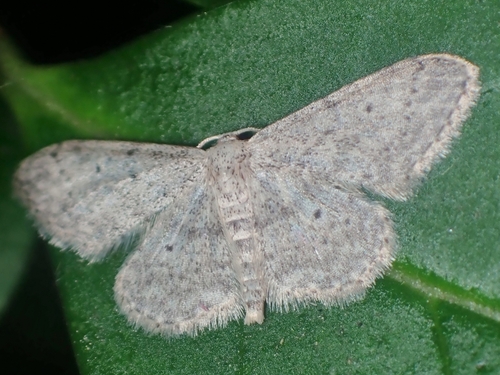
The riband wave (Idaea aversata) is a moth of the family Geometridae. The species was first described by Carl Linnaeus in his 1758 10th edition of Systema Naturae. It is an abundant species in Europe, the Near East and North Africa and across the Palearctic. Records are few in the Iberian Peninsula and the Balkan Peninsula. The north border is northern Sweden and northern Finland. The northernmost parts of Russia and a few areas of Russia, northwest of the Caspian Sea are excluded. In North Africa (eastern Algeria and Tunisia), there is a smaller presence belonging to a separate subspecies (Idaea aversata indeviata Prout, 1935). Outside Europe, the distribution area extends from northern Turkey up to the Caucasus, from there via Central Asia, Siberia and north-east China to Japan. The occurrence in Japan is regarded as subspecies (Idaea aversata japonica Inoue, 1955). A small, isolated occurrence in southern Turkey is remarkable.

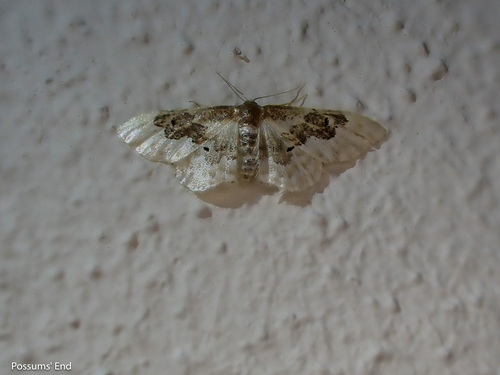
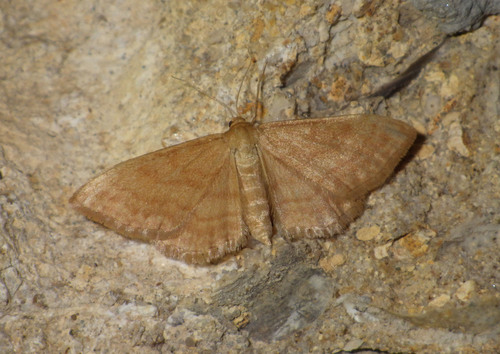
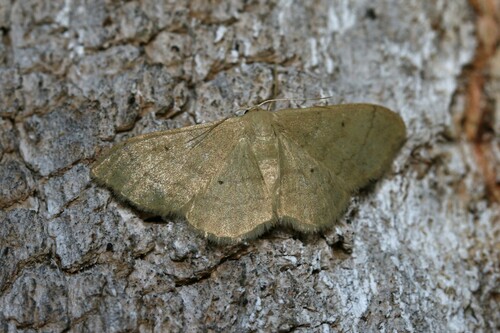
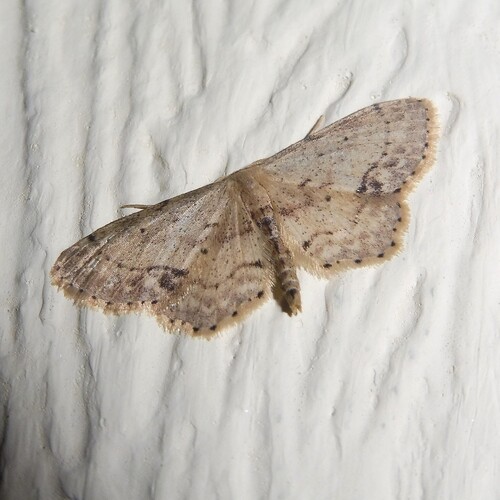
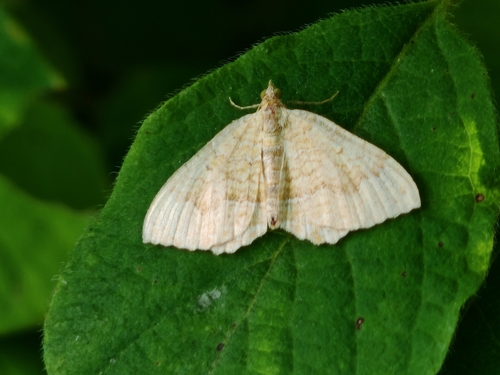
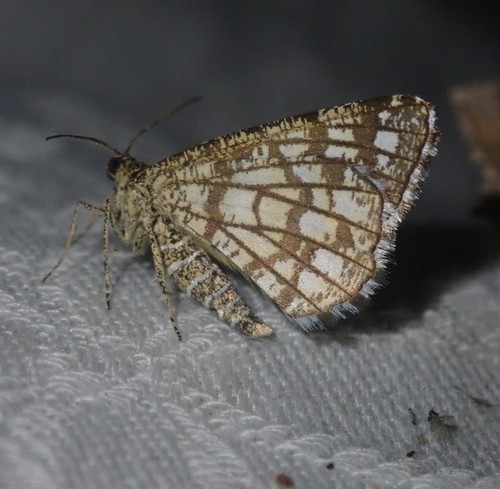
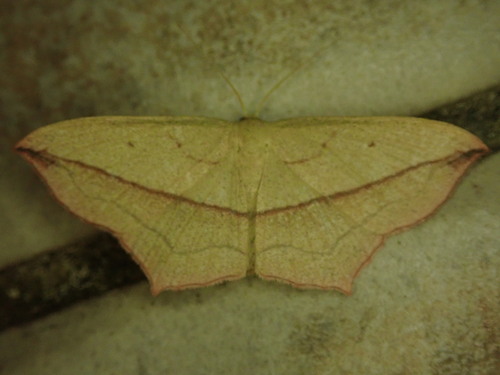
The species has a wingspan of 30–35 mm. Its distinctive outline is familiar at lighted windows. The wings are buff or cream with dark fasciae (bands). Two main forms exist, equally abundant: one has darker shading between... Wikipedia →

Global Distribution

Parks Where Found

# Park Country Daily sighting probability
1 Snowdonia National Park 🇬🇧 United Kingdom
~20%
2 Vanoise National Park 🇫🇷 France
~10%
3 Wadden Sea National Park 🇩🇪 Germany
~10%
4 Cairngorms National Park 🇬🇧 United Kingdom
~10%
5 Aigüestortes National Park 🇪🇸 Spain
~10%
6 Bavarian Forest National Park 🇩🇪 Germany
~10%
7 Cévennes National Park 🇫🇷 France
~10%
8 Pyrénées National Park 🇫🇷 France
~10%
9 Mercantour National Park 🇫🇷 France
~10%
10 Ecrins National Park 🇫🇷 France
~10%
11 Fertő-Hanság National Park 🇭🇺 Hungary
~10%

Cities Where Found

# City Country Daily sighting probability
1 Liverpool 🇬🇧 United Kingdom
~30%
2 London 🇬🇧 United Kingdom
~20%
3 Birmingham 🇬🇧 United Kingdom
~20%
4 Manchester 🇬🇧 United Kingdom
~20%
5 Porto 🇵🇹 Portugal
~20%
6 Essen 🇩🇪 Germany
~20%
7 Budapest 🇭🇺 Hungary
~10%
8 Kyiv 🇺🇦 Ukraine
~10%
9 Leeds 🇬🇧 United Kingdom
~10%
10 Copenhagen 🇩🇰 Denmark
~10%

Before you go

What are the chances of seeing a Riband Wave in Berlin?

With luck

About 10% of wildlife watchers report a Riband Wave sighting in Berlin on a given day, based on 119 verified sightings from GBIF citizen-science data. It is the 88th most-seen of the 1065 insects we can rate there. Over three days the chance rises to about 30%, and over a week to about 50%, if each day is a fresh chance.

When is the best time to see a Riband Wave in Berlin?

June

In that month about 20% of wildlife watchers report a Riband Wave in Berlin on a given day, against under 5% in August and October–April, the lowest months.

What time of day is best to see a Riband Wave?

Between 10 pm and 1 am

Across all the parks we cover, that three-hour window holds the most Riband Wave sightings with a recorded time, and about 6 in 10 of them come between 6 pm and 6 am: it is seen both by day and at night.

Is Berlin the best place to see a Riband Wave?

11th of 28

Of the 28 cities where we can rate Riband Wave sightings, Berlin ranks 11th at about 10%. The best odds are in Liverpool (United Kingdom, about 30%), London (United Kingdom, about 20%) and Birmingham (United Kingdom, about 20%).

Which relatives of the Riband Wave live in Berlin?

Same genus: Idaea

The closest relatives of the Riband Wave that you can see in Berlin (genus Idaea) are Small Dusty Wave (about 10%) and Least Carpet (about 10%), with each one's daily chance of a sighting.

Where does the Riband Wave sighting chance come from?

GBIF citizen-science records

It is estimated from how often the Riband Wave is recorded against all the insects logged in Berlin (119 verified sightings), calibrated against known sighting rates. Figures are rounded to the nearest 10% because citizen-science data supports honest approximations, not decimals, and months with records from fewer than five people show "—". How it works.

← Back to Berlin