Cocksfoot Moth

Cocksfoot Moth

Glyphipterix simpliciella

Daily sighting probability <5% · Rare
at Birmingham

In 3 days ~10% in a week ~30%

9 Verified sightings at Birmingham
5 In 1 park From 2019 to 2026
May Best month
☀️ Diurnal When it's spotted

About the Cocksfoot Moth

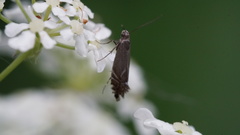
Glyphipterix simpliciella, the cocksfoot moth, is a species of moth of the family Glyphipterigidae. This quite common species can be found in the western part of the Palearctic realm and is common in much of Great Britain and Ireland. This species is also found in New Zealand.

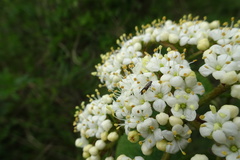
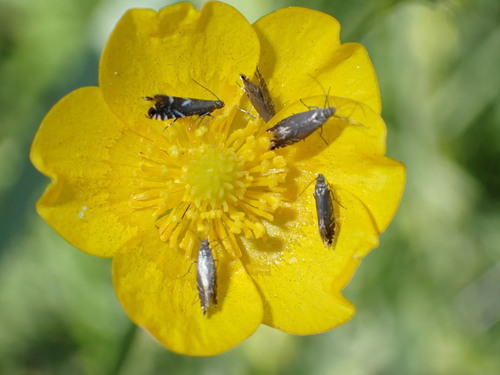
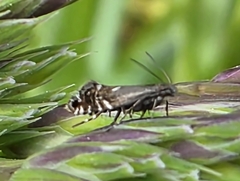
These small moths mainly inhabit flower meadows, especially with buttercup and there are often many on one flower. Glyphipterix simpliciella has a wingspan of 6–9 mm. and can reach a length of 3–4 mm. These tiny cryptic moths have dark brown forewings with a slightly metallic sheen. They also show a black apical spot and five white or silvery streaks along their costa, two across the dorsum and one in the posterior corner of the wings. The hindwings are dark grey, with grey cilia. Both sexes are similar.

This species is rather similar to Glyphipterix equitella and Glyphipterix schoenicolella. It is a univoltine species. Adults are on wing from May to July. They fly in the sunshine and especially feed on nectar of buttercup (Ranunculus species), Crataegus monogyna, Euphorbia esula, and of various Apiaceae species (especially Leucanthemum vulgare... Wikipedia →
Global Distribution

Parks Where Found

# Park Country Daily sighting probability
1 Wadden Sea National Park 🇩🇪 Germany
<5%

More parks will be added in future updates.

Cities Where Found

# City Country Daily sighting probability
1 Liverpool 🇬🇧 United Kingdom
~10%
2 Birmingham 🇬🇧 United Kingdom
<5%
3 Manchester 🇬🇧 United Kingdom
<5%
4 London 🇬🇧 United Kingdom
<5%

Before you go

What are the chances of seeing a Cocksfoot Moth in Birmingham?

Rare

Under 5% of wildlife watchers report a Cocksfoot Moth sighting in Birmingham on a given day, based on 9 verified sightings from GBIF citizen-science data. It is the 528th most-seen of the 811 insects we can rate there. Over three days the chance rises to about 10%, and over a week to about 30%, if each day is a fresh chance.

When is the best time to see a Cocksfoot Moth in Birmingham?

May

In that month about 10% of wildlife watchers report a Cocksfoot Moth in Birmingham on a given day, against under 5% in June to April, the lowest months.

What time of day is best to see a Cocksfoot Moth?

Between 11 am and 2 pm

Across all the parks we cover, that three-hour window holds the most Cocksfoot Moth sightings with a recorded time, and nearly all of them come between 6 am and 6 pm: it is a daytime animal.

Is Birmingham the best place to see a Cocksfoot Moth?

2nd of 4

Of the 4 cities where we can rate Cocksfoot Moth sightings, Birmingham ranks 2nd at under 5%. The best odds are in Liverpool (United Kingdom, about 10%).

Which relatives of the Cocksfoot Moth live in Birmingham?

Same order: Lepidoptera

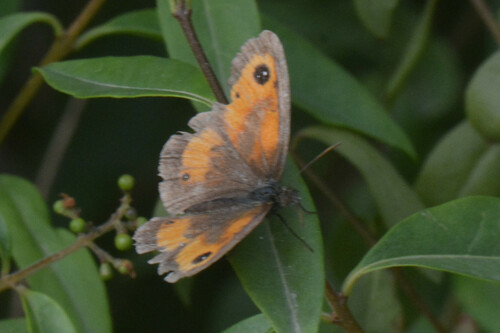
The closest relatives of the Cocksfoot Moth that you can see in Birmingham (order Lepidoptera, Butterflies and Moths) are Speckled Wood (about 50%), European Comma (about 30%) and Gatekeeper (about 30%), with each one's daily chance of a sighting.

Where does the Cocksfoot Moth sighting chance come from?

GBIF citizen-science records

It is estimated from how often the Cocksfoot Moth is recorded against all the insects logged in Birmingham (9 verified sightings), calibrated against known sighting rates. Figures are rounded to the nearest 10% because citizen-science data supports honest approximations, not decimals, and months with records from fewer than five people show "—". How it works.

← Back to Birmingham