Heineken Fly

Heineken Fly

Rhingia campestris

Daily sighting probability <5% · Rare
at Birmingham

In 3 days ~10% in a week ~30%

11 Verified sightings at Birmingham
20 In all 3 parks From 2019 to 2026
April Best month
☀️ Diurnal When it's spotted

About the Heineken Fly

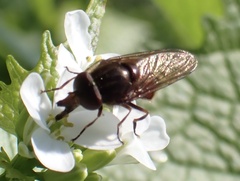
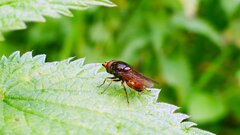
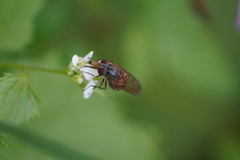
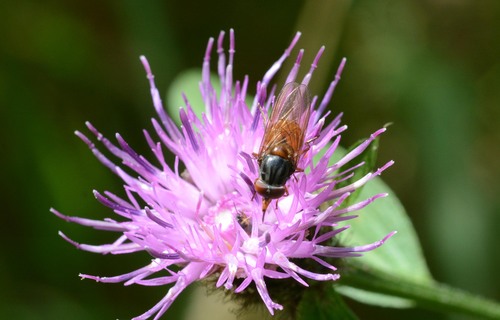
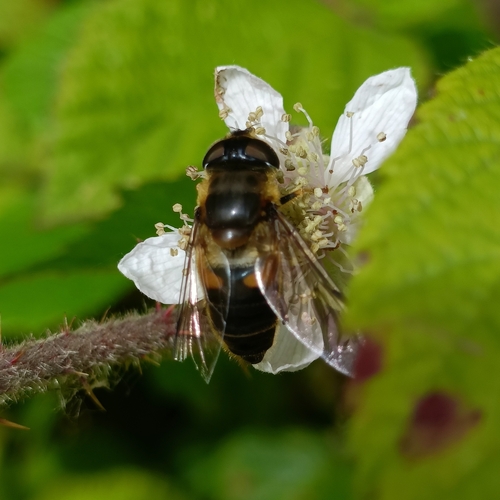
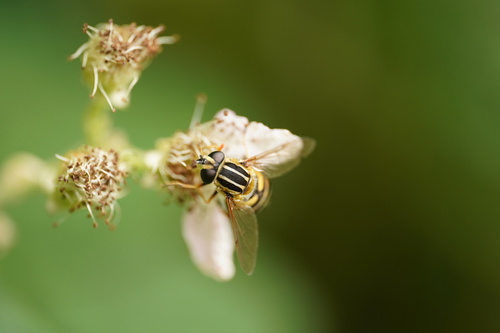
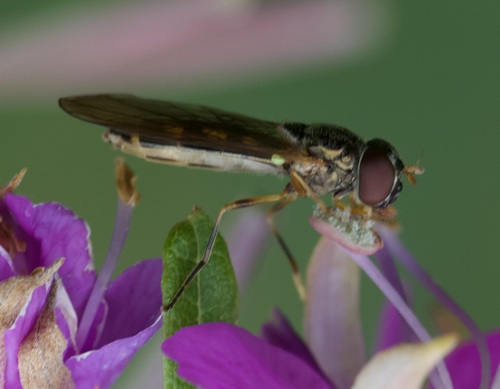
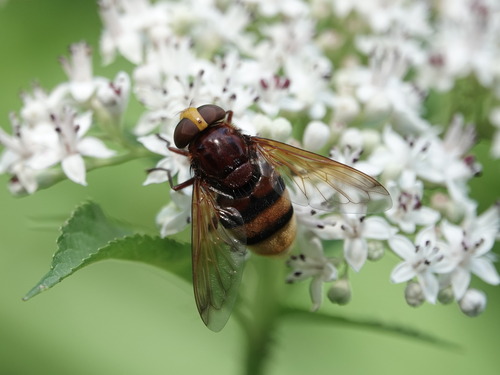
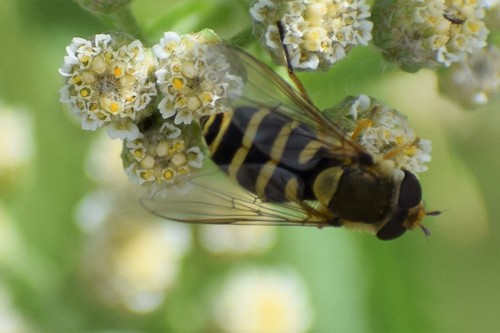
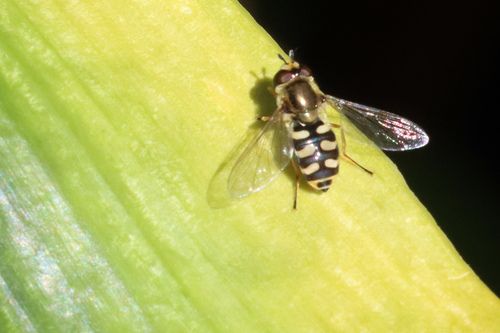
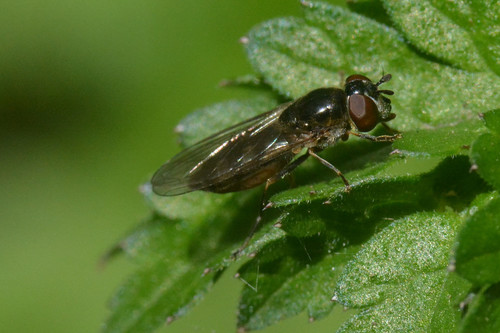
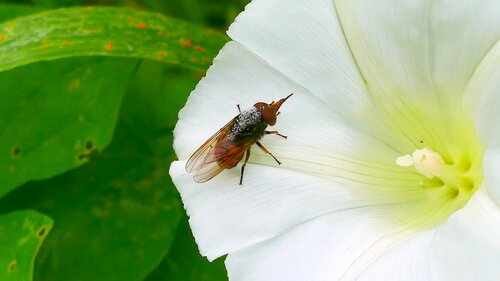
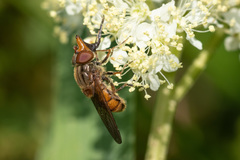
Rhingia campestris is a species of hoverfly, 7–11 millimetres (0.3–0.4 in) long, with a wingspan of 12–18 mm (0.5–0.7 in). It is common across the Palearctic from March until November. It has a broad orange abdomen with a black line along the sides (the black line is absent along the sides of Rhingia rostrata), and has the distinctive long snout of all Rhingia species. Rhingia campestris is the main pollinator for many plant species and due to its long snout it can forage on tubulous flowers. Larvae are associated with cow dung. Adults males feed on nectar, while adult females feed on protein rich pollen, reflecting the cost of developing eggs.

External images For terms see Morphology of DipteraWing length 5.5–7 mm. Snout straight, longer than the diameter of the eye in side view. Tergites with black hind edge and side margins and often with a black mark in the middle of the tergite. Pre-genital sternite black-haired. Tibiae red.

See references for determination Palearctic Fennoscandia South to the Pyrenees, Spain and the Mediterranean basin. Ireland East through Europe into European Russia and the Caucasus then to Siberia, Mongolia and the Russian... Wikipedia →
Global Distribution

Parks Where Found

# Park Country Daily sighting probability
1 Cairngorms National Park 🇬🇧 United Kingdom
~10%
2 Snowdonia National Park 🇬🇧 United Kingdom
~10%
3 Pyrénées National Park 🇫🇷 France
<5%

Cities Where Found

# City Country Daily sighting probability
1 Leeds 🇬🇧 United Kingdom
~10%
2 Manchester 🇬🇧 United Kingdom
<5%
3 Birmingham 🇬🇧 United Kingdom
<5%

Before you go

What are the chances of seeing a Heineken Fly in Birmingham?

Rare

Under 5% of wildlife watchers report a Heineken Fly sighting in Birmingham on a given day, based on 11 verified sightings from GBIF citizen-science data. It is the 528th most-seen of the 811 insects we can rate there. Over three days the chance rises to about 10%, and over a week to about 30%, if each day is a fresh chance.

When is the best time to see a Heineken Fly in Birmingham?

April and May

In those months about 10% of wildlife watchers report a Heineken Fly in Birmingham on a given day, against under 5% in June to March, the lowest months.

What time of day is best to see a Heineken Fly?

Between noon and 3 pm

Across all the parks we cover, that three-hour window holds the most Heineken Fly sightings with a recorded time, and nearly all of them come between 6 am and 6 pm: it is a daytime animal.

Is Birmingham the best place to see a Heineken Fly?

3rd of 3

Of the 3 cities where we can rate Heineken Fly sightings, Birmingham ranks 3rd at under 5%. The best odds are in Leeds (United Kingdom, about 10%) and Manchester (United Kingdom, under 5%).

Where does the Heineken Fly sighting chance come from?

GBIF citizen-science records

It is estimated from how often the Heineken Fly is recorded against all the insects logged in Birmingham (11 verified sightings), calibrated against known sighting rates. Figures are rounded to the nearest 10% because citizen-science data supports honest approximations, not decimals, and months with records from fewer than five people show "—". How it works.

← Back to Birmingham