Semaphore Fly

Semaphore Fly

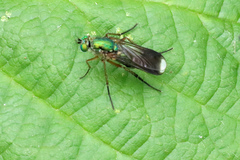
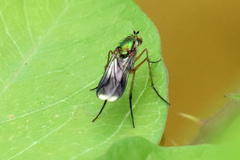
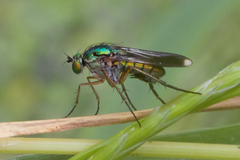
Poecilobothrus nobilitatus

Daily sighting probability ~10% · With luck
at Birmingham

In 3 days ~20% in a week ~40%

26 Verified sightings at Birmingham
6 In 1 park From 2019 to 2026
June Best month
🌅 Crepuscular When it's spotted

About the Semaphore Fly

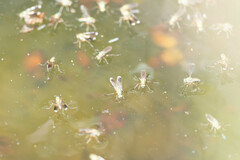
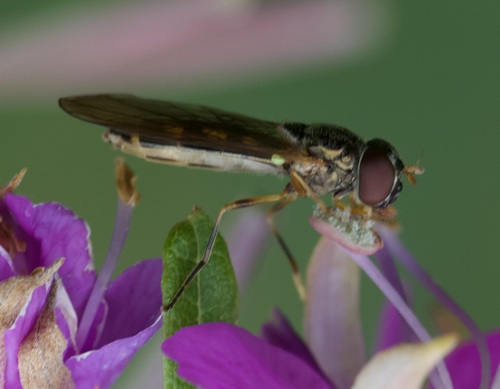
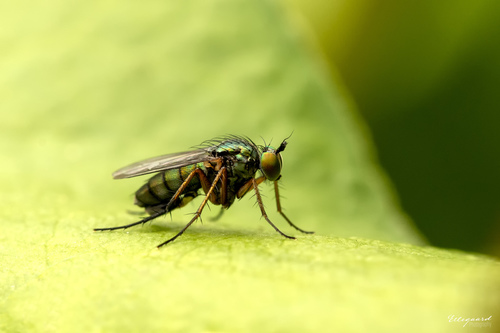
Poecilobothrus nobilitatus or semaphore fly is a species of fly in the highly studied family Dolichopodidae. P. nobilitatus flies are popular study subjects because they are easy to recognize and are of large size. They mainly reside around ponds and wet lands, where most of their hunting and mating take place. Their mating ritual is highly studied due to their distinctive mate selection behaviors.

P. nobilitatus has been found in Austria, Belgium, Czech Republic, Denmark, France, Germany, Hungary, Ireland, Italy, Luxembourg, Netherlands, Poland, Romania, Russia, Slovakia, Spain, Sweden, Switzerland, and the UK. Many flies in the Dolichopodidae family have metallic green reflections in their cornea due to the cornea's wavelength-selective spectral reflectance. Their cornea is built like a multi-layered mirror that reduces the transmission of green light to the cornea's light receptors. This results in distinctive green iridescent eyes that many of the flies have.

The P. nobilitatus species exhibits sexual dimorphism; females and males have distinctive wing markings. Males are usually 7mm long and are smoky black on the distal half... Wikipedia →
Global Distribution

Parks Where Found

# Park Country Daily sighting probability
1 Wadden Sea National Park 🇩🇪 Germany
<5%

More parks will be added in future updates.

Cities Where Found

# City Country Daily sighting probability
1 Liverpool 🇬🇧 United Kingdom
~10%
2 Birmingham 🇬🇧 United Kingdom
~10%
3 London 🇬🇧 United Kingdom
~10%
4 Dublin 🇮🇪 Ireland
~10%
5 Manchester 🇬🇧 United Kingdom
<5%
6 Leeds 🇬🇧 United Kingdom
<5%

Before you go

What are the chances of seeing a Semaphore Fly in Birmingham?

With luck

About 10% of wildlife watchers report a Semaphore Fly sighting in Birmingham on a given day, based on 26 verified sightings from GBIF citizen-science data. It is the 289th most-seen of the 811 insects we can rate there. Over three days the chance rises to about 20%, and over a week to about 40%, if each day is a fresh chance.

When is the best time to see a Semaphore Fly in Birmingham?

June and July

In those months about 10% of wildlife watchers report a Semaphore Fly in Birmingham on a given day, against under 5% in August to May, the lowest months.

What time of day is best to see a Semaphore Fly?

Between 2 and 5 pm

Across all the parks we cover, that three-hour window holds the most Semaphore Fly sightings with a recorded time, and about 7 in 10 of them come between 6 am and 6 pm: it is most active around dawn and dusk.

Is Birmingham the best place to see a Semaphore Fly?

Among the best

Of the 6 cities where we can rate Semaphore Fly sightings, Birmingham ranks 2nd at about 10%, level with the leaders once rounded. The best odds are in Liverpool (United Kingdom, about 10%).

Which relatives of the Semaphore Fly live in Birmingham?

Same order: Diptera

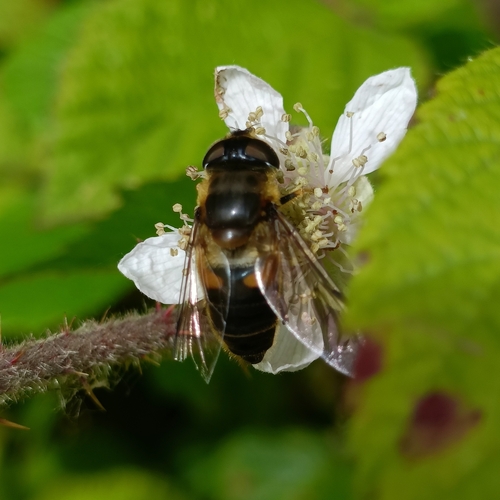
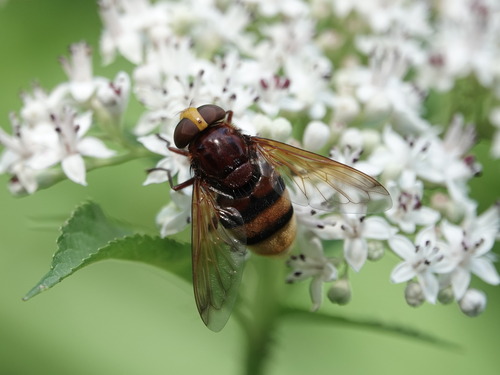
The closest relatives of the Semaphore Fly that you can see in Birmingham (order Diptera, Flies) are Yellow-Haired Sun Fly (about 40%), Marmalade Hover Fly (about 30%) and Tapered Drone Fly (about 30%), with each one's daily chance of a sighting.

Where does the Semaphore Fly sighting chance come from?

GBIF citizen-science records

It is estimated from how often the Semaphore Fly is recorded against all the insects logged in Birmingham (26 verified sightings), calibrated against known sighting rates. Figures are rounded to the nearest 10% because citizen-science data supports honest approximations, not decimals, and months with records from fewer than five people show "—". How it works.

← Back to Birmingham