White-Foot Bell

White-Foot Bell

Epiblema foenella

Daily sighting probability <5% · Rare
at Birmingham

In 3 days ~10% in a week ~20%

6 Verified sightings at Birmingham
13 In all 2 parks From 2019 to 2026
July Best month
☀️🌙 Day & Night When it's spotted

About the White-Foot Bell

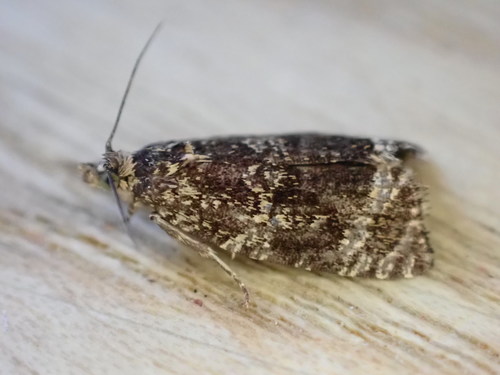
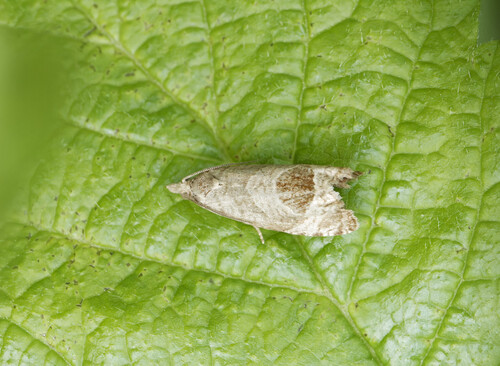
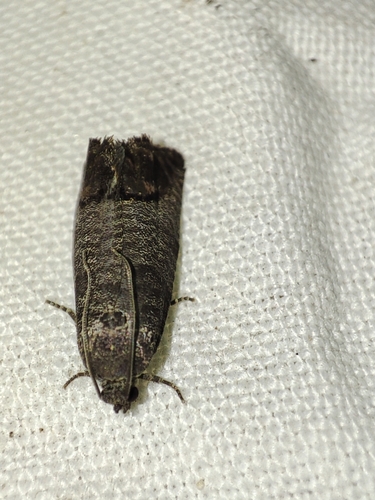
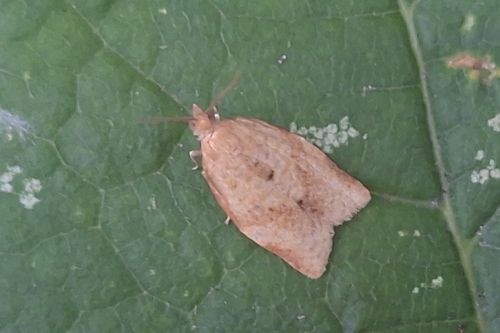
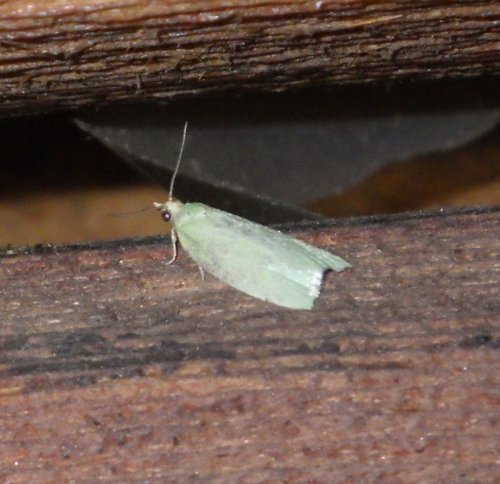
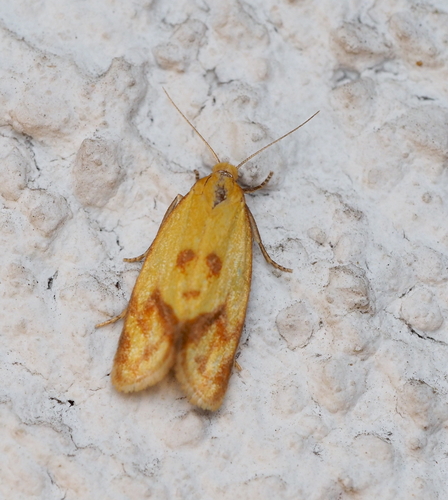
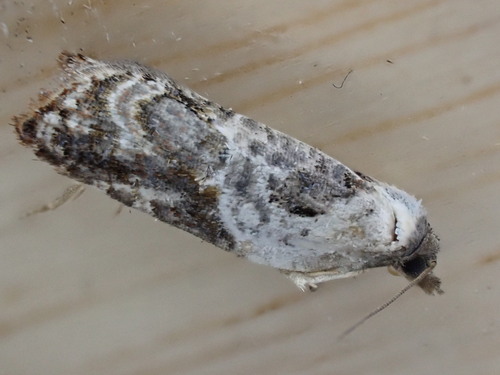
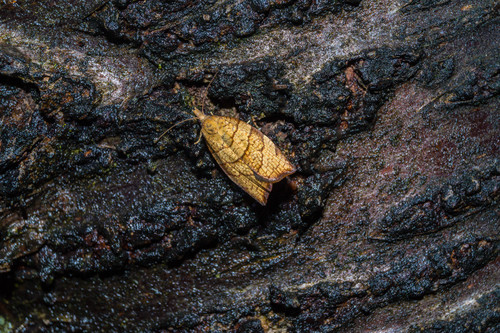
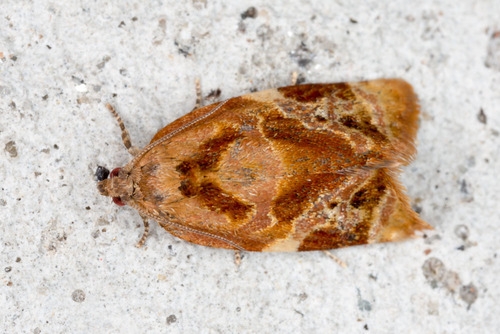
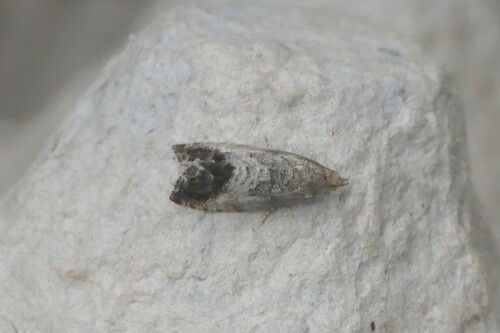
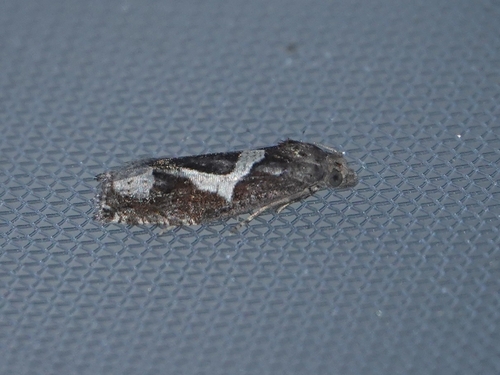
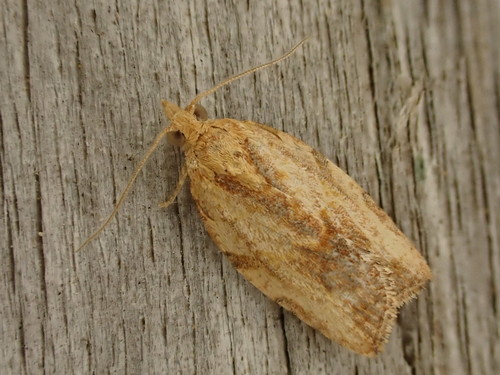
Epiblema foenella, the white-foot bell, is a moth of the family Tortricidae. The wingspan is 17–26 mm. This quite-common moth has dark brown forewings with a striking falcate medio-dorsal white marking and a gray-colored area at the ends of the wings. The shape of the white marking is quite variable.

This species has one generation and the mature caterpillars overwinter. The larvae feed on the roots and lower stem of mugwort or common wormwood (Artemisia vulgaris), of southernwood (Artemisia abrotanum) and of golden marguerite (Anthemis tinctoria). The moth flies from May to August depending on the location. They usually fly from late afternoon into the evening.

This species can be found in most of Europe, southern Russia, the Caucasus, Siberia, Kazakhstan, Kyrgyzstan, Mongolia, the Russian Far East, China (Tianjin, Hebei, Inner Mongolia, Jilin, Heilongjiang, Jiangsu, Zhejiang, Anhui, Fujian, Jiangxi, Shandong, Henan, Hubei, Hunan, Guangxi, Sichuan, Guizhou, Yunnan, Shaanxi, Gansu, Qinghai, Ningxia, Xinjiang), Korea, Japan, India, Taiwan and Vietnam.

The white-foot bell prefers rough uncultivated ground, grassland, scrub, river banks... Wikipedia →
Global Distribution

Parks Where Found

# Park Country Daily sighting probability
1 Bavarian Forest National Park 🇩🇪 Germany
~10%
2 Cévennes National Park 🇫🇷 France
<5%

Cities Where Found

# City Country Daily sighting probability
1 Helsinki 🇫🇮 Finland
~10%
2 Novosibirsk 🇷🇺 Russia
~10%
3 Berlin 🇩🇪 Germany
<5%
4 Kyiv 🇺🇦 Ukraine
<5%
5 Copenhagen 🇩🇰 Denmark
<5%
6 Nizhny Novgorod 🇷🇺 Russia
<5%
7 Seoul 🇰🇷 South Korea
<5%
8 Birmingham 🇬🇧 United Kingdom
<5%
9 Moscow 🇷🇺 Russia
<5%
10 Vienna 🇦🇹 Austria
<5%

Before you go

What are the chances of seeing a White-Foot Bell in Birmingham?

Rare

Under 5% of wildlife watchers report a White-Foot Bell sighting in Birmingham on a given day, based on 6 verified sightings from GBIF citizen-science data. It is the 668th most-seen of the 811 insects we can rate there. Over three days the chance rises to about 10%, and over a week to about 20%, if each day is a fresh chance.

When is the best time to see a White-Foot Bell in Birmingham?

July

In that month about 10% of wildlife watchers report a White-Foot Bell in Birmingham on a given day, against under 5% in August to June, the lowest months.

What time of day is best to see a White-Foot Bell?

Between 9 pm and midnight

Across all the parks we cover, that three-hour window holds the most White-Foot Bell sightings with a recorded time, and about half of them come between 6 am and 6 pm: it is seen both by day and at night.

Is Birmingham the best place to see a White-Foot Bell?

8th of 11

Of the 11 cities where we can rate White-Foot Bell sightings, Birmingham ranks 8th at under 5%. The best odds are in Helsinki (Finland, about 10%), Novosibirsk (Russia, about 10%) and Berlin (Germany, under 5%).

Which relatives of the White-Foot Bell live in Birmingham?

Same family: Tortricidae

The closest relatives of the White-Foot Bell that you can see in Birmingham (family Tortricidae, Tortricid Leafroller Moths) are Light Brown Apple Moth (about 20%), Common Marble (about 10%) and Common Roller (about 10%), with each one's daily chance of a sighting.

Where does the White-Foot Bell sighting chance come from?

GBIF citizen-science records

It is estimated from how often the White-Foot Bell is recorded against all the insects logged in Birmingham (6 verified sightings), calibrated against known sighting rates. Figures are rounded to the nearest 10% because citizen-science data supports honest approximations, not decimals, and months with records from fewer than five people show "—". How it works.

← Back to Birmingham