White-Spotted Sable

White-Spotted Sable

Anania funebris

Daily sighting probability <5% · Rare
at Boston

In 3 days ~10% in a week ~20%

5 Verified sightings at Boston
45 In all 5 parks From 2019 to 2026
June Best month
☀️ Diurnal When it's spotted

About the White-Spotted Sable

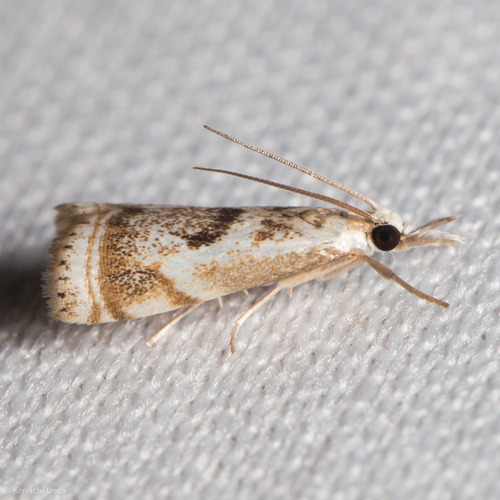
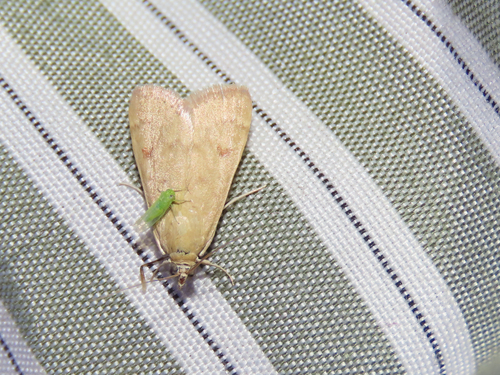
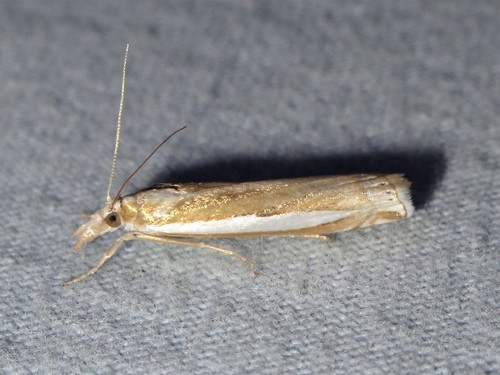
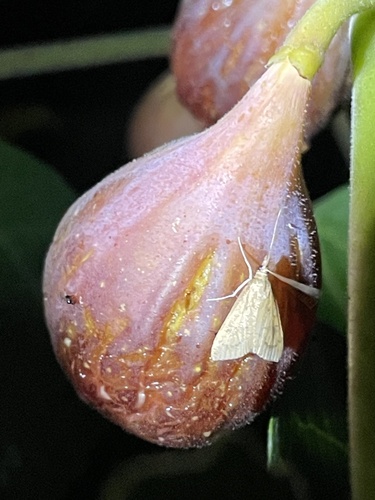
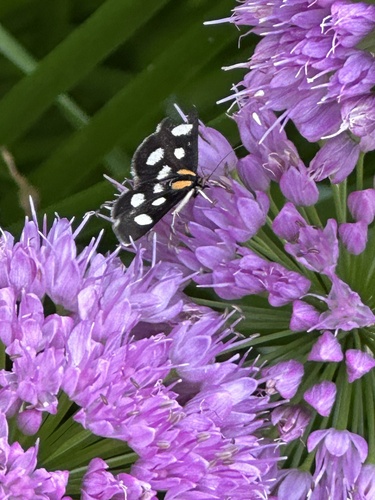
Anania funebris, the white-spotted sable, is a species of diurnal dayflying moth of the family Crambidae. It is wide-spread in Europe, northern Asia, and North America. There are two subspecies: Anania funebris funebris (Ström, 1768) – Eurasia

Anania funebris glomeralis (Walker, 1859) – North America The wingspan is 20–23 mm (0.79-0.92 in). The forewings are black; a large round white subdorsal spot before middle, and a second in disc beyond middle; sometimes a white dot above first; cilia white towards tips. Hindwings as forewings, but without the white dot. The larva is ochreous-whitish; dorsal line deep green; subdorsal and lateral green; spiracular whitish-green; dots green; head whitish-brown.

See also Parsons et al. The adults have a tendency to quickly hide behind leaves. The moth flies during the day from late April to August, June and July being the most active in their flight season. The larvae feed on leaves of goldenrod (Solidago) such as Solidago virgaurea. It occasionally feeds on dyer's greenweed (Genista tinctoria).

Lepiforum de Wikipedia →
Global Distribution

Parks Where Found

# Park Country Daily sighting probability
1 Vanoise National Park 🇫🇷 France
~20%
2 Hohe Tauern National Park 🇦🇹 Austria
~20%
3 Triglav National Park 🇸🇮 Slovenia
~10%
4 Elk Island National Park 🇨🇦 Canada
~10%
5 Pyrénées National Park 🇫🇷 France
<5%

Cities Where Found

# City Country Daily sighting probability
1 Toronto 🇨🇦 Canada
~10%
2 Calgary 🇨🇦 Canada
<5%
3 Boston 🇺🇸 United States
<5%

Before you go

What are the chances of seeing a White-Spotted Sable in Boston?

Rare

Under 5% of wildlife watchers report a White-Spotted Sable sighting in Boston on a given day, based on 5 verified sightings from GBIF citizen-science data. It is the 1063rd most-seen of the 1200 insects we can rate there. Over three days the chance rises to about 10%, and over a week to about 20%, if each day is a fresh chance.

When is the best time to see a White-Spotted Sable in Boston?

Any time of year

In every month with enough records, under 5% of wildlife watchers report a White-Spotted Sable in Boston on a given day, so our monthly data shows no clear season.

What time of day is best to see a White-Spotted Sable?

Between 1 and 4 pm

Across all the parks we cover, that three-hour window holds the most White-Spotted Sable sightings with a recorded time, and nearly all of them come between 6 am and 6 pm: it is a daytime animal.

Is Boston the best place to see a White-Spotted Sable?

3rd of 3

Of the 3 cities where we can rate White-Spotted Sable sightings, Boston ranks 3rd at under 5%. The best odds are in Toronto (Canada, about 10%) and Calgary (Canada, under 5%).

Which relatives of the White-Spotted Sable live in Boston?

Same family: Crambidae

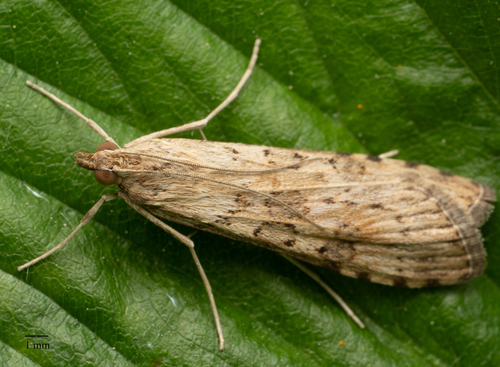
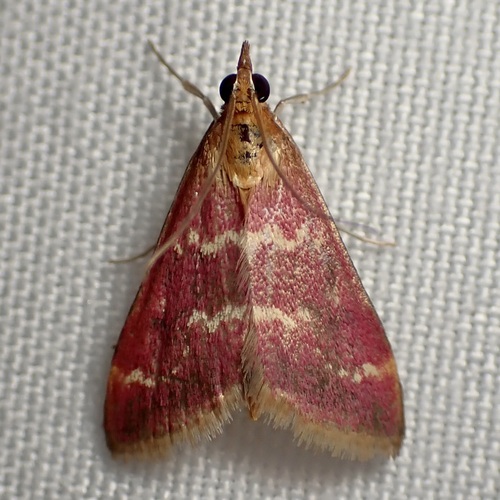
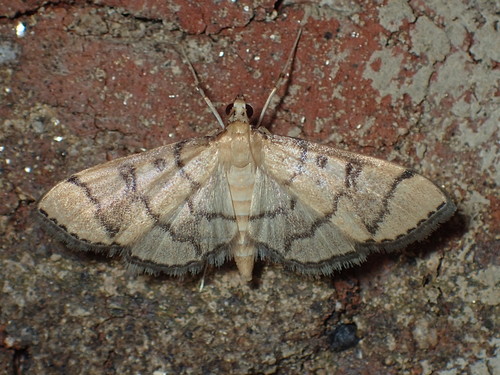
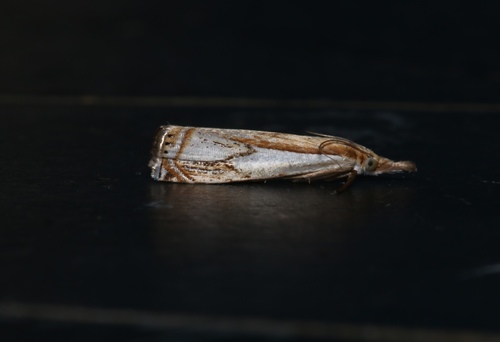
The closest relatives of the White-Spotted Sable that you can see in Boston (family Crambidae, Crambid Snout Moths) are Elegant Grass-Veneer (about 10%), Garden Webworm Moth (about 10%) and Common Grass-Veneer (about 10%), with each one's daily chance of a sighting.

Where does the White-Spotted Sable sighting chance come from?

GBIF citizen-science records

It is estimated from how often the White-Spotted Sable is recorded against all the insects logged in Boston (5 verified sightings), calibrated against known sighting rates. Figures are rounded to the nearest 10% because citizen-science data supports honest approximations, not decimals, and months with records from fewer than five people show "—". How it works.

← Back to Boston