Big Greasy

Big Greasy

Cressida cressida

Daily sighting probability ~10% · With luck
at Brisbane

In 3 days ~20% in a week ~40%

55 Verified sightings at Brisbane
6 In 1 park From 2019 to 2026
February Best month
☀️🌙 Day & Night When it's spotted

About the Big Greasy

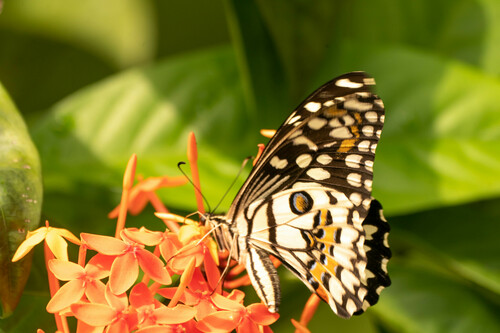
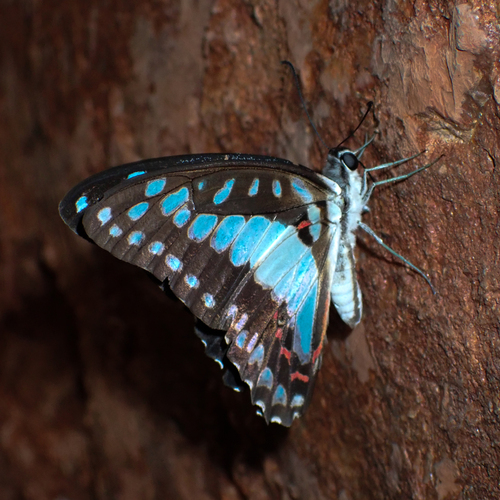
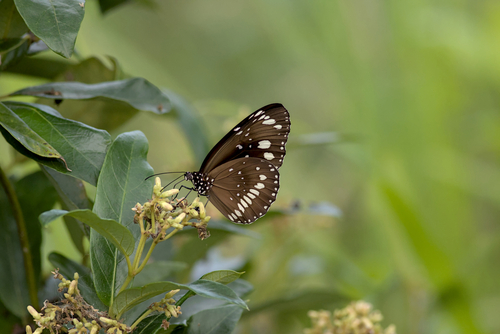
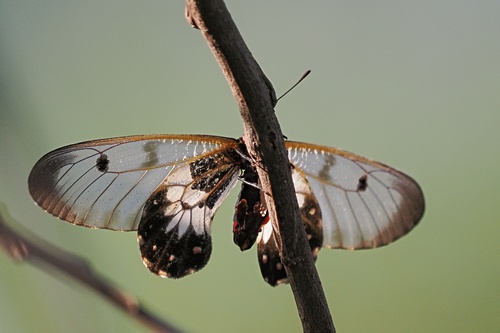
Cressida cressida, the clearwing swallowtail or big greasy, is a Troidine swallowtail butterfly found in northern Australia, New Guinea, Maluku, and Timor. It is in the monotypic genus Cressida. Remarkably, this species is not particularly closely related to other Asian swallowtails, but instead seems to be the closest living relative of the peculiar South American swallowtails of genus Euryades.

Johann Fabricius acquired the first specimens of this species from Joseph Banks, who collected them at the site of present-day Cooktown in 1770. Fabricius described the male and female as Papilio cressida and P. harmonia respectively, under the premise that the two were different species. The original specimens now reside in the Natural History Museum, London. Both male and female now possess the same name, cressida, however, this species is no longer placed in the genus Papilio, but in the genus Cressida. The systematics of the genus is as follows: Wikipedia →
Global Distribution

Parks Where Found

# Park Country Daily sighting probability
1 Kakadu National Park 🇦🇺 Australia
~10%

More parks will be added in future updates.

Cities Where Found

# City Country Daily sighting probability
1 Brisbane 🇦🇺 Australia
~10%

Before you go

What are the chances of seeing a Big Greasy in Brisbane?

With luck

About 10% of wildlife watchers report a Big Greasy sighting in Brisbane on a given day, based on 55 verified sightings from GBIF citizen-science data. It is the 230th most-seen of the 1083 insects we can rate there. Over three days the chance rises to about 20%, and over a week to about 40%, if each day is a fresh chance.

When is the best time to see a Big Greasy in Brisbane?

August to March

In those months about 10% of wildlife watchers report a Big Greasy in Brisbane on a given day, against under 5% in April to July, the lowest months.

What time of day is best to see a Big Greasy?

Between 7 and 10 am

Across all the parks we cover, that three-hour window holds the most Big Greasy sightings with a recorded time, and about 7 in 10 of them come between 6 am and 6 pm: it is seen both by day and at night.

Where else can you see a Big Greasy?

Only Brisbane, in our data

Brisbane is the only city on Wallace's Line with enough records to rate Big Greasy sightings: about 10% of wildlife watchers there report one on a given day.

Which relatives of the Big Greasy live in Brisbane?

Same family: Papilionidae

The closest relatives of the Big Greasy that you can see in Brisbane (family Papilionidae, Swallowtails and Parnassians) are Orchard Swallowtail (about 30%), Lime Swallowtail (about 10%) and Dainty Swallowtail (about 10%), with each one's daily chance of a sighting.

Where does the Big Greasy sighting chance come from?

GBIF citizen-science records

It is estimated from how often the Big Greasy is recorded against all the insects logged in Brisbane (55 verified sightings), calibrated against known sighting rates. Figures are rounded to the nearest 10% because citizen-science data supports honest approximations, not decimals, and months with records from fewer than five people show "—". How it works.

← Back to Brisbane