Red-Tipped Shadefly

Red-Tipped Shadefly

Argiocnemis rubescens

Daily sighting probability ~10% · With luck
at Brisbane

In 3 days ~20% in a week ~40%

133 Verified sightings at Brisbane
77 In all 5 parks From 2019 to 2026
November Best month
☀️ Diurnal When it's spotted

About the Red-Tipped Shadefly

Argiocnemis rubescens is a species of damselfly in the family Coenagrionidae, commonly known as the red-tipped shadefly. It is a widespread species extending from India to southern China, south-east Asia, New Guinea and Australia.

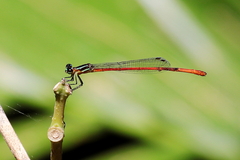
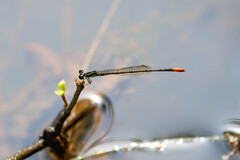
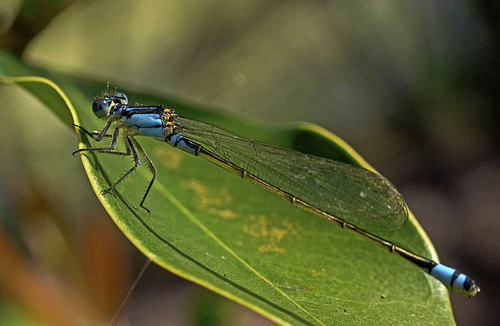
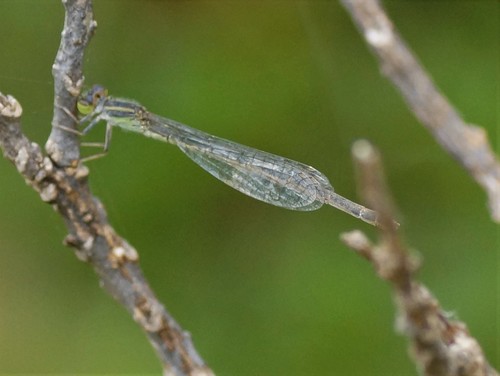
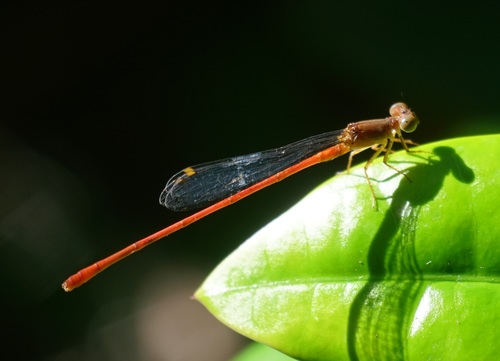
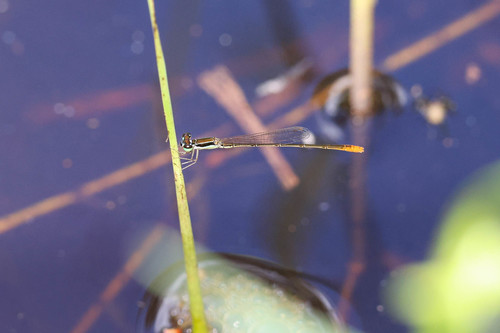
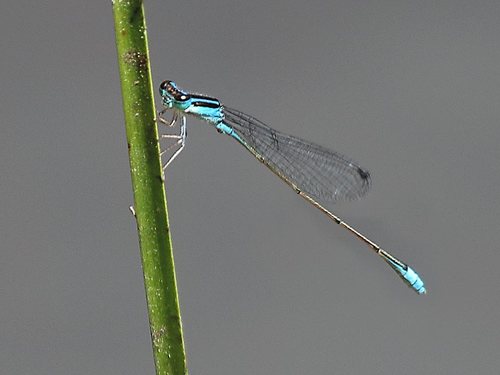
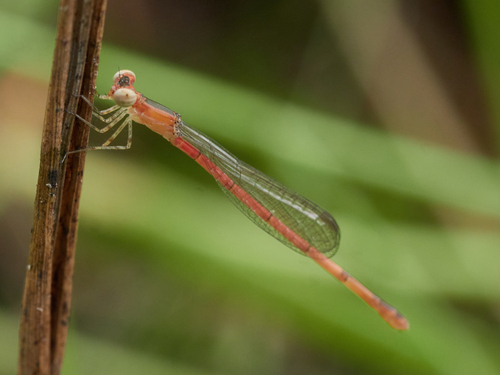
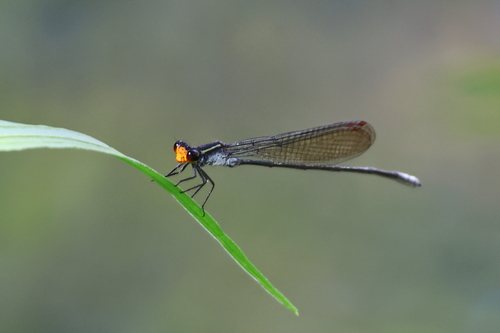
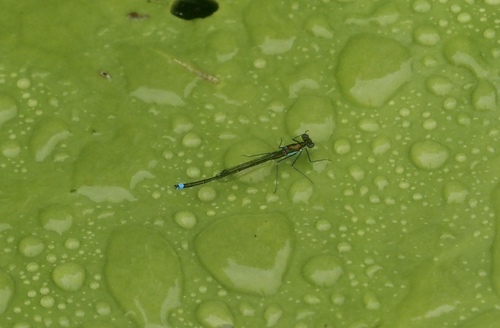
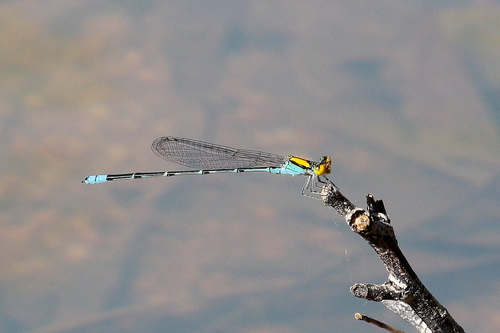
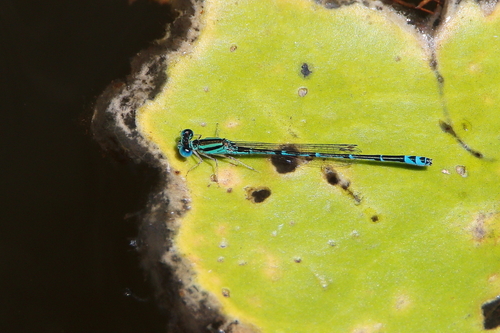
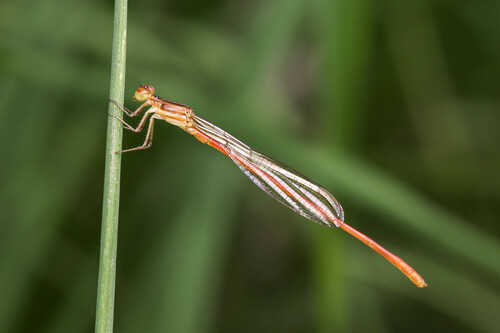
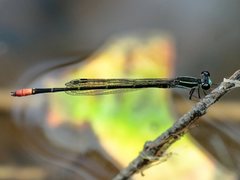
Argiocnemis rubescens prefers fresh still waters such as pools, marshes and swamps. The adult is a small to medium-sized damselfly with a length of 35 to 40mm, and the hindwing less than 22mm. When immature it is a pale reddish brown. The mature male is dark with pale green stripes on the thorax, and red on segments 8 and 9. In Australia, the distribution is in suitable habitat from Shark Bay in the west, across the north of the continent, to about Point Hicks in the south-east. The taxon has been assessed in the IUCN Red List as least concern.

The genus name Argiocnemis is derived from -cnemis, from the Greek κνημίς (knēmis, "greave" or "legging"), a suffix commonly used in damselfly names, and a prefix Argio- of uncertain origin, possibly from the Greek ἀργία (argia, "idleness" or "leisure") or formed as an anagram of Agrio-, based on the genus Agrion.

The species name rubescens is Latin for "becoming red" or "blushing". Edmond de Sélys Longchamps... Wikipedia →
Global Distribution

Parks Where Found

# Park Country Daily sighting probability
1 Khao Sok National Park 🇹🇭 Thailand
~20%
2 Doi Inthanon National Park 🇹🇭 Thailand
~20%
3 Gunung Leuser National Park 🇮🇩 Indonesia
~20%
4 Lamington National Park 🇦🇺 Australia
~10%
5 Daintree National Park 🇦🇺 Australia
~10%

Cities Where Found

# City Country Daily sighting probability
1 Brisbane 🇦🇺 Australia
~10%

Before you go

What are the chances of seeing a Red-Tipped Shadefly in Brisbane?

With luck

About 10% of wildlife watchers report a Red-Tipped Shadefly sighting in Brisbane on a given day, based on 133 verified sightings from GBIF citizen-science data. It is the 158th most-seen of the 1083 insects we can rate there. Over three days the chance rises to about 20%, and over a week to about 40%, if each day is a fresh chance.

When is the best time to see a Red-Tipped Shadefly in Brisbane?

September to May

In those months about 10% of wildlife watchers report a Red-Tipped Shadefly in Brisbane on a given day, against under 5% in June to August, the lowest months.

What time of day is best to see a Red-Tipped Shadefly?

Between 9 am and noon

Across all the parks we cover, that three-hour window holds the most Red-Tipped Shadefly sightings with a recorded time, and about 9 in 10 of them come between 6 am and 6 pm: it is a daytime animal.

Where else can you see a Red-Tipped Shadefly?

Only Brisbane, in our data

Brisbane is the only city on Wallace's Line with enough records to rate Red-Tipped Shadefly sightings: about 10% of wildlife watchers there report one on a given day.

Which relatives of the Red-Tipped Shadefly live in Brisbane?

Same family: Coenagrionidae

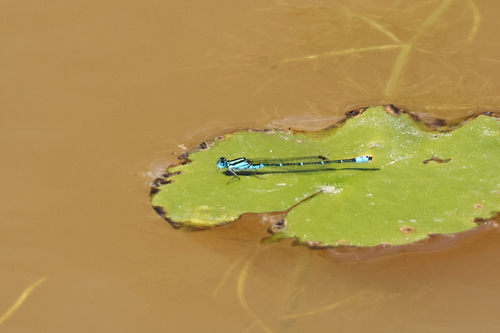
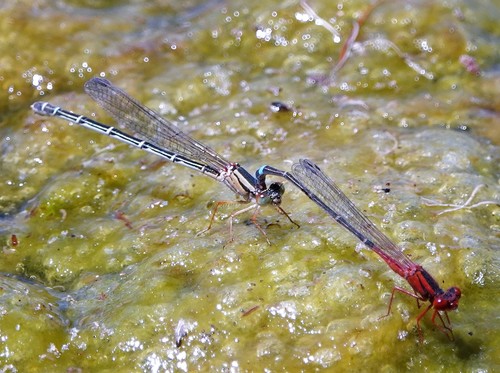
The closest relatives of the Red-Tipped Shadefly that you can see in Brisbane (family Coenagrionidae, Narrow-winged Damselflies) are Australian Bluetail (about 20%), Aurora Bluetail (about 10%) and Redtail (about 10%), with each one's daily chance of a sighting.

Where does the Red-Tipped Shadefly sighting chance come from?

GBIF citizen-science records

It is estimated from how often the Red-Tipped Shadefly is recorded against all the insects logged in Brisbane (133 verified sightings), calibrated against known sighting rates. Figures are rounded to the nearest 10% because citizen-science data supports honest approximations, not decimals, and months with records from fewer than five people show "—". How it works.

← Back to Brisbane