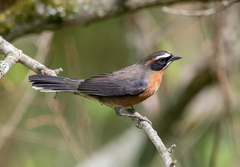
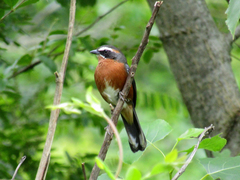
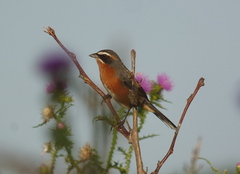

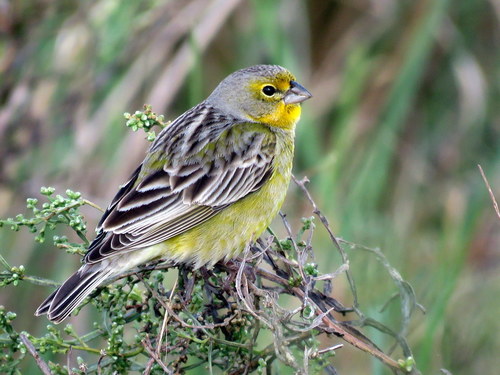
Black-and-rufous Warbling-Finch

Black-and-rufous Warbling-Finch

Poospiza nigrorufa

Silhouette: Sheatherius · PhyloPic

LCLeast ConcernNTVUENCR
Daily sighting probability ~30% · Possible
at Buenos Aires

In 3 days ~60% in a week ~90%

4,503 Verified sightings at Buenos Aires
74 In all 2 parks From 2019 to 2026
November Best month
☀️ Diurnal When it's spotted

About the Black-and-rufous Warbling-Finch

The black-and-rufous warbling finch (Poospiza nigrorufa) is a species of bird in the tanager family Thraupidae. It is found in Argentina, Bolivia, Brazil, Paraguay, and Uruguay. Its natural habitats are subtropical or tropical dry shrubland, subtropical or tropical moist shrubland, swamps, and heavily degraded former forest.

This species was formerly considered conspecific with the black-and-chestnut warbling finch (Poospiza whitii). The taxa were split based on molecular genetic and phenotypic data. Wikipedia →

Sounds

Recording0:06

Argentina · 2023

© Sabrina Andrea Rendon Anaya · XC836110 · CC BY-NC-SA 4.0

Song0:51

Brazil · 2021

© JAYRSON ARAUJO DE OLIVEIRA · XC686629 · CC BY-NC-SA 4.0

Call0:36

Brazil · 2020

© Marcelo da Rocha · XC580347 · CC BY-NC-SA 4.0

Global Distribution

Parks Where Found

# Park Country Daily sighting probability
1 El Palmar National Park 🇦🇷 Argentina
~10%
2 Iberá National Park 🇦🇷 Argentina
<5%

Cities Where Found

# City Country Daily sighting probability
1 Buenos Aires 🇦🇷 Argentina
~30%
2 Curitiba 🇧🇷 Brazil
~10%
3 Rosario 🇦🇷 Argentina
<5%
4 Porto Alegre 🇧🇷 Brazil
<5%

Before you go

What are the chances of seeing a Black-and-rufous Warbling-Finch in Buenos Aires?

Possible

About 30% of wildlife watchers report a Black-and-rufous Warbling-Finch sighting in Buenos Aires on a given day, based on 4,503 verified sightings from GBIF citizen-science data. It is the 51st most-seen of the 274 birds we can rate there. Over three days the chance rises to about 60%, and over a week to about 90%, if each day is a fresh chance.

When is the best time to see a Black-and-rufous Warbling-Finch in Buenos Aires?

October to December

In those months about 40% of wildlife watchers report a Black-and-rufous Warbling-Finch in Buenos Aires on a given day, against about 20% in February to June, the lowest months.

What time of day is best to see a Black-and-rufous Warbling-Finch?

Between 8 and 11 am

Across all the parks we cover, that three-hour window holds the most Black-and-rufous Warbling-Finch sightings with a recorded time, and about 9 in 10 of them come between 6 am and 6 pm: it is a daytime animal.

Is Buenos Aires the best place to see a Black-and-rufous Warbling-Finch?

Yes

Of the 4 cities where we can rate Black-and-rufous Warbling-Finch sightings, Buenos Aires has the highest daily chance: about 30%. Next come Curitiba (Brazil, about 10%) and Rosario (Argentina, under 5%).

Which relatives of the Black-and-rufous Warbling-Finch live in Buenos Aires?

Same family: Thraupidae

The closest relatives of the Black-and-rufous Warbling-Finch that you can see in Buenos Aires (family Thraupidae, Tanagers and Allies) are Saffron Finch (about 60%), Brazilian Cardinal (about 40%) and Sayaca Tanager (about 40%), with each one's daily chance of a sighting.

Where does the Black-and-rufous Warbling-Finch sighting chance come from?

GBIF citizen-science records

It is estimated from how often the Black-and-rufous Warbling-Finch is recorded against all the birds logged in Buenos Aires (4,503 verified sightings), calibrated against known sighting rates. Figures are rounded to the nearest 10% because citizen-science data supports honest approximations, not decimals, and months with records from fewer than five people show "—". How it works.

← Back to Buenos Aires