Paulista Bumble Bee

Paulista Bumble Bee

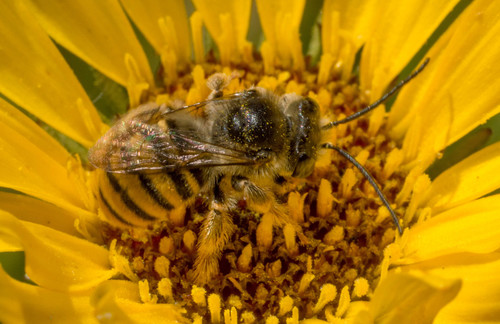
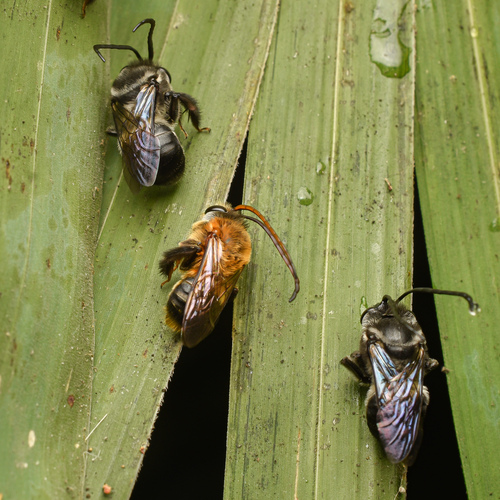
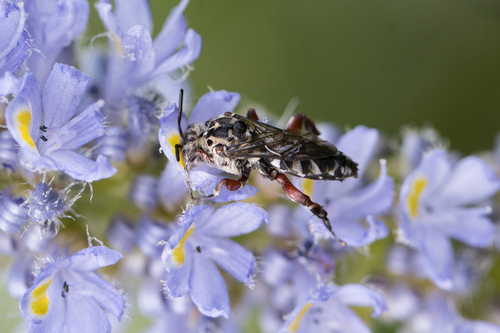
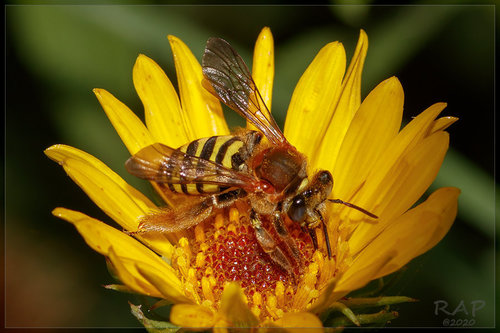
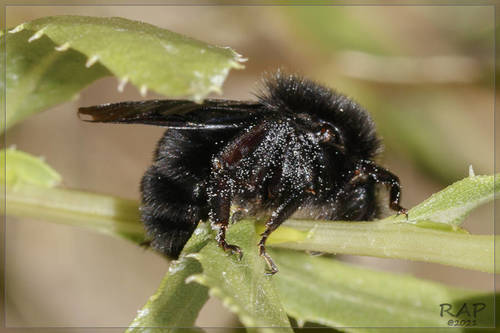
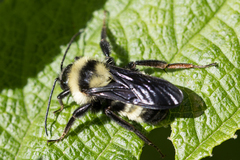
Bombus pauloensis

Daily sighting probability ~10% · With luck
at Buenos Aires

In 3 days ~40% in a week ~60%

332 Verified sightings at Buenos Aires
April Best month

About the Paulista Bumble Bee

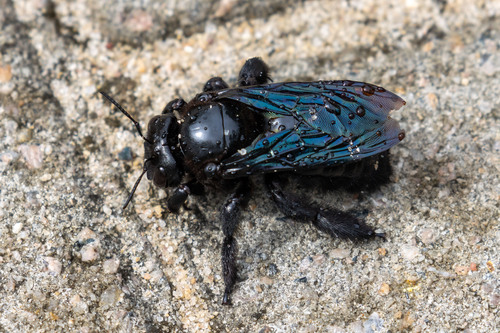
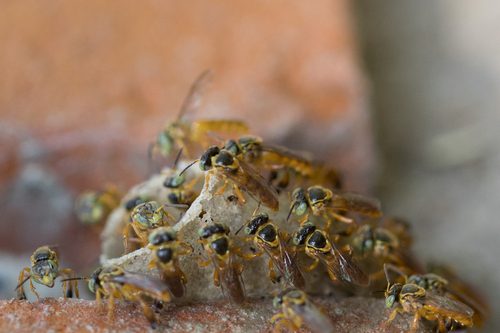
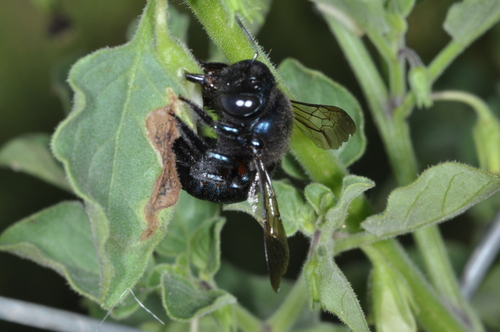
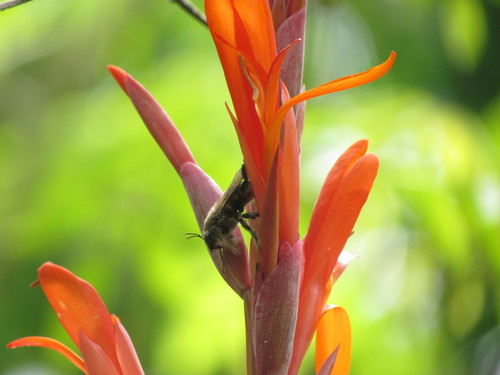
Bombus pauloensis is a neotropical bumblebee, formerly known as Bombus atratus, that is found throughout regions of South America, including Colombia, Ecuador, Brazil, Uruguay and Argentina. It lives in social colonies that include a founder queen/queens, workers and brood. B. pauloensis is somewhat unusual because of its potential to oscillate between polygynous (multiple queens) and monogynous (one queen) nesting cycles. Bombus pauloensis was the first species in the genus Bombus that was discovered to display such polygynous nesting patterns. The polygynous nesting cycles lead to certain specific types of behavior including queen-queen aggression. Nests can also be perennial, which is a characteristic rarely found in other bumblebees.

B. pauloensis can be helpful to agricultural because of their ability to pollinate different species of plants. B. pauloensis has been found to occupy a range of geographic areas and climates throughout South America. Colonies have the ability to thermoregulate nests and keep them a little bit warmer than the outside environment. Foraging workers use muscle contractions to maintain stable temperatures and coupe with seasonal and daily fluctuations in temperature. Wikipedia →

Global Distribution

Parks Where Found

# Park Country Daily sighting probability

More parks will be added in future updates.

Cities Where Found

# City Country Daily sighting probability
1 Cordoba 🇦🇷 Argentina
~20%
2 Curitiba 🇧🇷 Brazil
~20%
3 Montevideo 🇺🇾 Uruguay
~20%
4 Rosario 🇦🇷 Argentina
~10%
5 Buenos Aires 🇦🇷 Argentina
~10%
6 Porto Alegre 🇧🇷 Brazil
~10%
7 Bogota 🇨🇴 Colombia
~10%
8 São Paulo 🇧🇷 Brazil
<5%

Before you go

What are the chances of seeing a Paulista Bumble Bee in Buenos Aires?

With luck

About 10% of wildlife watchers report a Paulista Bumble Bee sighting in Buenos Aires on a given day, based on 332 verified sightings from GBIF citizen-science data. It is the 27th most-seen of the 558 insects we can rate there. Over three days the chance rises to about 40%, and over a week to about 60%, if each day is a fresh chance.

When is the best time to see a Paulista Bumble Bee in Buenos Aires?

February to May

In those months about 20% of wildlife watchers report a Paulista Bumble Bee in Buenos Aires on a given day, against under 5% in July, the lowest month.

Is Buenos Aires the best place to see a Paulista Bumble Bee?

5th of 8

Of the 8 cities where we can rate Paulista Bumble Bee sightings, Buenos Aires ranks 5th at about 10%. The best odds are in Cordoba (Argentina, about 20%), Curitiba (Brazil, about 20%) and Montevideo (Uruguay, about 20%).

Which relatives of the Paulista Bumble Bee live in Buenos Aires?

Same family: Apidae

The closest relatives of the Paulista Bumble Bee that you can see in Buenos Aires (family Apidae, Honey Bees, Bumble Bees, and Allies) are Xylocopa augusti (about 10%) and Xylocopa frontalis (about 10%), with each one's daily chance of a sighting.

Where does the Paulista Bumble Bee sighting chance come from?

GBIF citizen-science records

It is estimated from how often the Paulista Bumble Bee is recorded against all the insects logged in Buenos Aires (332 verified sightings), calibrated against known sighting rates. Figures are rounded to the nearest 10% because citizen-science data supports honest approximations, not decimals, and months with records from fewer than five people show "—". How it works.
← Back to Buenos Aires