Parrot-beaked Tortoise

Parrot-beaked Tortoise

Homopus areolatus

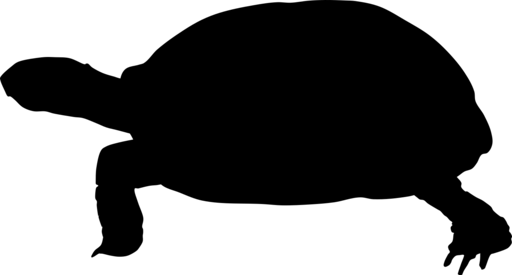
Silhouette: Andrew A. Farke · PhyloPic

LCLeast ConcernNTVUENCR
Daily sighting probability ~20% · Possible
at Cape Town

In 3 days ~40% in a week ~70%

189 Verified sightings at Cape Town
108 In all 3 parks From 2019 to 2026
December Best month
☀️ Diurnal When it's spotted

About the Parrot-beaked Tortoise

Homopus areolatus, commonly known as the common padloper or parrot-beaked tortoise, is a tiny species of tortoise of the genus Homopus, indigenous to the southern part of South Africa. Homopus areolatus is known by a wide range of common names. In its native region in southern Africa (and in much of the scientific community) it is usually known as the common padloper due to its being by far the most commonly occurring of all the Homopus ("padloper") species.

It is also commonly known as the parrot-beaked tortoise, due to the relatively large beak that the males of the species possess. Other names include the older name of beaked Cape tortoise, as well as areolated tortoise. The latter name refers to its species name "areolatus", and describes the raised rings around the scutes of its shell.

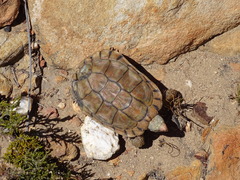
The common padloper is a small, rather flat tortoise. Its shell usually has varied colouration, ranging between olive-green and brown. The shields of the carapace are flat, with large raised areolae, and a thin black edging.

Like its larger relative, the greater padloper, and unlike the other padlopers, it has only four toes on its front feet, as well as its hind... Wikipedia →

Global Distribution

Parks Where Found

# Park Country Daily sighting probability
1 Table Mountain National Park 🇿🇦 South Africa
~10%
2 Garden Route National Park 🇿🇦 South Africa
~10%
3 Addo Elephant National Park 🇿🇦 South Africa
~10%

Cities Where Found

# City Country Daily sighting probability
1 Cape Town 🇿🇦 South Africa
~20%

Before you go

What are the chances of seeing a Parrot-beaked Tortoise in Cape Town?

Possible

About 20% of wildlife watchers report a Parrot-beaked Tortoise sighting in Cape Town on a given day, based on 189 verified sightings from GBIF citizen-science data. It is the 9th most-seen of the 35 reptiles we can rate there. Over three days the chance rises to about 40%, and over a week to about 70%, if each day is a fresh chance.

When is the best time to see a Parrot-beaked Tortoise in Cape Town?

December

In that month about 30% of wildlife watchers report a Parrot-beaked Tortoise in Cape Town on a given day, against about 10% in January and April–September, the lowest months. That is one of Cape Town's driest months, with about 20 mm of rain against 140 mm in June.

What time of day is best to see a Parrot-beaked Tortoise?

Between 9 am and noon

Across all the parks we cover, that three-hour window holds the most Parrot-beaked Tortoise sightings with a recorded time, and about 9 in 10 of them come between 6 am and 6 pm: it is a daytime animal.

Where else can you see a Parrot-beaked Tortoise?

Only Cape Town, in our data

Cape Town is the only city on Wallace's Line with enough records to rate Parrot-beaked Tortoise sightings: about 20% of wildlife watchers there report one on a given day.

Which relatives of the Parrot-beaked Tortoise live in Cape Town?

Same family: Testudinidae

The closest relatives of the Parrot-beaked Tortoise that you can see in Cape Town (family Testudinidae, Tortoises) are Angulate Tortoise (about 30%) and Leopard Tortoise (about 10%), with each one's daily chance of a sighting.

Where does the Parrot-beaked Tortoise sighting chance come from?

GBIF citizen-science records

It is estimated from how often the Parrot-beaked Tortoise is recorded against all the reptiles logged in Cape Town (189 verified sightings), calibrated against known sighting rates. Figures are rounded to the nearest 10% because citizen-science data supports honest approximations, not decimals, and months with records from fewer than five people show "—". How it works.

← Back to Cape Town