About the Spotted Blisterbeetle
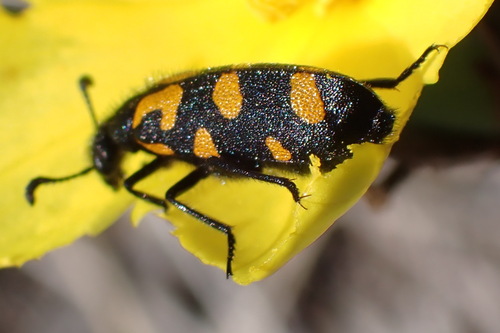
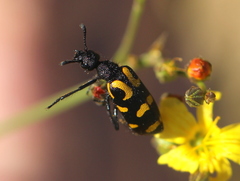
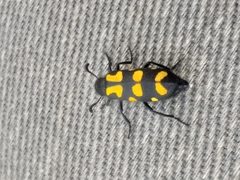
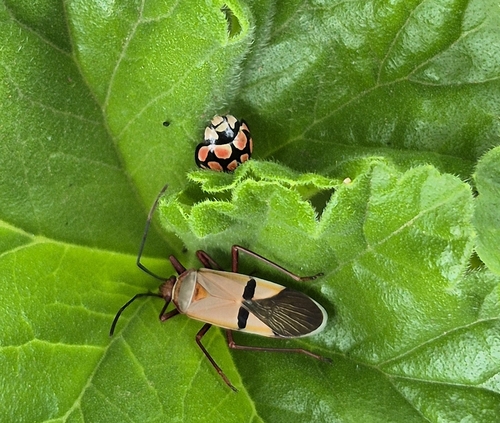
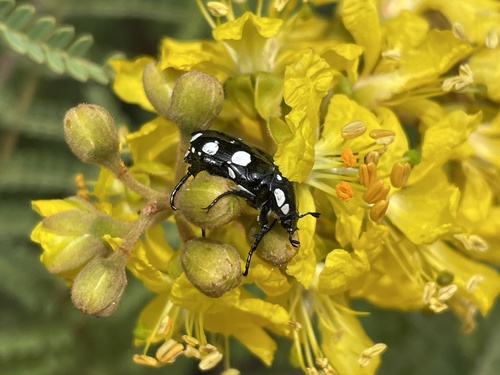
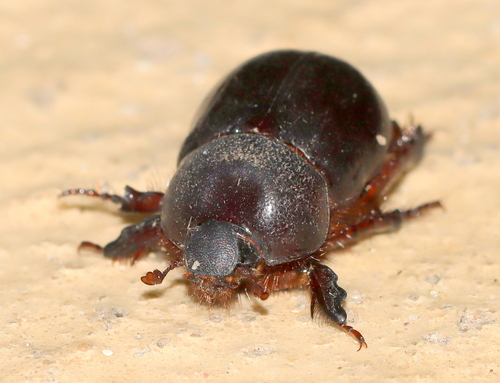
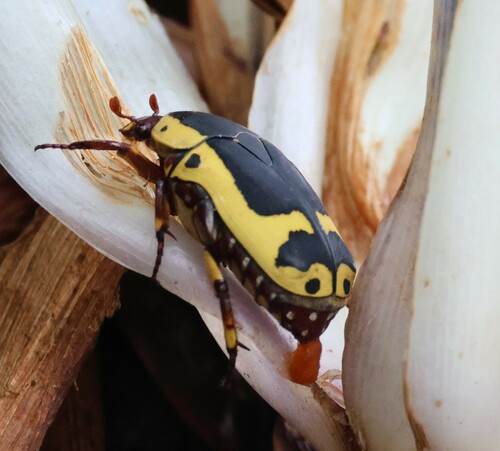
Ceroctis capensis, or spotted blister beetle, is diurnal and endemic to Southern Africa occurring in diverse habitats, and belonging to the Meloidae or Blister beetle family. It secretes a toxic liquid from its leg joints when roughly handled, blistering human skin. This species somewhat resembles Mylabris oculata, a member of the same family.
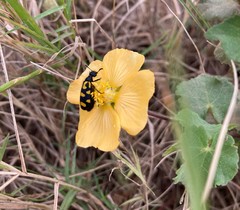
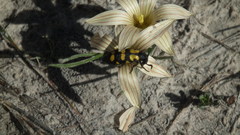
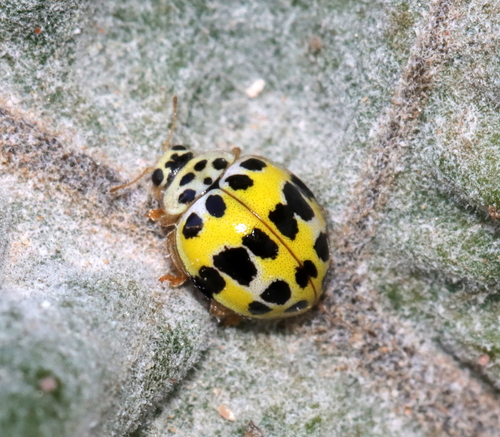
This species is found on a wide variety of plants, flying between flowers and consuming floral parts, showing a preference for the legume family and Watsonia species. It has a body length of some 12 mm while its elytra are black with yellow spots, and head, antennae and legs are black.
Adults of the Meloidae are vegetarian, flying unhurriedly between plants, protected by their aposematic colours which warn of poison. Their larvae, though, parasitise or prey on locust egg packets, or consume the eggs, pollen and honey of bees. Newly hatched triungulin larvae climb up plant stalks where they emit pheromones similar to those of a female bee. They clamber onto duped male bees and transfer to female bees when mating takes place - the female bees then carry the larvae back to her nest. Other species lay their eggs at the entrance to the bee's nest.... Wikipedia →