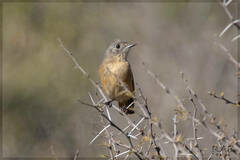
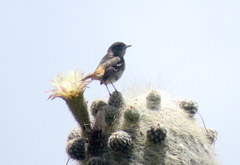
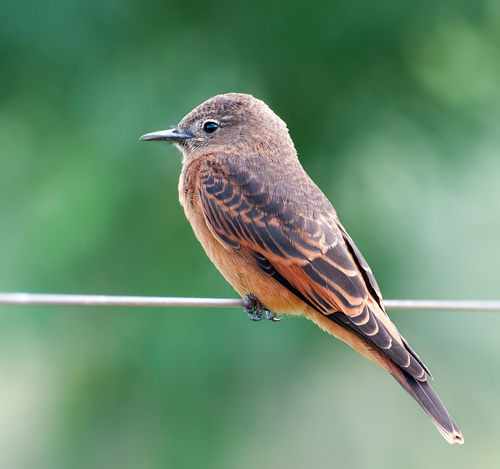
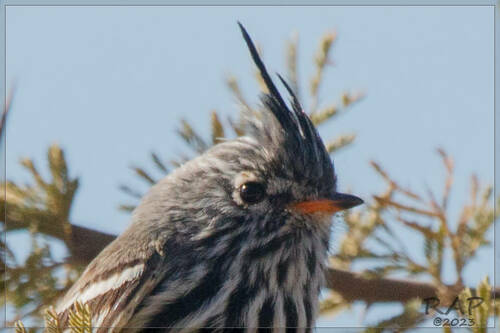
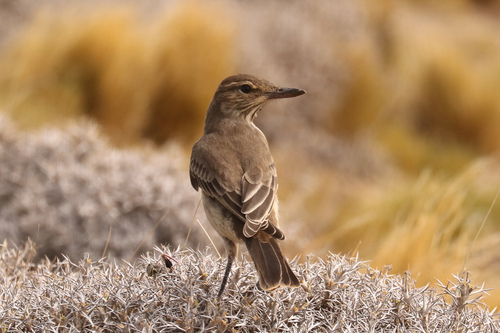
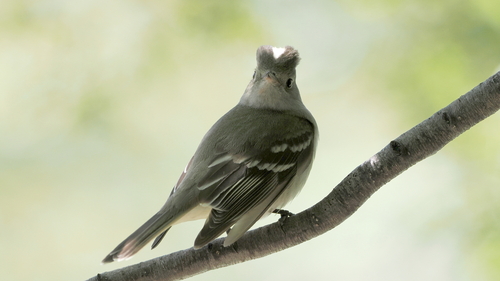
White-winged Black-Tyrant

White-winged Black-Tyrant

Knipolegus aterrimus

Silhouette: Emily Willoughby · PhyloPic

LCLeast ConcernNTVUENCR
Daily sighting probability <5% · Rare
at Cochabamba

In 3 days ~10% in a week ~30%

14 Verified sightings at Cochabamba
July Best month
☀️ Diurnal When it's spotted

About the White-winged Black-Tyrant

The white-winged black tyrant (Knipolegus aterrimus) is a species of bird in the family Tyrannidae, the tyrant flycatchers. It is found in Argentina, Bolivia, Paraguay, Peru, and as a vagrant to Brazil and Chile. The white-winged black tyrant was formally described in 1853 as Cnipolegus aterrimus. The genus' spelling was later changed to Knipolegus.

What is now Knipolegus franciscanus was long treated as a subspecies of K. aterrimus. By 2008 HBW had treated it as a full species. Following a 2012 publication that confirmed its status, other taxonomic systems followed suit, though they variously call it the Sao Francisco black tyrant and caatinga black-tyrant.

The white-winged black tyrant's further taxonomy is unsettled. BirdLife International's Handbook of the Birds of the World (HBW) recognizes heterogyna as a separate species, the white-rumped black-tyrant. Clements recognizes heterogyna as the "white-winged black-tyrant (white-rumped)" within the species.

This article follows... Wikipedia →

Sounds

Call0:35

Bolivia · 2023

© Niels Krabbe · XC778743 · CC BY-NC-SA 4.0

Song0:17

Argentina · 2016

© Martin Toledo · XC345297 · CC BY-NC-SA 4.0

Call?0:11

Peru · 2009

© Andrew Spencer · XC45848 · CC BY-NC-ND 2.5

Global Distribution

Parks Where Found

# Park Country Daily sighting probability

More parks will be added in future updates.

Cities Where Found

# City Country Daily sighting probability
1 Cochabamba 🇧🇴 Bolivia
<5%
2 La Paz 🇧🇴 Bolivia
<5%
3 Cordoba 🇦🇷 Argentina
<5%

Before you go

What are the chances of seeing a White-winged Black-Tyrant in Cochabamba?

Rare

Under 5% of wildlife watchers report a White-winged Black-Tyrant sighting in Cochabamba on a given day, based on 14 verified sightings from GBIF citizen-science data. It is the 76th most-seen of the 112 birds we can rate there. Over three days the chance rises to about 10%, and over a week to about 30%, if each day is a fresh chance.

When is the best time to see a White-winged Black-Tyrant in Cochabamba?

July

In that month about 20% of wildlife watchers report a White-winged Black-Tyrant in Cochabamba on a given day, against under 5% in May, September and November–March, the lowest months. That is one of Cochabamba's driest months, with about 5 mm of rain against 100 mm in January.

What time of day is best to see a White-winged Black-Tyrant?

Between 10 am and 1 pm

Across all the parks we cover, that three-hour window holds the most White-winged Black-Tyrant sightings with a recorded time, and about 9 in 10 of them come between 6 am and 6 pm: it is a daytime animal.

Is Cochabamba the best place to see a White-winged Black-Tyrant?

Yes

Of the 3 cities where we can rate White-winged Black-Tyrant sightings, Cochabamba has the highest daily chance: under 5%. Next come La Paz (Bolivia, under 5%) and Cordoba (Argentina, under 5%).

Which relatives of the White-winged Black-Tyrant live in Cochabamba?

Same family: Tyrannidae

The closest relatives of the White-winged Black-Tyrant that you can see in Cochabamba (family Tyrannidae, Tyrant Flycatchers) are Great Kiskadee (about 50%), White-crested Tyrannulet (about 20%) and Tropical Kingbird (about 10%), with each one's daily chance of a sighting.

Where does the White-winged Black-Tyrant sighting chance come from?

GBIF citizen-science records

It is estimated from how often the White-winged Black-Tyrant is recorded against all the birds logged in Cochabamba (14 verified sightings), calibrated against known sighting rates. Figures are rounded to the nearest 10% because citizen-science data supports honest approximations, not decimals, and months with records from fewer than five people show "—". How it works.

← Back to Cochabamba