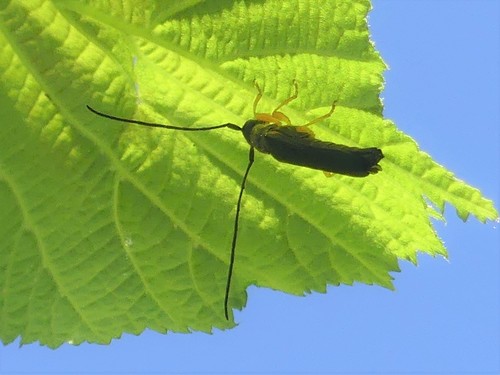
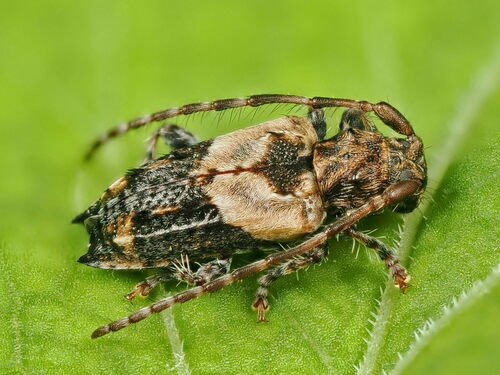
Violet Tanbark Beetle

Violet Tanbark Beetle

Callidium violaceum

Daily sighting probability <5% · Rare
at Copenhagen

In 3 days ~10% in a week ~20%

6 Verified sightings at Copenhagen
18 In all 3 parks From 2019 to 2026
June Best month
☀️ Diurnal When it's spotted

About the Violet Tanbark Beetle

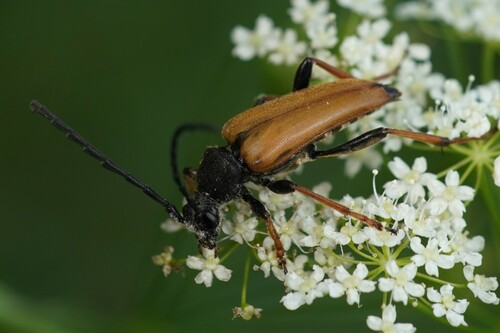
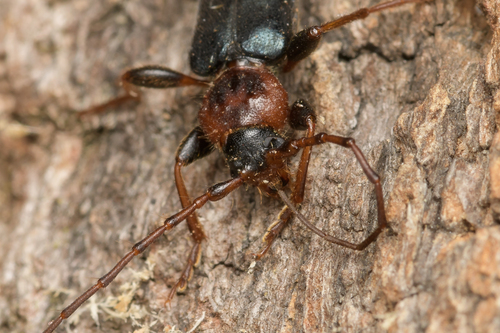
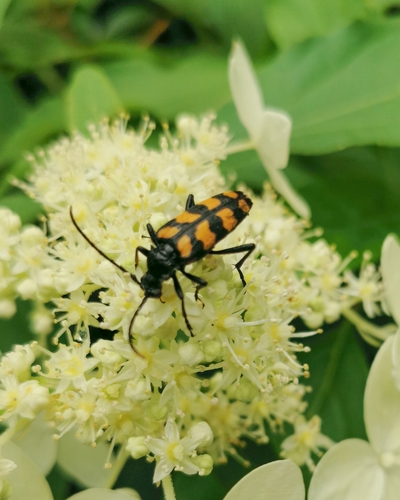
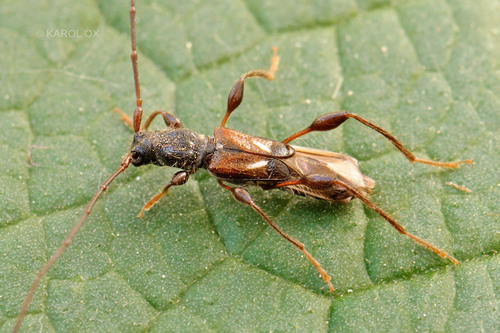
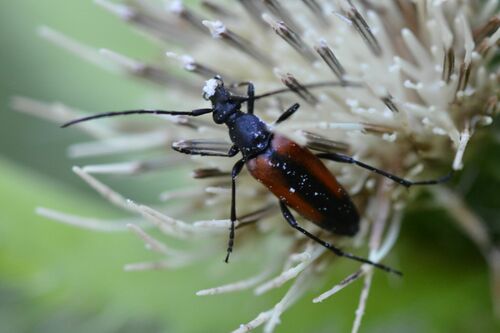
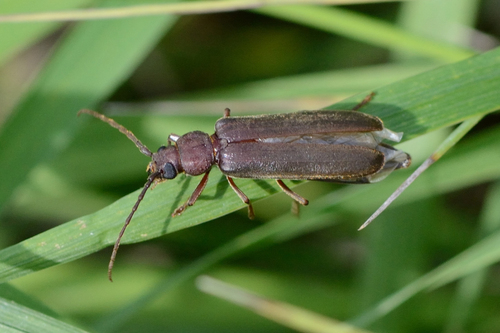
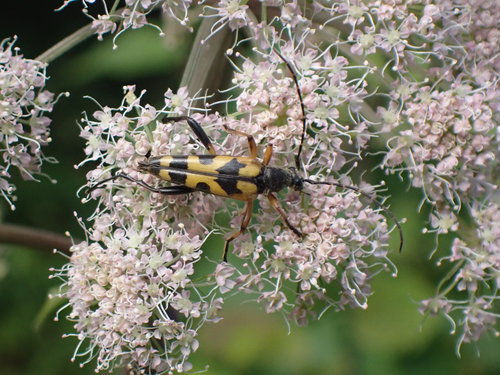
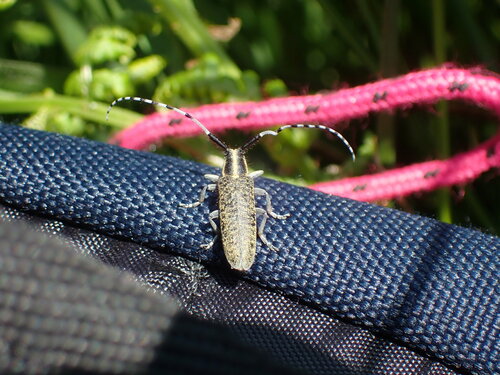
Callidium violaceum, commonly known as the violet tanbark beetle, is a species of beetle in the family Cerambycidae. It was described by Carl Linnaeus in his landmark 1758 10th edition of Systema Naturae. It is a medium-sized (8–16 mm), broad, black longhorn beetle, with wing covers that have a blue-violet metallic sheen, making the species easy to recognize. Callidium aeneum looks similar but has a green metallic sheen. The antennae are about half the length of the body. The pronotum is wider than long, with rounded sides, coarsely punctured, and with fairly long, erect, dark hairs. The wing covers are coarsely and densely punctured, but not wrinkled, with short hairs and a distinct metallic shine. The legs are black, the thighs slightly thickened, otherwise slender.

The larvae develop under the bark of dead spruce and pine. If you use materials with leftover bark as building material, the species can also attack these, and it can live indoors for several generations. It’s also common for it to get into homes with conifer firewood. Since the species can look like the house longhorn beetle (Hylotrupes bajulus), this can cause a lot of concern, but it’s not such a serious pest since the larvae don’t bore deep into the wood. Problems can be avoided if all materials used are thoroughly cleaned of bark. Larval development takes two years. Outdoors the adults are seen in June-July; indoors, they can appear over a longer period.In Norway it seems to be quite uncommon in forests, the most common habitat is stacks of firewood stored under a roof. Wikipedia →

Global Distribution

Parks Where Found

# Park Country Daily sighting probability
1 Hohe Tauern National Park 🇦🇹 Austria
~10%
2 Bavarian Forest National Park 🇩🇪 Germany
<5%
3 Wadden Sea National Park 🇩🇪 Germany
<5%

Cities Where Found

# City Country Daily sighting probability
1 Copenhagen 🇩🇰 Denmark
<5%
2 Vienna 🇦🇹 Austria
<5%
3 Prague 🇨🇿 Czechia
<5%
4 Berlin 🇩🇪 Germany
<5%
5 Moscow 🇷🇺 Russia
<5%

Before you go

What are the chances of seeing a Violet Tanbark Beetle in Copenhagen?

Rare

Under 5% of wildlife watchers report a Violet Tanbark Beetle sighting in Copenhagen on a given day, based on 6 verified sightings from GBIF citizen-science data. It is the 376th most-seen of the 476 insects we can rate there. Over three days the chance rises to about 10%, and over a week to about 20%, if each day is a fresh chance.

When is the best time to see a Violet Tanbark Beetle in Copenhagen?

March and June

In those months about 10% of wildlife watchers report a Violet Tanbark Beetle in Copenhagen on a given day, against under 5% in April–May and July–February, the lowest months.

What time of day is best to see a Violet Tanbark Beetle?

Between 3 and 6 pm

Across all the parks we cover, that three-hour window holds the most Violet Tanbark Beetle sightings with a recorded time, and about 8 in 10 of them come between 6 am and 6 pm: it is a daytime animal.

Is Copenhagen the best place to see a Violet Tanbark Beetle?

Yes

Of the 5 cities where we can rate Violet Tanbark Beetle sightings, Copenhagen has the highest daily chance: under 5%. Next come Vienna (Austria, under 5%) and Prague (Czechia, under 5%).

Which relatives of the Violet Tanbark Beetle live in Copenhagen?

Same family: Cerambycidae

The closest relatives of the Violet Tanbark Beetle that you can see in Copenhagen (family Cerambycidae, Longhorn Beetles) are Wasp Beetle (about 10%), Red Pine Longhorn Beetle (about 10%) and Tanbark Borer (about 10%), with each one's daily chance of a sighting.

Where does the Violet Tanbark Beetle sighting chance come from?

GBIF citizen-science records

It is estimated from how often the Violet Tanbark Beetle is recorded against all the insects logged in Copenhagen (6 verified sightings), calibrated against known sighting rates. Figures are rounded to the nearest 10% because citizen-science data supports honest approximations, not decimals, and months with records from fewer than five people show "—". How it works.

← Back to Copenhagen