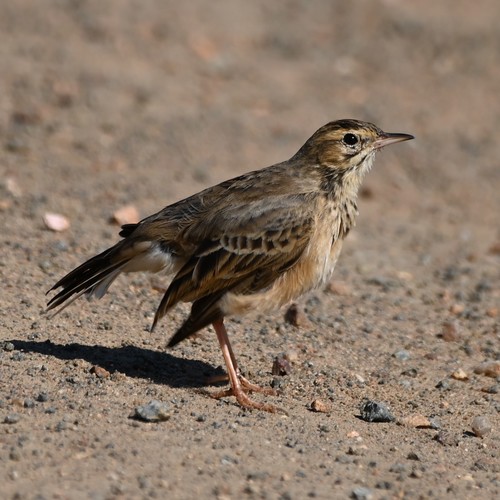
Black-bellied Starling

Black-bellied Starling

Notopholia corrusca

LCLeast ConcernNTVUENCR
Daily sighting probability ~10% · With luck
at Dar es-Salaam

In 3 days ~40% in a week ~70%

22 Verified sightings at Dar es-Salaam
1,492 In all 6 parks From 2019 to 2026
August Best month
☀️ Diurnal When it's spotted

About the Black-bellied Starling

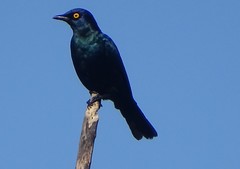
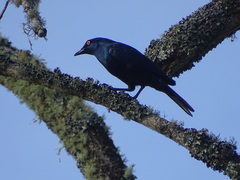
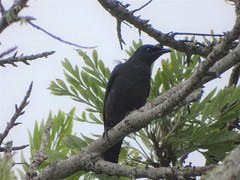
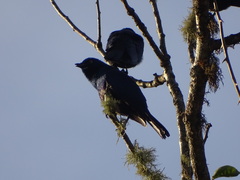
The black-bellied starling (Notopholia corusca) is a species of starling in the family Sturnidae, originally described by zoologist Alexander von Nordmann in 1835. It is found in Eswatini, Kenya, Mozambique, Somalia, South Africa, Tanzania, and Zimbabwe.

Their iris color changes by mood or behavior due to fluctuations in blood flow rates. Black-bellied (glossy) starling – Species text in The Atlas of Southern African Birds Wikipedia →

Sounds

Song0:28

South Africa · 2026

© JJSUN · XC1079972 · CC BY-NC-SA 4.0

Call0:52

Kenya · 2024

© Peter Boesman · XC948291 · CC BY-NC-ND 4.0

Song0:22

South Africa · 2021

© Tim Cockcroft · XC654797 · CC BY-NC-SA 4.0

Global Distribution

Parks Where Found

# Park Country Daily sighting probability
1 iSimangaliso Wetland Park 🇿🇦 South Africa
~40%
2 uMkhuze Game Reserve 🇿🇦 South Africa
~40%
3 Garden Route National Park 🇿🇦 South Africa
~20%
4 Hluhluwe-Imfolozi Park 🇿🇦 South Africa
~20%
5 Addo Elephant National Park 🇿🇦 South Africa
~10%
6 Kruger National Park 🇿🇦 South Africa
<5%

Cities Where Found

# City Country Daily sighting probability
1 Durban 🇿🇦 South Africa
~20%
2 Dar es-Salaam 🇹🇿 Tanzania
~10%
3 Mombasa 🇰🇪 Kenya
~10%
4 Zanzibar City 🇹🇿 Tanzania
<5%

Before you go

What are the chances of seeing a Black-bellied Starling in Dar es-Salaam?

With luck

About 10% of wildlife watchers report a Black-bellied Starling sighting in Dar es-Salaam on a given day, based on 22 verified sightings from GBIF citizen-science data. It is the 61st most-seen of the 138 birds we can rate there. Over three days the chance rises to about 40%, and over a week to about 70%, if each day is a fresh chance.

When is the best time to see a Black-bellied Starling in Dar es-Salaam?

January, April, June and August–October

In those months about 20% of wildlife watchers report a Black-bellied Starling in Dar es-Salaam on a given day, against about 10% in February–March, May, July and November–December, the lowest months.

What time of day is best to see a Black-bellied Starling?

Between 6 and 9 am

Across all the parks we cover, that three-hour window holds the most Black-bellied Starling sightings with a recorded time, and about 9 in 10 of them come between 6 am and 6 pm: it is a daytime animal.

Is Dar es-Salaam the best place to see a Black-bellied Starling?

2nd of 4

Of the 4 cities where we can rate Black-bellied Starling sightings, Dar es-Salaam ranks 2nd at about 10%. The best odds are in Durban (South Africa, about 20%).

Where does the Black-bellied Starling sighting chance come from?

GBIF citizen-science records

It is estimated from how often the Black-bellied Starling is recorded against all the birds logged in Dar es-Salaam (22 verified sightings), calibrated against known sighting rates. Figures are rounded to the nearest 10% because citizen-science data supports honest approximations, not decimals, and months with records from fewer than five people show "—". How it works.

← Back to Dar es-Salaam