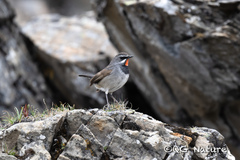
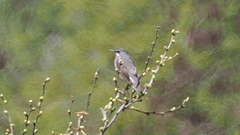
Chinese Rubythroat

Chinese Rubythroat

Calliope tschebaiewi

Silhouette: Martin Bulla, based on François Desbordes' illustration · PhyloPic

LCLeast ConcernNTVUENCR
Daily sighting probability <5% · Rare
at Dhaka

In 3 days <5% in a week ~10%

22 Verified sightings at Dhaka
149 In all 2 parks From 2019 to 2026
December Best month
☀️ Diurnal When it's spotted

About the Chinese Rubythroat

The Chinese rubythroat (Calliope tschebaiewi) is a small passerine bird in the family Muscicapidae. It is closely related to the Siberian rubythroat which however lacks the distinctive white tail-tips and white tail bases. It was also previously considered conspecific with the Himalayan rubythroat, together called the white-tailed rubythroat. It is found along the Himalayan ranges from Pakistan to Myanmar.

The first formal description of the Chinese rubythroat was by the Russian geographer Nikolay Przhevalsky in 1876. He introduced the current binomial name Calliope tschebaiewi. The specific epithet tschebaiewi is in honour of the Cossack Pamfili Tschebaeiv who accompanied Przevalsky on his travels. The Chinese rubythroat was subsequently considered as a subspecies of the Himalayan rubythroat (Calliope pectoralis). The species complex was given the English name "white-tailed rubythroat" and placed in the genus Luscinia. A large molecular phylogenetic study published in 2010 found that the Luscinia was not monophyletic. The genus was therefore split and several species including the white-tailed rubythroat were moved to the reinstated genus Calliope. Another study published... Wikipedia →

Sounds

Song0:27

China · 2021

© JJSUN · XC1070707 · CC BY-NC-SA 4.0

Alarm call0:28

China · 2010

© Mats Rellmar · XC203410 · CC BY-NC-SA 4.0

Song0:09

China · 2025

© Jelle Scharringa · XC1029039 · CC BY-NC-SA 4.0

Global Distribution

Parks Where Found

# Park Country Daily sighting probability
1 Kaziranga National Park 🇮🇳 India
~10%
2 Manas National Park 🇮🇳 India
<5%

Cities Where Found

# City Country Daily sighting probability
1 Dhaka 🇧🇩 Bangladesh
<5%

Before you go

What are the chances of seeing a Chinese Rubythroat in Dhaka?

Rare

Under 5% of wildlife watchers report a Chinese Rubythroat sighting in Dhaka on a given day, based on 22 verified sightings from GBIF citizen-science data. It is the 138th most-seen of the 185 birds we can rate there. Over three days the chance rises to under 5%, and over a week to about 10%, if each day is a fresh chance.

When is the best time to see a Chinese Rubythroat in Dhaka?

December

In that month about 10% of wildlife watchers report a Chinese Rubythroat in Dhaka on a given day, against under 5% in January to November, the lowest months. That is one of Dhaka's driest months, with about 20 mm of rain against 440 mm in July.

What time of day is best to see a Chinese Rubythroat?

Between 7 and 10 am

Across all the parks we cover, that three-hour window holds the most Chinese Rubythroat sightings with a recorded time, and about 8 in 10 of them come between 6 am and 6 pm: it is a daytime animal.

Where else can you see a Chinese Rubythroat?

Only Dhaka, in our data

Dhaka is the only city on Wallace's Line with enough records to rate Chinese Rubythroat sightings: under 5% of wildlife watchers there report one on a given day.

Which relatives of the Chinese Rubythroat live in Dhaka?

Same family: Muscicapidae

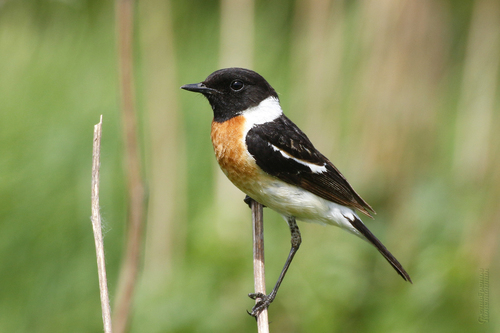
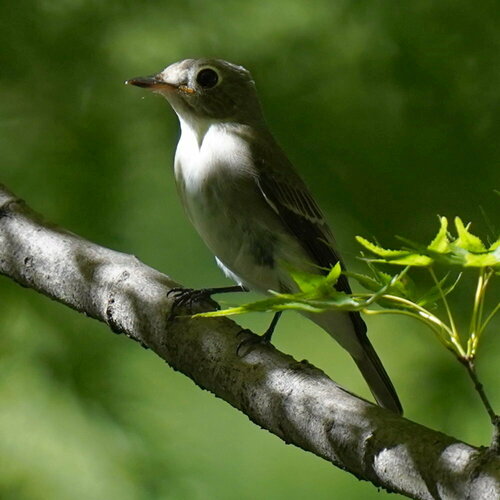
The closest relatives of the Chinese Rubythroat that you can see in Dhaka (family Muscicapidae, Old World Flycatchers, Robins, and Chats) are Oriental Magpie-Robin (about 80%), Taiga Flycatcher (about 20%) and Siberian Stonechat (about 10%), with each one's daily chance of a sighting.

Where does the Chinese Rubythroat sighting chance come from?

GBIF citizen-science records

It is estimated from how often the Chinese Rubythroat is recorded against all the birds logged in Dhaka (22 verified sightings), calibrated against known sighting rates. Figures are rounded to the nearest 10% because citizen-science data supports honest approximations, not decimals, and months with records from fewer than five people show "—". How it works.

← Back to Dhaka