Mozambique Spitting Cobra

Mozambique Spitting Cobra

Naja mossambica

Silhouette: V. Deepak · PhyloPic

LCLeast ConcernNTVUENCR
Daily sighting probability ~10% · With luck
at Durban

In 3 days ~20% in a week ~30%

8 Verified sightings at Durban
44 In all 2 parks From 2019 to 2026
October Best month
☀️ Diurnal When it's spotted

About the Mozambique Spitting Cobra

The Mozambique spitting cobra (Naja mossambica) is a highly venomous species of spitting cobra in the family Elapidae. The species is native to Africa, and it is found in Angola, Botswana, Malawi, Mozambique, Namibia, South Africa, Tanzania, Zambia, and Zimbabwe.

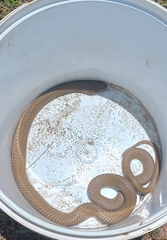
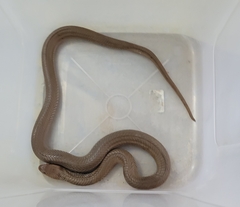
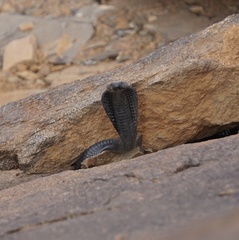
German naturalist Wilhelm Peters described Naja mossambica as a species new to science in 1854. In colour, Naja mossambica is slate to blue, olive or tawny black above, with some or all scales having black edging. Below, it is salmon pink to purple yellowish, with black bars across the neck and ventrals speckled or edged with brown or black; young specimens sometimes have pink or yellow bars on the throat.

The average length of adults is between 90 cm and 105 cm (3–3½ feet), but the largest specimen measured was a male 154 cm (5 feet) long in Durban, KwaZulu-Natal, South Africa. Naja mossambica is the most common cobra of the savanna regions of tropical and subtropical Africa. The distribution includes all of Mozambique; KwaZulu-Natal, as far south as Durban; Mpumalanga's lowveld region; southeastern Tanzania and Pemba Island; and west to far southeastern Angola and northeastern... Wikipedia →

Global Distribution

Parks Where Found

# Park Country Daily sighting probability
1 Pilanesberg National Park 🇿🇦 South Africa
~10%
2 Kruger National Park 🇿🇦 South Africa
~10%

Cities Where Found

# City Country Daily sighting probability
1 Durban 🇿🇦 South Africa
~10%

Zoos & Centres Where Found

# Zoo / Centre Country
1 Johannesburg Zoo 🇿🇦 South Africa In captivity
2 Paphos Zoo 🇨🇾 Cyprus In captivity
3 Hartbeespoort Dam Snake and Animal Park 🇿🇦 South Africa In captivity

Before you go

What are the chances of seeing a Mozambique Spitting Cobra in Durban?

With luck

About 10% of wildlife watchers report a Mozambique Spitting Cobra sighting in Durban on a given day, based on 8 verified sightings from GBIF citizen-science data. It is the 22nd most-seen of the 27 reptiles we can rate there. Over three days the chance rises to about 20%, and over a week to about 30%, if each day is a fresh chance.

When is the best time to see a Mozambique Spitting Cobra in Durban?

February–May and October–November

In those months about 10% of wildlife watchers report a Mozambique Spitting Cobra in Durban on a given day, against under 5% in June–September and December–January, the lowest months.

What time of day is best to see a Mozambique Spitting Cobra?

Between noon and 3 pm

Across all the parks we cover, that three-hour window holds the most Mozambique Spitting Cobra sightings with a recorded time, and about 8 in 10 of them come between 6 am and 6 pm: it is a daytime animal.

Where else can you see a Mozambique Spitting Cobra?

Only Durban, in our data

Durban is the only city on Wallace's Line with enough records to rate Mozambique Spitting Cobra sightings: about 10% of wildlife watchers there report one on a given day.

Which relatives of the Mozambique Spitting Cobra live in Durban?

Same family: Elapidae

The closest relatives of the Mozambique Spitting Cobra that you can see in Durban (family Elapidae, Elapid Snakes) are Eastern Green Mamba (about 10%) and Black Mamba (about 10%), with each one's daily chance of a sighting.

Where does the Mozambique Spitting Cobra sighting chance come from?

GBIF citizen-science records

It is estimated from how often the Mozambique Spitting Cobra is recorded against all the reptiles logged in Durban (8 verified sightings), calibrated against known sighting rates. Figures are rounded to the nearest 10% because citizen-science data supports honest approximations, not decimals, and months with records from fewer than five people show "—". How it works.

← Back to Durban