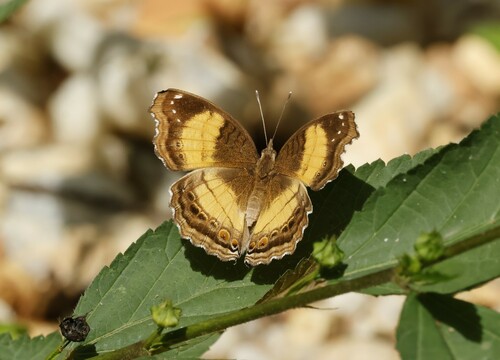

Wanderer

Wanderer

Bematistes aganice

Daily sighting probability ~10% · With luck
at Durban

In 3 days ~10% in a week ~30%

12 Verified sightings at Durban
57 In 1 park From 2019 to 2026
April Best month
☀️ Diurnal When it's spotted

About the Wanderer

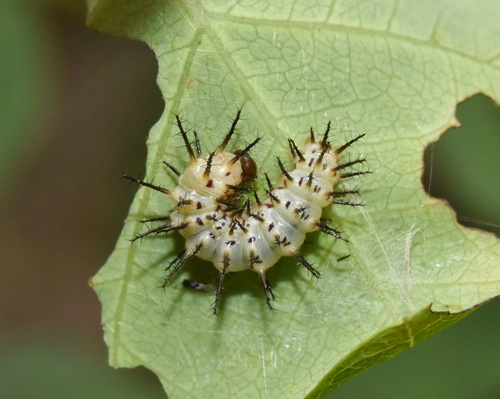
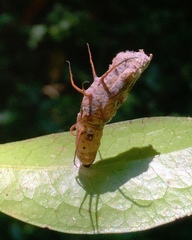
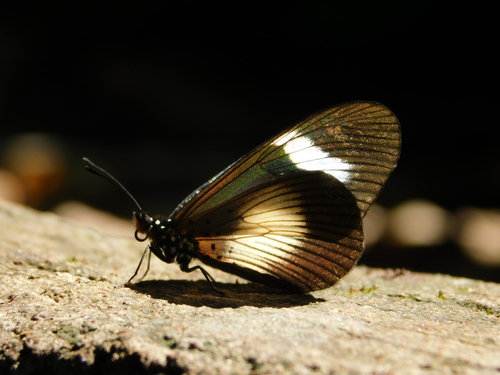
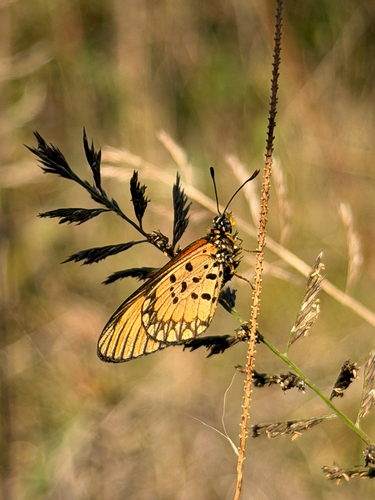
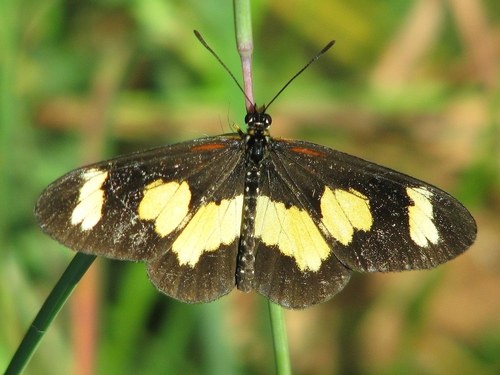
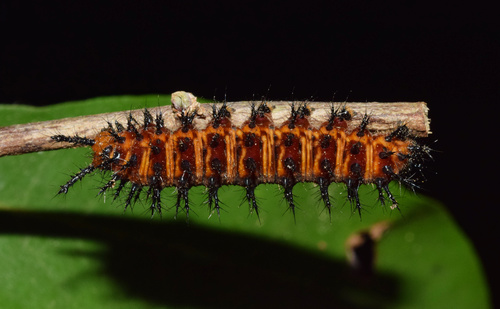
Bematistes aganice, the wanderer, is a species of butterfly of the family Nymphalidae. It is found in southern and south-eastern Africa. P. aganice Hew. (58 d) nearly approaches the preceding species [montana now Bematistes aganice montana], but has a narrower transverse band on the forewing and especially a much narrower median band on the hindwing; these are in the male white-yellow or white, in the female white; the transverse band of the forewing is in the male often almost broken up into spots and the spot in cellule 1 b very small or absent; the ground-colour in fresh specimens is almost black and the sharply defined marginal band of the hindwing in both sexes is 9-11mm. in breadth; the base of the hindwing is nearly black above, dark brown beneath; thus the sexes differ but little from one another. - Larva whitish green with long yellowish spines, yellow-brown head, and blue dots dorsally and laterally. Pupa whitish green with four pairs of long light red dorsal spines as in camerunica and small divaricating horns on the head. This species in the only endemic Planema in South Africa and is distributed from Kaffirland to Zambesi; in East Africa it is represented... Wikipedia →

Global Distribution

Parks Where Found

# Park Country Daily sighting probability
1 iSimangaliso Wetland Park 🇿🇦 South Africa
~10%

More parks will be added in future updates.

Cities Where Found

# City Country Daily sighting probability
1 Durban 🇿🇦 South Africa
~10%

Before you go

What are the chances of seeing a Wanderer in Durban?

With luck

About 10% of wildlife watchers report a Wanderer sighting in Durban on a given day, based on 12 verified sightings from GBIF citizen-science data. It is the 176th most-seen of the 401 insects we can rate there. Over three days the chance rises to about 10%, and over a week to about 30%, if each day is a fresh chance.

When is the best time to see a Wanderer in Durban?

January–February, April–June and August

In those months about 10% of wildlife watchers report a Wanderer in Durban on a given day, against under 5% in March, July and September–December, the lowest months.

What time of day is best to see a Wanderer?

Between 11 am and 2 pm

Across all the parks we cover, that three-hour window holds the most Wanderer sightings with a recorded time, and nearly all of them come between 6 am and 6 pm: it is a daytime animal.

Where else can you see a Wanderer?

Only Durban, in our data

Durban is the only city on Wallace's Line with enough records to rate Wanderer sightings: about 10% of wildlife watchers there report one on a given day.

Which relatives of the Wanderer live in Durban?

Same genus: Acraea

The closest relatives of the Wanderer that you can see in Durban (genus Acraea, Acraeas) are Dusky Acraea (about 20%), Whitebar Acraea (about 20%) and Dancing Amber (about 10%), with each one's daily chance of a sighting.

Where does the Wanderer sighting chance come from?

GBIF citizen-science records

It is estimated from how often the Wanderer is recorded against all the insects logged in Durban (12 verified sightings), calibrated against known sighting rates. Figures are rounded to the nearest 10% because citizen-science data supports honest approximations, not decimals, and months with records from fewer than five people show "—". How it works.

← Back to Durban