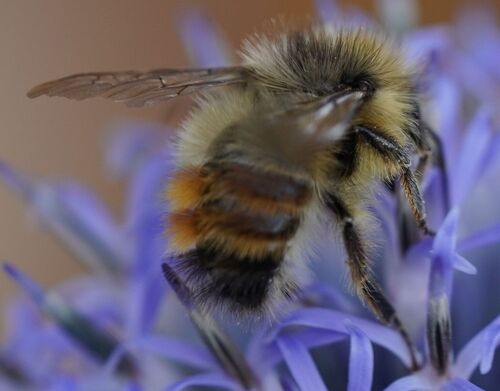
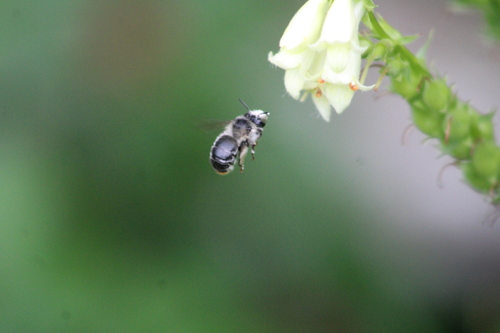
Yellow-Banded Bumble Bee

Yellow-Banded Bumble Bee

Bombus terricola

Daily sighting probability <5% · Rare
at Edmonton

In 3 days ~10% in a week ~20%

9 Verified sightings at Edmonton
97 In all 5 parks From 2019 to 2026
July Best month
☀️ Diurnal When it's spotted

About the Yellow-Banded Bumble Bee

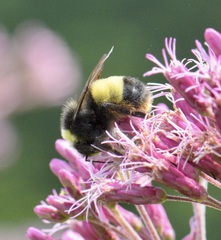
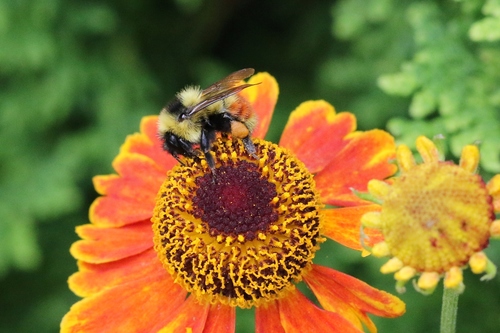
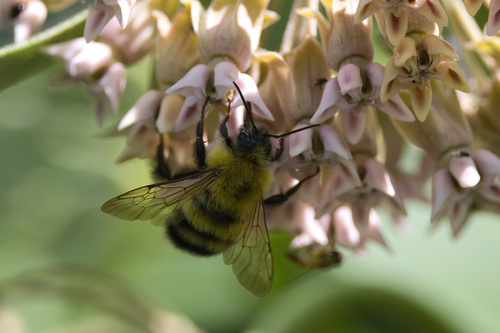
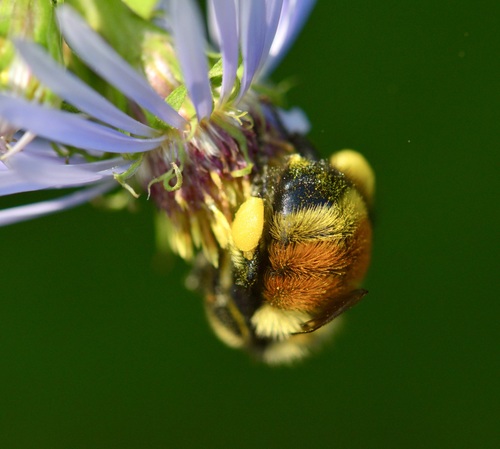
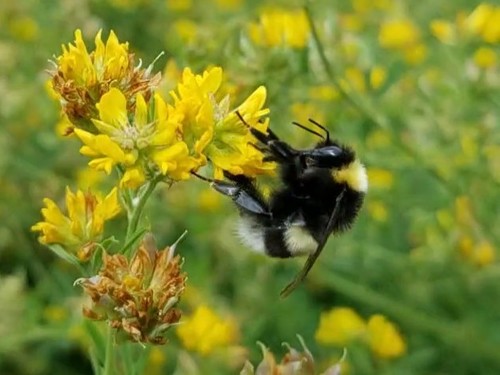
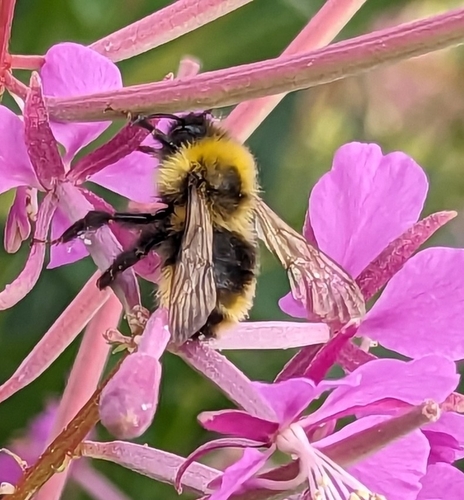
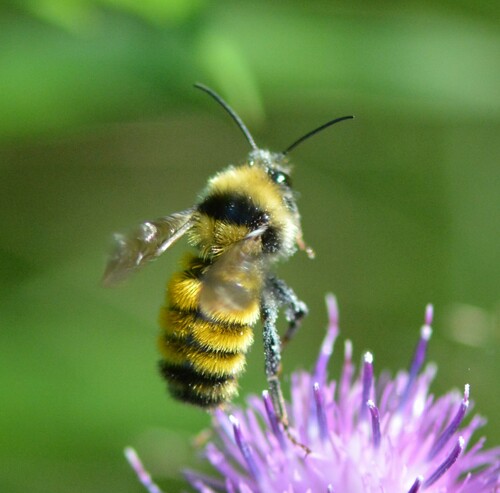
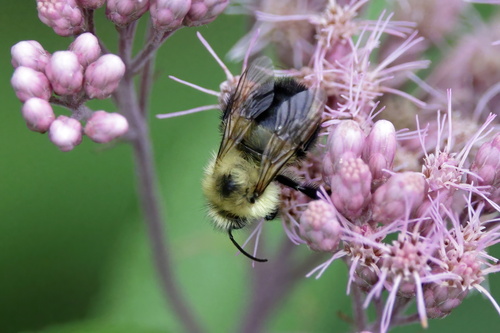
Bombus terricola, the yellow-banded bumble bee, is a species of bee in the genus Bombus. It is native to southern Canada and the east and midwest of the United States. It possesses complex behavioral traits, such as the ability to adapt to a queenless nest, choose which flower to visit, and regulate its temperature to fly during cold weather. It was at one time a common species, but has declined in numbers since the late 1990s, likely due to urban development and parasite infection. It is a good pollinator of wild flowers and crops such as alfalfa, potatoes, raspberries, and cranberries.

B. terricola belongs to the order Hymenoptera, which consists of ants, bees, wasps, and sawflies. B. terricola belongs to the family Apidae, which encompasses bumble bees, honey bees, stingless bees, and more. Within this, it is part of the genus Bombus, which consists of bumble bees. Kirby first defined this species in 1837. Bombus occidentalis has been speculated to be a subspecies of B. terricola, but most experts now agree that it is its own distinct species. B. terricola is also closely related to B. affinis both phylogenetically and in terms of pheromone signalling... Wikipedia →
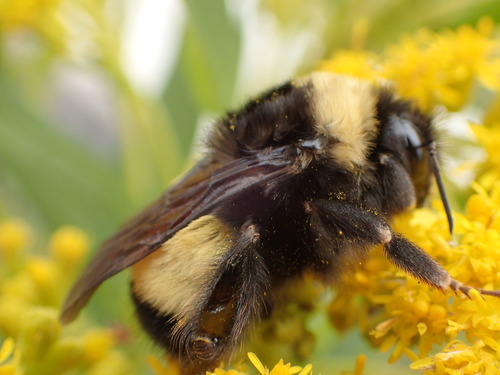
Global Distribution

Parks Where Found

# Park Country Daily sighting probability
1 Cape Breton Highlands National Park 🇨🇦 Canada
~20%
2 Riding Mountain National Park 🇨🇦 Canada
~10%
3 Acadia National Park 🇺🇸 United States
~10%
4 Gros Morne National Park 🇨🇦 Canada
~10%
5 Elk Island National Park 🇨🇦 Canada
~10%

Cities Where Found

# City Country Daily sighting probability
1 Montreal 🇨🇦 Canada
<5%
2 Edmonton 🇨🇦 Canada
<5%
3 Toronto 🇨🇦 Canada
<5%
4 Minneapolis [Saint Paul] 🇺🇸 United States
<5%

Before you go

What are the chances of seeing a Yellow-Banded Bumble Bee in Edmonton?

Rare

Under 5% of wildlife watchers report a Yellow-Banded Bumble Bee sighting in Edmonton on a given day, based on 9 verified sightings from GBIF citizen-science data. It is the 230th most-seen of the 390 insects we can rate there. Over three days the chance rises to about 10%, and over a week to about 20%, if each day is a fresh chance.

When is the best time to see a Yellow-Banded Bumble Bee in Edmonton?

July

In that month about 10% of wildlife watchers report a Yellow-Banded Bumble Bee in Edmonton on a given day, against under 5% in August to June, the lowest months. That is one of Edmonton's wettest months, with about 95 mm of rain against 20 mm in February.

What time of day is best to see a Yellow-Banded Bumble Bee?

Between noon and 3 pm

Across all the parks we cover, that three-hour window holds the most Yellow-Banded Bumble Bee sightings with a recorded time, and about 9 in 10 of them come between 6 am and 6 pm: it is a daytime animal.

Is Edmonton the best place to see a Yellow-Banded Bumble Bee?

Among the best

Of the 4 cities where we can rate Yellow-Banded Bumble Bee sightings, Edmonton ranks 2nd at under 5%, level with the leaders once rounded. The best odds are in Montreal (Canada, under 5%).

Which relatives of the Yellow-Banded Bumble Bee live in Edmonton?

Same genus: Bombus

The closest relatives of the Yellow-Banded Bumble Bee that you can see in Edmonton (genus Bombus, Bumble Bees) are Red-Belted Bumble Bee (about 20%), Perplexing Bumble Bee (about 20%) and Tricolored Bumble Bee (about 20%), with each one's daily chance of a sighting.

Where does the Yellow-Banded Bumble Bee sighting chance come from?

GBIF citizen-science records

It is estimated from how often the Yellow-Banded Bumble Bee is recorded against all the insects logged in Edmonton (9 verified sightings), calibrated against known sighting rates. Figures are rounded to the nearest 10% because citizen-science data supports honest approximations, not decimals, and months with records from fewer than five people show "—". How it works.

← Back to Edmonton