About the House Cricket
Acheta domesticus, commonly called the house cricket, is a species of cricket most likely native to Southwestern Asia, but between 1950 and 2000 it became the standard feeder insect for the pet and research industries and spread worldwide. They can be kept as pets themselves, as this has been the case in China and Japan.
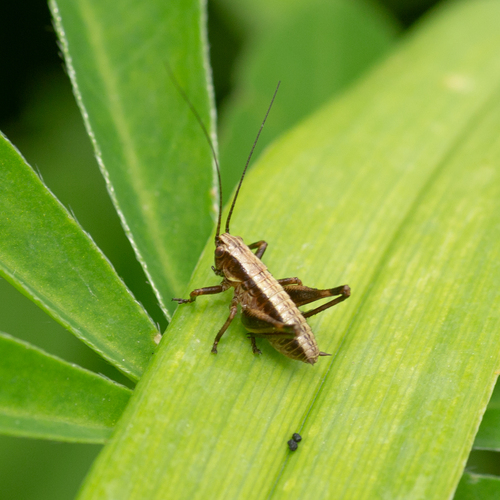
The house cricket is typically gray or brownish in color, growing to 16–21 millimetres (0.63–0.83 in) in length. Males and females look similar, but females will have a brown-black, needle-like ovipositor extending from the center rear, approximately the same length as the cerci, the paired appendages towards the rear-most segment of the cricket. On males, the cerci are more prominent.
The house cricket is an omnivore that eats a range of plant and animal matter. Crickets in the wild consume flowers, leaves, fruits, grasses and other insects (including dead members of their own species). Crickets in captivity will accept fruits (e.g. apples, oranges, bananas), vegetables (e.g. potatoes, carrots, squash, leafy vegetables), grains (e.g. oatmeal, cornmeal, cooked corncobs, alfalfa, wheat germ, rice cereal), various pet foods and commercial... Wikipedia →