Great Green Bush-Cricket

Great Green Bush-Cricket

Tettigonia viridissima

Daily sighting probability ~10% · With luck
at Essen

In 3 days ~30% in a week ~60%

63 Verified sightings at Essen
771 In all 15 parks From 2019 to 2026
August Best month
☀️ Diurnal When it's spotted

About the Great Green Bush-Cricket

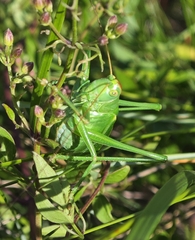
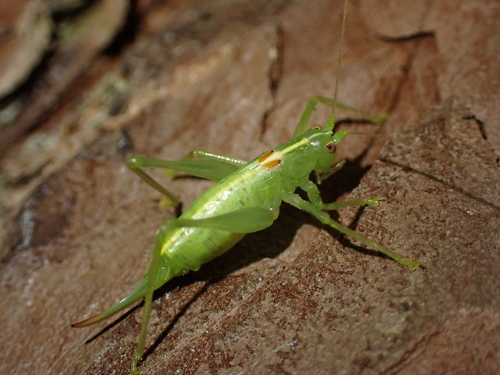
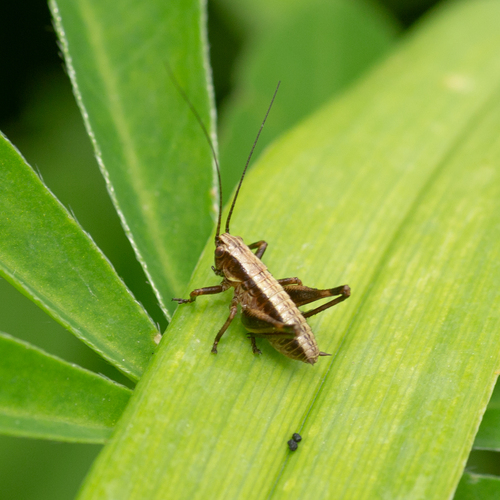
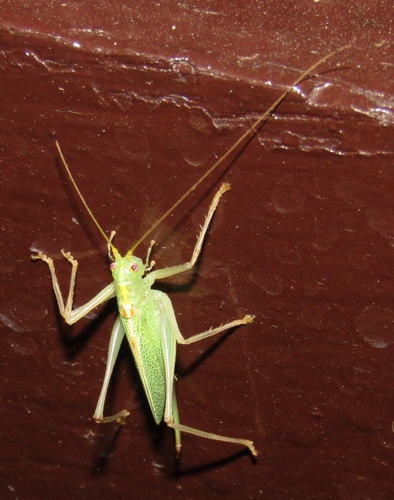
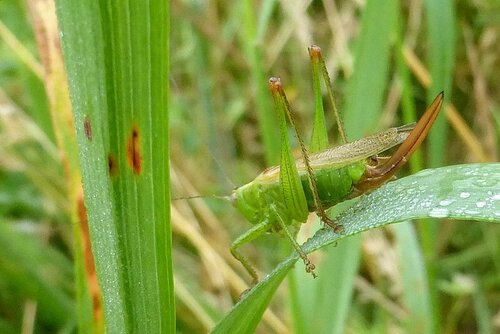
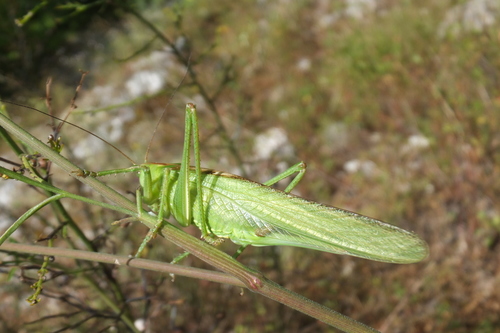
Tettigonia viridissima, the great green bush-cricket, is a large species of bush-cricket belonging to the subfamily Tettigoniinae. This species can be encountered in most of Europe, in the eastern Palearctic realm, in the Near East, and in North Africa, especially in meadows, grasslands, prairies and occasionally in gardens at an elevation up to 1,800 metres (5,900 ft) above sea level.

The adult males grow up to 28–36 millimetres (1.1–1.4 in) long, while females reach 32–42 millimetres (1.3–1.7 in). This insect is most often completely green (but there are specimens completely yellowish or with yellow legs), excluding a rust-colored band on top of the body. The organ of the stridulation of the males is generally brown.

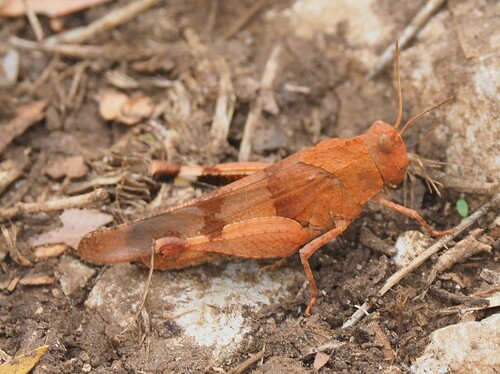
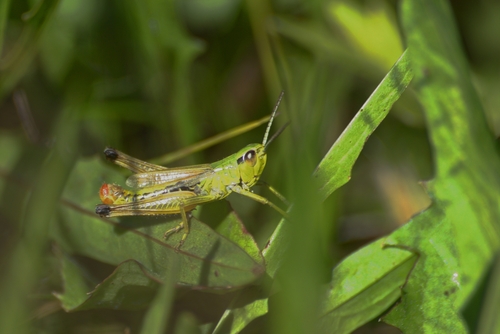
Tettigonia viridissima is distinguished by its very long and thin antennae, which can sometimes reach up to three times the length of the body, thus differentiating them from grasshoppers, which always carry short antennae. It could be confused with Tettigonia cantans, whose wings are a centimeter shorter than the ovipositor, or Tettigonia caudata, whose hind femurs bear conspicuous black spines.

The morphology of both... Wikipedia →
Global Distribution

Parks Where Found

# Park Country Daily sighting probability
1 Kiskunság National Park 🇭🇺 Hungary
~30%
2 Cévennes National Park 🇫🇷 France
~30%
3 Triglav National Park 🇸🇮 Slovenia
~30%
4 Aigüestortes National Park 🇪🇸 Spain
~20%
5 Sierra Nevada National Park 🇪🇸 Spain
~20%
6 Picos de Europa National Park 🇪🇸 Spain
~20%
7 Bavarian Forest National Park 🇩🇪 Germany
~20%
8 Plitvice Lakes National Park 🇭🇷 Croatia
~20%
9 Pyrénées National Park 🇫🇷 France
~20%
10 Fertő-Hanság National Park 🇭🇺 Hungary
~20%
11 Wadden Sea National Park 🇩🇪 Germany
~20%
12 Ecrins National Park 🇫🇷 France
~20%
13 Białowieża National Park 🇵🇱 Poland
~10%
14 Vanoise National Park 🇫🇷 France
~10%
15 Sierra de Guadarrama National Park 🇪🇸 Spain
~10%

Cities Where Found

# City Country Daily sighting probability
1 Vienna 🇦🇹 Austria
~30%
2 Budapest 🇭🇺 Hungary
~20%
3 Turin 🇮🇹 Italy
~20%
4 Prague 🇨🇿 Czechia
~20%
5 Lyon 🇫🇷 France
~20%
6 Milan 🇮🇹 Italy
~20%
7 Paris 🇫🇷 France
~20%
8 Berlin 🇩🇪 Germany
~20%
9 Cologne 🇩🇪 Germany
~20%
10 Amsterdam 🇳🇱 Netherlands
~10%

Before you go

What are the chances of seeing a Great Green Bush-Cricket in Essen?

With luck

About 10% of wildlife watchers report a Great Green Bush-Cricket sighting in Essen on a given day, based on 63 verified sightings from GBIF citizen-science data. It is the 31st most-seen of the 434 insects we can rate there. Over three days the chance rises to about 30%, and over a week to about 60%, if each day is a fresh chance.

When is the best time to see a Great Green Bush-Cricket in Essen?

July to September

In those months about 20% of wildlife watchers report a Great Green Bush-Cricket in Essen on a given day, against under 5% in October and December–March, the lowest months.

What time of day is best to see a Great Green Bush-Cricket?

Between 2 and 5 pm

Across all the parks we cover, that three-hour window holds the most Great Green Bush-Cricket sightings with a recorded time, and about 8 in 10 of them come between 6 am and 6 pm: it is a daytime animal.

Is Essen the best place to see a Great Green Bush-Cricket?

14th of 34

Of the 34 cities where we can rate Great Green Bush-Cricket sightings, Essen ranks 14th at about 10%. The best odds are in Vienna (Austria, about 30%), Budapest (Hungary, about 20%) and Turin (Italy, about 20%).

Where does the Great Green Bush-Cricket sighting chance come from?

GBIF citizen-science records

It is estimated from how often the Great Green Bush-Cricket is recorded against all the insects logged in Essen (63 verified sightings), calibrated against known sighting rates. Figures are rounded to the nearest 10% because citizen-science data supports honest approximations, not decimals, and months with records from fewer than five people show "—". How it works.

← Back to Essen