Green Rat Snake

Green Rat Snake

Senticolis triaspis

Silhouette: Alex Slavenko · PhyloPic

LCLeast ConcernNTVUENCR
Daily sighting probability <5% · Rare
at Guadalajara

In 3 days ~10% in a week ~30%

9 Verified sightings at Guadalajara
32 In all 2 parks From 2019 to 2026
November Best month
☀️🌙 Day & Night When it's spotted

About the Green Rat Snake

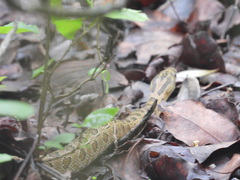
Senticolis is a genus of nonvenomous snake in the family Colubridae. The genus Senticolis is monotypic, containing the sole species Senticolis triaspis, also known as the green rat snake. The species is endemic to Central America, Mexico, southern Arizona, and southern New Mexico.

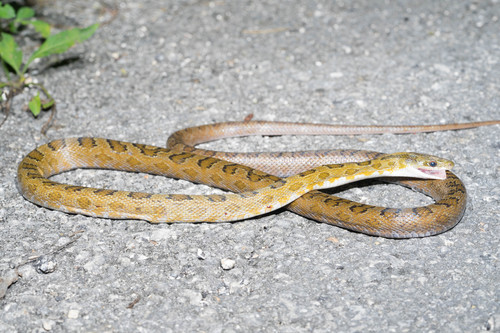
Senticolis triaspis may grow to a total length (including tail) of 160 cm (63 in). Dorsally, it is green or olive green, and ventrally it is light yellow. The head is elongated, the body is slender, and the smooth dorsal scales are arranged in 31–39 rows.

Senticolis triaspis usually inhabits evergreen forests and grassland. Senticolis triaspis is well distributed in the Baboquivari, Pajarito, Atascosa, Santa Rita, Empire, Patagonia, Chiricahua, Swisshelm, Pedregosa, and Peloncillo mountains of southeastern Arizona.

Senticolis triaspis consumes small animals such as lizards, birds, and bats, killing them by deadly constriction. Senticolis triaspis is primarily diurnal. An adult female of S. triaspis is able to lay up to nine eggs in a clutch.

Three subspecies are recognized as being valid, including... Wikipedia →
Sounds

Recording0:13

Mexico · 2024

© @NaturaGto · iNaturalist · CC BY-NC 4.0

Global Distribution

Parks Where Found

# Park Country Daily sighting probability
1 Santa Rosa National Park 🇨🇷 Costa Rica
~20%
2 Monteverde Cloud Forest Reserve 🇨🇷 Costa Rica
~10%

Cities Where Found

# City Country Daily sighting probability
1 Tegucigalpa 🇭🇳 Honduras
~20%
2 San José 🇨🇷 Costa Rica
~10%
3 Guadalajara 🇲🇽 México
<5%

Zoos & Centres Where Found

# Zoo / Centre Country
1 Columbus Zoo and Aquarium 🇺🇸 United States In captivity
2 Zoológico la pastroa 🇲🇽 Mexico In captivity
3 Arizona-Sonora Desert Museum 🇺🇸 United States In captivity
4 Zoobotânico de São José do Rio Preto 🇧🇷 Brazil In captivity
5 OdySea Aquarium 🇺🇸 United States In captivity
6 Exotarium Oberhof 🇩🇪 Germany In captivity
7 Zoológico Miguél Álvarez del Toro 🇲🇽 Mexico In captivity

Before you go

What are the chances of seeing a Green Rat Snake in Guadalajara?

Rare

Under 5% of wildlife watchers report a Green Rat Snake sighting in Guadalajara on a given day, based on 9 verified sightings from GBIF citizen-science data. It is the 16th most-seen of the 18 reptiles we can rate there. Over three days the chance rises to about 10%, and over a week to about 30%, if each day is a fresh chance.

When is the best time to see a Green Rat Snake in Guadalajara?

April and August–December

In those months about 10% of wildlife watchers report a Green Rat Snake in Guadalajara on a given day, against under 5% in January–March and May–July, the lowest months.

What time of day is best to see a Green Rat Snake?

Between 10 am and 1 pm

Across all the parks we cover, that three-hour window holds the most Green Rat Snake sightings with a recorded time, and about 7 in 10 of them come between 6 am and 6 pm: it is seen both by day and at night.

Is Guadalajara the best place to see a Green Rat Snake?

3rd of 3

Of the 3 cities where we can rate Green Rat Snake sightings, Guadalajara ranks 3rd at under 5%. The best odds are in Tegucigalpa (Honduras, about 20%) and San José (Costa Rica, about 10%).

Which relatives of the Green Rat Snake live in Guadalajara?

Same family: Colubridae

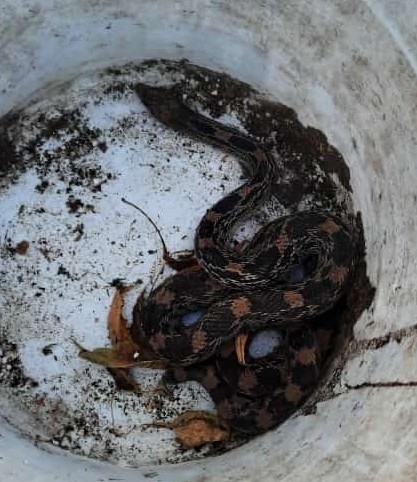
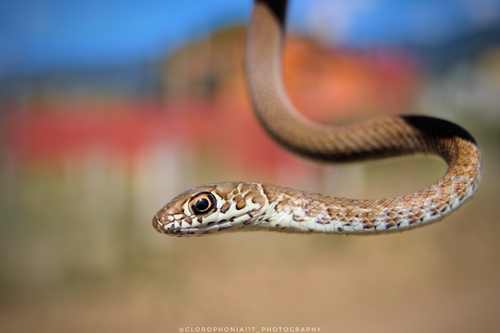
The closest relatives of the Green Rat Snake that you can see in Guadalajara (family Colubridae, Colubrid Snakes) are Mexican Bull Snake (about 10%) and Neotropical Whip Snake (about 10%), with each one's daily chance of a sighting.

Where does the Green Rat Snake sighting chance come from?

GBIF citizen-science records

It is estimated from how often the Green Rat Snake is recorded against all the reptiles logged in Guadalajara (9 verified sightings), calibrated against known sighting rates. Figures are rounded to the nearest 10% because citizen-science data supports honest approximations, not decimals, and months with records from fewer than five people show "—". How it works.

← Back to Guadalajara