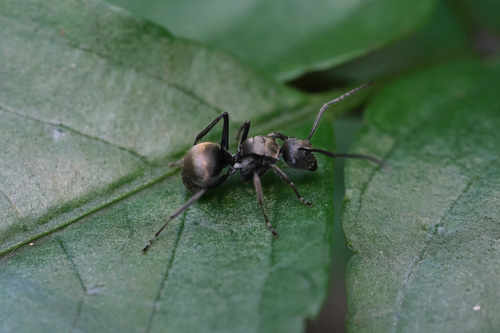
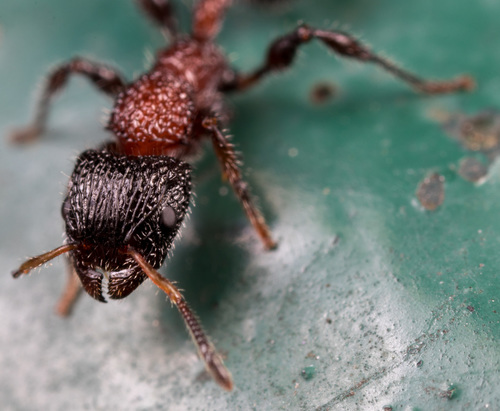
Red Imported Fire Ant

Red Imported Fire Ant

Solenopsis invicta

Daily sighting probability ~10% · With luck
at Guangzhou

In 3 days ~20% in a week ~40%

26 Verified sightings at Guangzhou
120 In all 3 parks From 2019 to 2026
November Best month
☀️ Diurnal When it's spotted

About the Red Imported Fire Ant

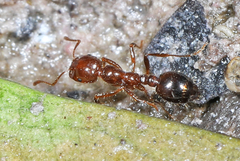
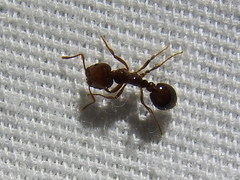
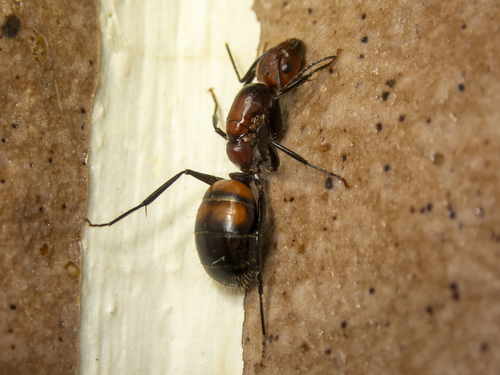
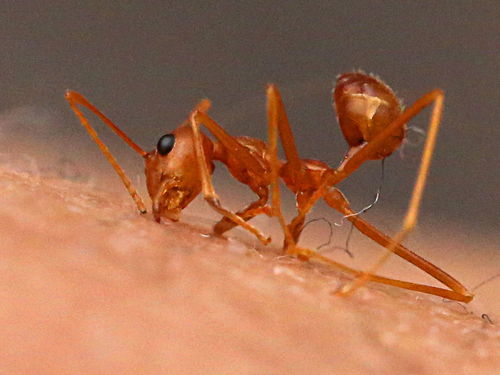
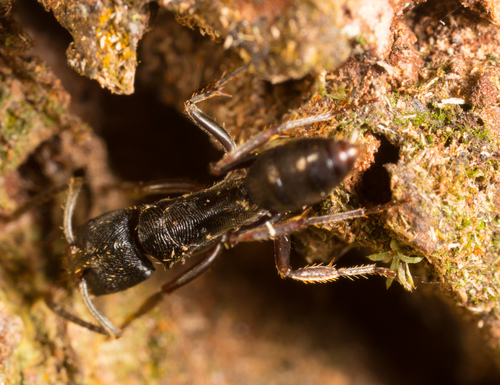
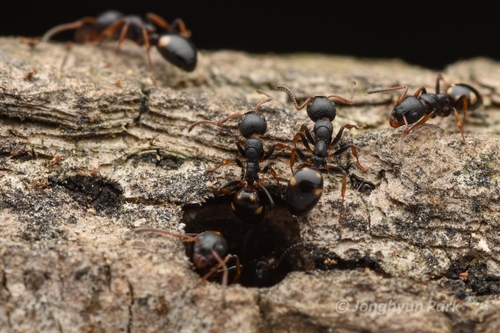
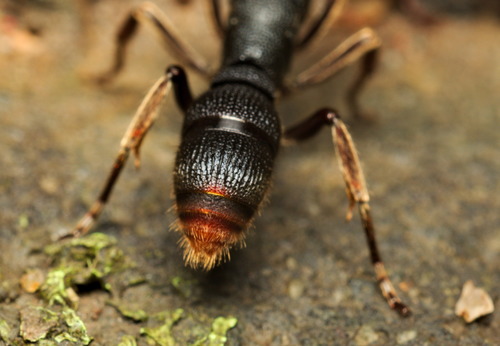
Solenopsis invicta, the fire ant, or red imported fire ant (RIFA), is a species of ant native to South America. A member of the genus Solenopsis in the subfamily Myrmicinae, it was described by Swiss entomologist Felix Santschi as a variant of S. saevissima in 1916. Its current specific name invicta was given to the ant in 1972 as a separate species. However, the variant and species were the same ant, and the name was preserved due to its wide use. Though South American in origin, the red imported fire ant has been accidentally introduced in Australia, New Zealand, several Asian and Caribbean countries, Europe and the United States. The red imported fire ant is polymorphic, as workers appear in different shapes and sizes. The ant's colours are red and somewhat yellowish with a brown or black gaster, but males are completely black. Red imported fire ants are dominant in altered areas and live in a wide variety of habitats. They can be found in rainforests, disturbed areas, deserts, grasslands, alongside roads and buildings, and in electrical equipment. Colonies form large mounds constructed from soil with no visible entrances because foraging tunnels are built and workers emerge far away from the nest.

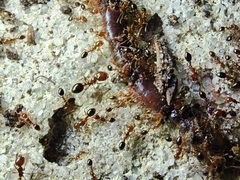
These ants exhibit a wide variety of behaviours, such as building rafts when they sense that water levels are rising. They also show necrophoric behaviour, where nestmates discard scraps or dead ants on refuse piles outside the nest. Foraging takes place on warm or hot days, although they may remain outside at night. Workers communicate by a series of semiochemicals and pheromones, which are used for recruitment, foraging, and defence. They are omnivores and eat dead mammals, arthropods, insects, seeds, and sweet substances such as honeydew from hemipteran insects with which they have developed relationships. Predators include arachnids, birds, and many insects including other ants, dragonflies, earwigs, and beetles. The ant is a host to parasites and to a number of pathogens, nematodes, and viruses, which have been viewed as potential biological control agents. Nuptial flight occurs during the warm seasons, and the alates may mate for as long as 30 minutes. Colony founding can be done by a single queen or a group of queens, which later contest for dominance once the first workers emerge. Workers can live for several months, while queens can live for years; mature colony numbers can vary from 500,000 to 2,000,000 individuals. Wikipedia →
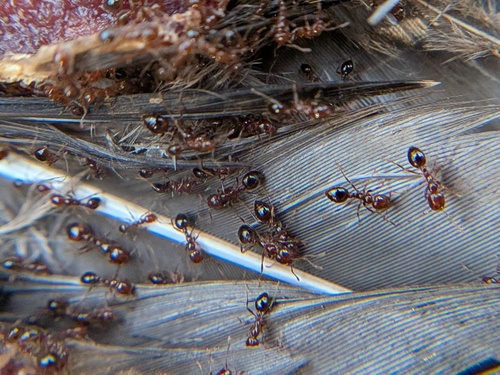
Global Distribution

Parks Where Found

# Park Country Daily sighting probability
1 Big Cypress National Preserve 🇺🇸 United States
~20%
2 Everglades National Park 🇺🇸 United States
~10%
3 Merritt Island National Wildlife Refuge 🇺🇸 United States
~10%

Cities Where Found

# City Country Daily sighting probability
1 Hanoi 🇻🇳 Vietnam
~20%
2 Kunming 🇨🇳 China
~10%
3 Austin 🇺🇸 United States
~10%
4 San Antonio 🇺🇸 United States
~10%
5 Dallas 🇺🇸 United States
~10%
6 Orlando 🇺🇸 United States
~10%
7 Zhuhai [Macau] 🇨🇳 China
~10%
8 Houston 🇺🇸 United States
~10%
9 Miami 🇺🇸 United States
~10%
10 Brisbane 🇦🇺 Australia
~10%

Before you go

What are the chances of seeing a Red Imported Fire Ant in Guangzhou?

With luck

About 10% of wildlife watchers report a Red Imported Fire Ant sighting in Guangzhou on a given day, based on 26 verified sightings from GBIF citizen-science data. It is the 112th most-seen of the 482 insects we can rate there. Over three days the chance rises to about 20%, and over a week to about 40%, if each day is a fresh chance.

When is the best time to see a Red Imported Fire Ant in Guangzhou?

March–July, September and November–December

In those months about 10% of wildlife watchers report a Red Imported Fire Ant in Guangzhou on a given day, against under 5% in January–February, August and October, the lowest months.

What time of day is best to see a Red Imported Fire Ant?

Between 11 am and 2 pm

Across all the parks we cover, that three-hour window holds the most Red Imported Fire Ant sightings with a recorded time, and about 9 in 10 of them come between 6 am and 6 pm: it is a daytime animal.

Is Guangzhou the best place to see a Red Imported Fire Ant?

12th of 15

Of the 15 cities where we can rate Red Imported Fire Ant sightings, Guangzhou ranks 12th at about 10%. The best odds are in Hanoi (Vietnam, about 20%), Kunming (China, about 10%) and Austin (United States, about 10%).

Which relatives of the Red Imported Fire Ant live in Guangzhou?

Same family: Formicidae

The closest relatives of the Red Imported Fire Ant that you can see in Guangzhou (family Formicidae, Ants) are Nicobar Carpenter Ant (about 10%), Rich Spiny Sugar Ant (about 10%) and Asian Weaver Ant (about 10%), with each one's daily chance of a sighting.

Where does the Red Imported Fire Ant sighting chance come from?

GBIF citizen-science records

It is estimated from how often the Red Imported Fire Ant is recorded against all the insects logged in Guangzhou (26 verified sightings), calibrated against known sighting rates. Figures are rounded to the nearest 10% because citizen-science data supports honest approximations, not decimals, and months with records from fewer than five people show "—". How it works.

← Back to Guangzhou