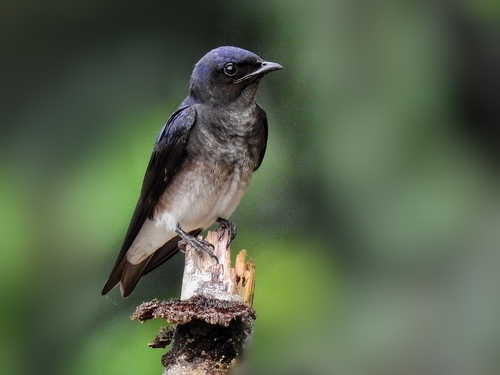

Black-capped Sparrow

Black-capped Sparrow

Arremon abeillei

Silhouette: Juan Camilo Cepeda-Duque · PhyloPic

LCLeast ConcernNTVUENCR
Daily sighting probability <5% · Rare
at Guayaquil

In 3 days <5% in a week ~10%

10 Verified sightings at Guayaquil
40 In 1 park From 2019 to 2026
January Best month
☀️ Diurnal When it's spotted

About the Black-capped Sparrow

The black-capped sparrow (Arremon abeillei) is a species of bird in the family Passerellidae, the New World sparrows. It is found in Ecuador and Peru. The black-capped sparrow was formally described in 1844 with its current binomial Arremon abeillei.

The black-capped sparrow is monotypic. However, what is now the Maranon sparrow (A. nigriceps) was previously treated as a subspecies; taxonomic systems began separating them in 2016. A later study confirmed that the two are sister species.

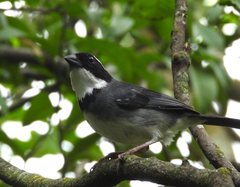
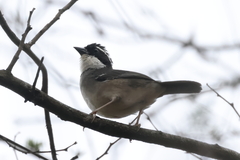
The black-capped sparrow is about 15 cm (5.9 in) long and weighs about 26 g (0.92 oz). The sexes have the same plumage. Adults have a mostly black head with a white throat and a wide white stripe from above the eye down the side of the nape. They often raise their crown feathers in a shaggy crest. Their upperparts and tail are blue-gray. Their wing coverts are blue-gray; some individuals have small pale tips on them that form two wing bars. Their flight feathers are dusky with blue-gray edges. Their throat is white with a black band below it across the upper breast. Their flanks are gray and the rest of their underparts white. They have a brown iris, a... Wikipedia →

Sounds

Call0:18

Ecuador · 2021

© Bobby Wilcox · XC693000 · CC BY-NC-SA 4.0

Song0:21

Ecuador · 2015

© Leonardo Ordóñez-Delgado · XC278804 · CC BY-NC-SA 4.0

Call0:09

Peru · 2015

© Ross Gallardy · XC297103 · CC BY-NC-SA 4.0

Global Distribution

Parks Where Found

# Park Country Daily sighting probability
1 Machalilla National Park 🇪🇨 Ecuador
~10%

More parks will be added in future updates.

Cities Where Found

# City Country Daily sighting probability
1 Guayaquil 🇪🇨 Ecuador
<5%

Before you go

What are the chances of seeing a Black-capped Sparrow in Guayaquil?

Rare

Under 5% of wildlife watchers report a Black-capped Sparrow sighting in Guayaquil on a given day, based on 10 verified sightings from GBIF citizen-science data. It is the 129th most-seen of the 167 birds we can rate there. Over three days the chance rises to under 5%, and over a week to about 10%, if each day is a fresh chance.

When is the best time to see a Black-capped Sparrow in Guayaquil?

Any time of year

In every month with enough records, under 5% of wildlife watchers report a Black-capped Sparrow in Guayaquil on a given day, so our monthly data shows no clear season.

What time of day is best to see a Black-capped Sparrow?

Between 7 and 10 am

Across all the parks we cover, that three-hour window holds the most Black-capped Sparrow sightings with a recorded time, and about 9 in 10 of them come between 6 am and 6 pm: it is a daytime animal.

Where else can you see a Black-capped Sparrow?

Only Guayaquil, in our data

Guayaquil is the only city on Wallace's Line with enough records to rate Black-capped Sparrow sightings: under 5% of wildlife watchers there report one on a given day.

Which relatives of the Black-capped Sparrow live in Guayaquil?

Same order: Passeriformes

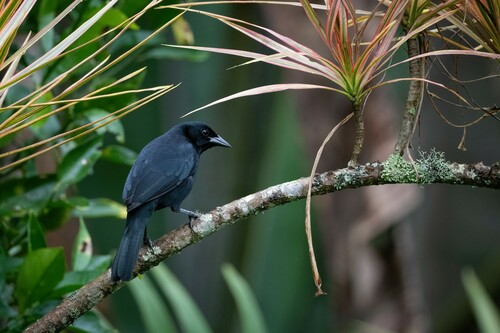
The closest relatives of the Black-capped Sparrow that you can see in Guayaquil (order Passeriformes, Perching Birds) are Blue-gray Tanager (about 90%), Tropical Kingbird (about 80%) and Scrub Blackbird (about 70%), with each one's daily chance of a sighting.

Where does the Black-capped Sparrow sighting chance come from?

GBIF citizen-science records

It is estimated from how often the Black-capped Sparrow is recorded against all the birds logged in Guayaquil (10 verified sightings), calibrated against known sighting rates. Figures are rounded to the nearest 10% because citizen-science data supports honest approximations, not decimals, and months with records from fewer than five people show "—". How it works.

← Back to Guayaquil