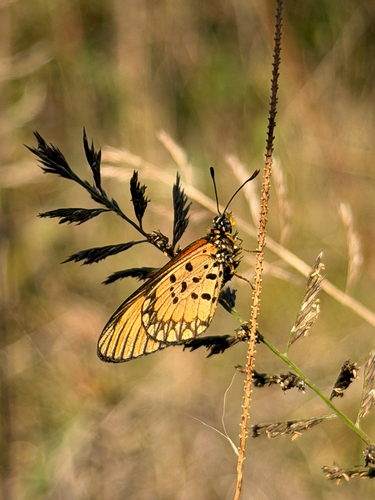
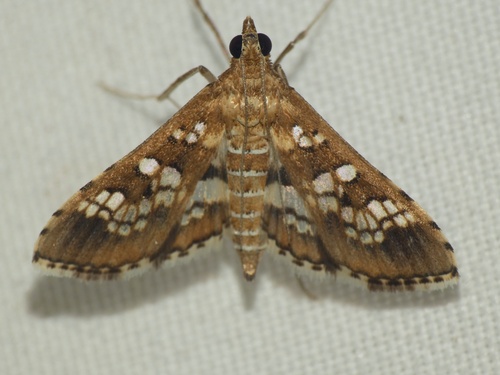
Common Citril
Daily sighting probability ~10% · With luck
at Harare

In 3 days ~30% in a week ~50%

6 Verified sightings at Harare
631 In all 8 parks From 2019 to 2026
March Best month
☀️ Diurnal When it's spotted

About the Common Citril

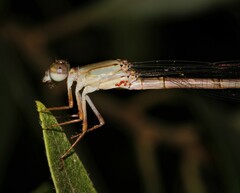
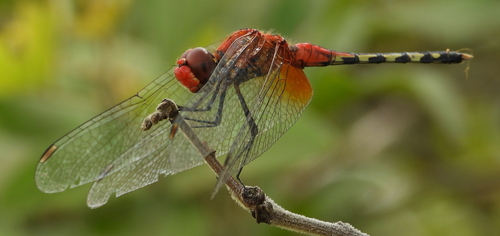
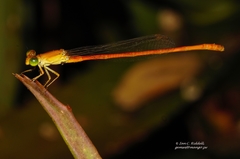
Ceriagrion glabrum is a species of damselfly in the family Coenagrionidae. Its common names include common orange, common citril, common pond damsel, common waxtail, orange waxtail and gewone aljander. It is widespread in Africa, where it is found in habitats that are dominated by reeds.

This is a small to medium size damselfly (length up to 46 mm (1.8 in), wingspan up to 53 mm (2.1 in)). The eyes are greenish with a dark grey cap. As is the case in many damselflies, this species shows strong sexual dimorphism. Males have a bright orange, unmarked abdomen and thorax, with a lighter yellow-orange colour on the sides of the abdomen. Females range from brown to green to orange. They become increasingly orange with age, although they never reach the same striking brightness of the males.

This is by far the most common and widespread African Ceriagrion species. It has been observed to occur in Angola, Botswana, Burkina Faso, Burundi, Cameroon, Chad, the Republic of the Congo, the Democratic Republic of the Congo, Ivory Coast, Egypt, Equatorial Guinea, Ethiopia, Gabon, Gambia, Ghana, Guinea, Kenya, Liberia, Madagascar, Malawi, Mali, Mauritius... Wikipedia →

Global Distribution

Parks Where Found

# Park Country Daily sighting probability
1 Ankarafantsika National Park 🇲🇬 Madagascar
~30%
2 iSimangaliso Wetland Park 🇿🇦 South Africa
~30%
3 uMkhuze Game Reserve 🇿🇦 South Africa
~30%
4 Garden Route National Park 🇿🇦 South Africa
~20%
5 Moremi Game Reserve 🇧🇼 Botswana
~10%
6 Kruger National Park 🇿🇦 South Africa
~10%
7 Addo Elephant National Park 🇿🇦 South Africa
~10%
8 Table Mountain National Park 🇿🇦 South Africa
~10%

Cities Where Found

# City Country Daily sighting probability
1 Antananarivo 🇲🇬 Madagascar
~40%
2 Durban 🇿🇦 South Africa
~10%
3 Harare 🇿🇼 Zimbabwe
~10%
4 Cape Town 🇿🇦 South Africa
~10%
5 Pretoria 🇿🇦 South Africa
<5%

Before you go

What are the chances of seeing a Common Citril in Harare?

With luck

About 10% of wildlife watchers report a Common Citril sighting in Harare on a given day, based on 6 verified sightings from GBIF citizen-science data. It is the 58th most-seen of the 93 insects we can rate there. Over three days the chance rises to about 30%, and over a week to about 50%, if each day is a fresh chance.

When is the best time to see a Common Citril in Harare?

March

In that month about 30% of wildlife watchers report a Common Citril in Harare on a given day, against under 5% in May to January, the lowest months. That is one of Harare's wettest months, with about 95 mm of rain against almost none in August.

What time of day is best to see a Common Citril?

Between 10 am and 1 pm

Across all the parks we cover, that three-hour window holds the most Common Citril sightings with a recorded time, and nearly all of them come between 6 am and 6 pm: it is a daytime animal.

Is Harare the best place to see a Common Citril?

3rd of 5

Of the 5 cities where we can rate Common Citril sightings, Harare ranks 3rd at about 10%. The best odds are in Antananarivo (Madagascar, about 40%) and Durban (South Africa, about 10%).

Which relatives of the Common Citril live in Harare?

Same order: Odonata

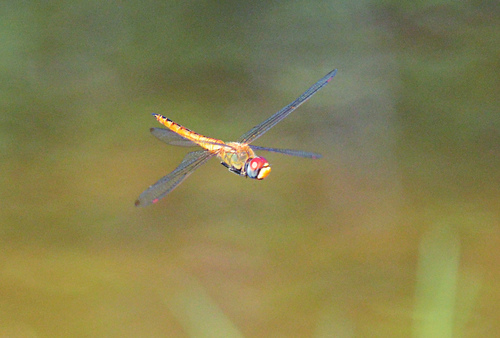
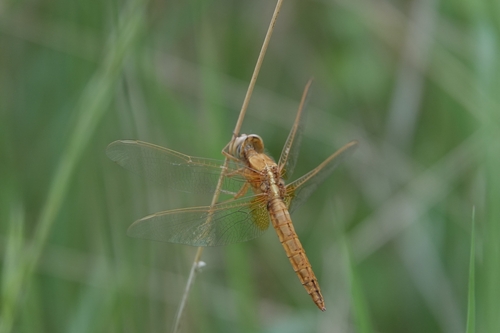
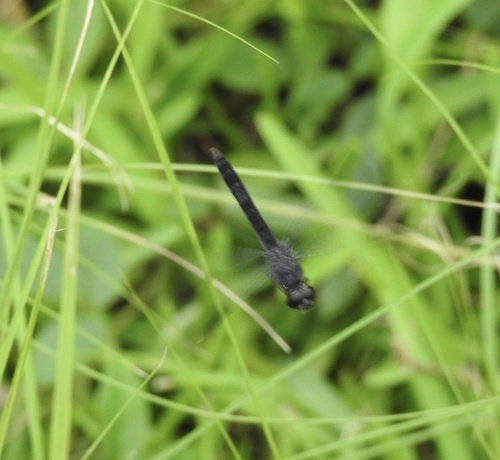
The closest relatives of the Common Citril that you can see in Harare (order Odonata, Dragonflies and Damselflies) are Orange-Winged Dropwing (about 20%), Wandering Glider (about 10%) and Broad Scarlet (about 10%), with each one's daily chance of a sighting.

Where does the Common Citril sighting chance come from?

GBIF citizen-science records

It is estimated from how often the Common Citril is recorded against all the insects logged in Harare (6 verified sightings), calibrated against known sighting rates. Figures are rounded to the nearest 10% because citizen-science data supports honest approximations, not decimals, and months with records from fewer than five people show "—". How it works.

← Back to Harare